
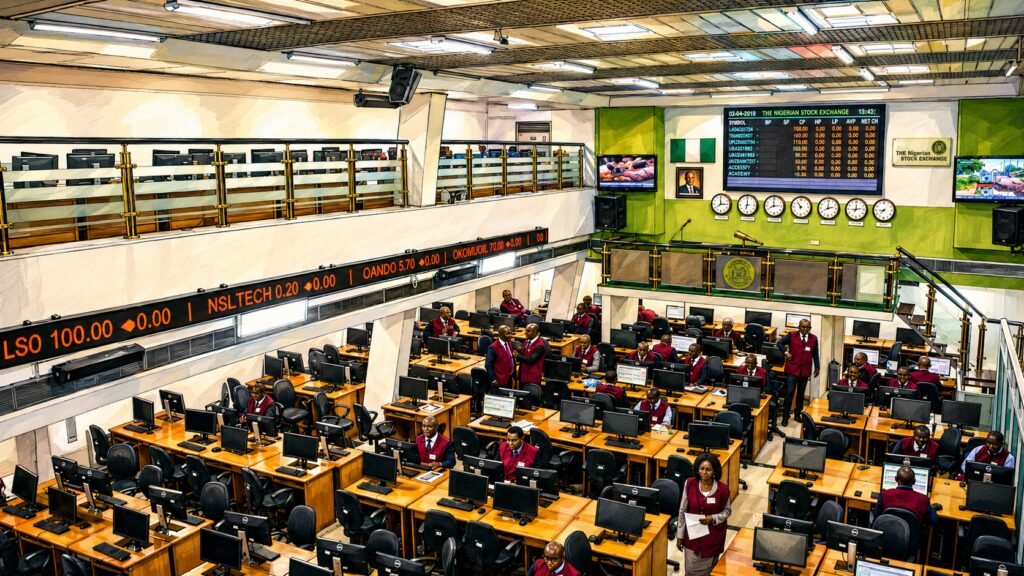
Something unusual happened on the Nigerian Exchange last week that should catch the attention of every active equity investor.
Equity turnover climbed past the ₦110 billion mark across five trading sessions, reaching a significantly elevated level compared with the preceding week.
That level of sustained activity would normally signal fresh conviction building underneath the surface of the market’s main benchmarks.
But the outcome told a very different story, with more than twice as many stocks falling as rising during the entire five-day period.
The trading floor was buzzing with volume through October 23, yet sellers ultimately controlled the direction from the opening bell to the close.
Fifty-five NGX stocks fall as trading volume jumps 22% in one week
Investors exchanged 2.024 billion shares valued at ₦110.773 billion in 173,113 deals during the week ended October 23, 2026, the NGX weekly market report showed.
That represented a 22% surge in volume and roughly a 13% climb in value compared to the preceding week’s trading activity.
The NGX All-Share Index (ASI) still slipped 0.13% to close at 247,222.27 points, dragging market capitalization down to ₦160.519 trillion.
Market breadth told the week’s most damaging story, deteriorating sharply from the numbers posted just seven days earlier on the exchange.
Fifty-five equities lost value while just 20 managed to finish the period in positive territory across the entire listed universe.
The prior week recorded 30 decliners against 50 gainers, meaning the ratio of winners to losers flipped decisively within five sessions.
Highcap Securities vice president David Adonri linked the sell-off to investor repositioning ahead of the Dangote Refinery initial public offering (IPO), the News Agency of Nigeria (NAN) reported.
That shift initially drew liquidity from listed equities on the secondary market, but repositioning pressure eventually faded over the period.
The Financial Services Industry dominated trading activity, accounting for 54.89% of total equity volume and 48.66% of total value on the exchange.
The sector moved 1.111 billion shares worth ₦53.908 billion across 81,787 deals, reinforcing its persistent grip on overall market turnover for the period.
Insurance and banking stocks drag the NGX into a four-week losing run
The 0.13% weekly decline extended a losing streak that has now run across four consecutive weeks without a single positive close on the exchange.
The ASI fell 0.52%, 0.97%, 0.33%, and 0.13% in those successive periods according to NGX weekly reports, though the narrowing weekly losses suggest that selling momentum may be easing.
The exchange had already shed roughly ₦530 billion in market value across just five sessions ending October 16.
More NGX market coverage:
- NGX sheds ₦1.6trn as only one sector survives
- Dangote Cement slides ₦46 in broad blue-chip sell-off
- NGX oil stocks stumble on Q4’s opening bell
Insurance stocks suffered the sharpest sectoral blow, with the NGX Insurance Index tumbling 2.79% to end the week carrying a year-to-date loss of 11.76%.
The Oil and Gas Index fell 2.55%, fully reversing its previous week’s 3.13% gain while still leading all sectors with a 126.04% return for 2026.

The Banking Index slipped 0.67% for the week and has now dropped 7.25% for October, exchange data confirmed.
Aradel Holdings extended its pullback, with the oil producer continuing to trade well below its April all-time high on the exchange.
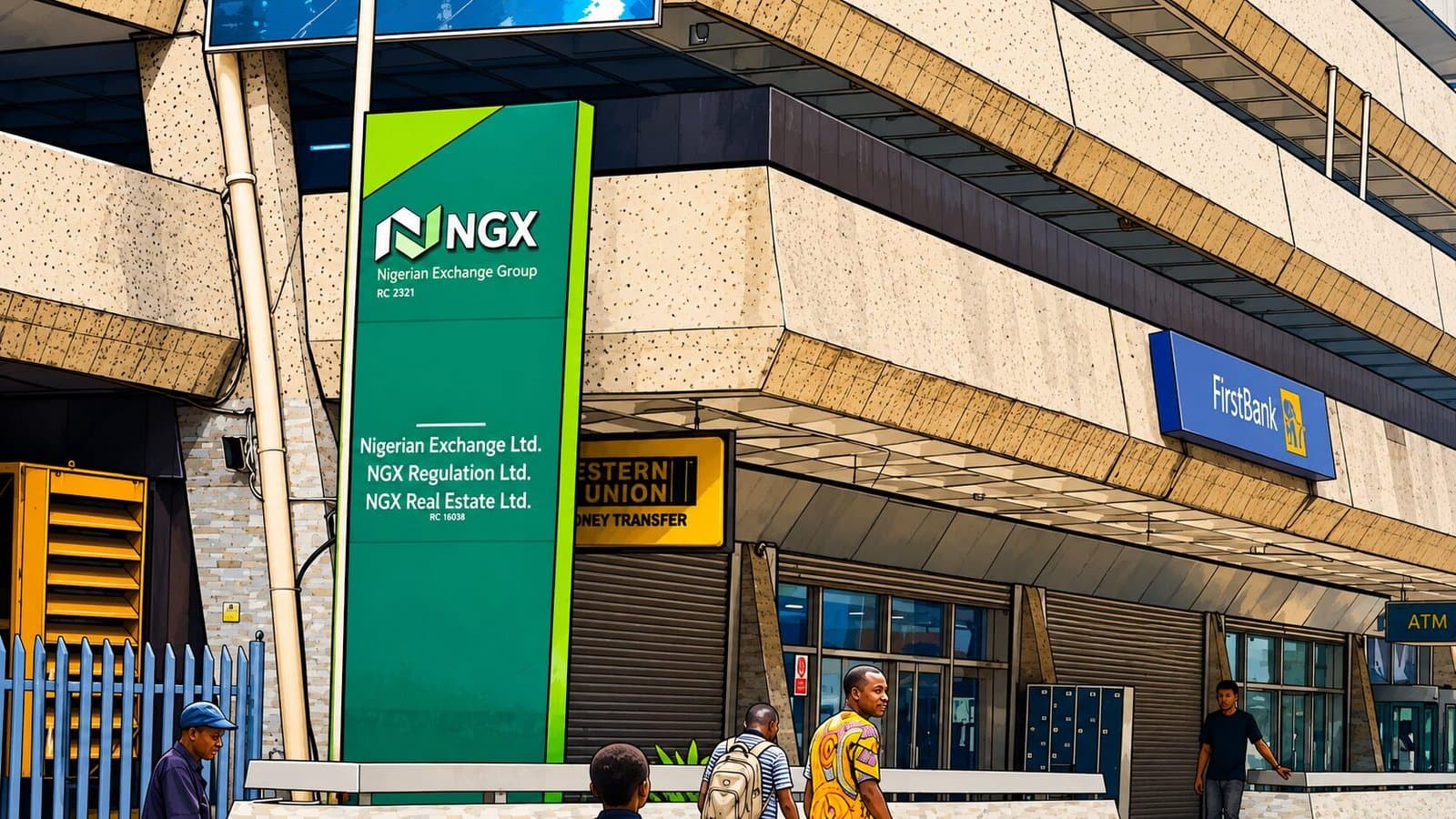
UPDC Real Estate Investment Trust crashed 17.26% to lead the percentage losers, while the Nigerian Exchange Group fell 10.29% and Vitafoam shed exactly 10%.
Fidelity Bank and industrial goods stocks defy the broader NGX selloff
Not every pocket of the market surrendered to sellers during the five trading sessions ending October 23 on the Nigerian Exchange.
The NGX Industrial Goods Index surged 1.95% to become the strongest performing sector, pushing its year-to-date gain to an impressive 87.56% overall.
Dangote Cement and Meyer, which climbed 9.72% to ₦17.50, drove the sector’s outperformance, the exchange data showed.
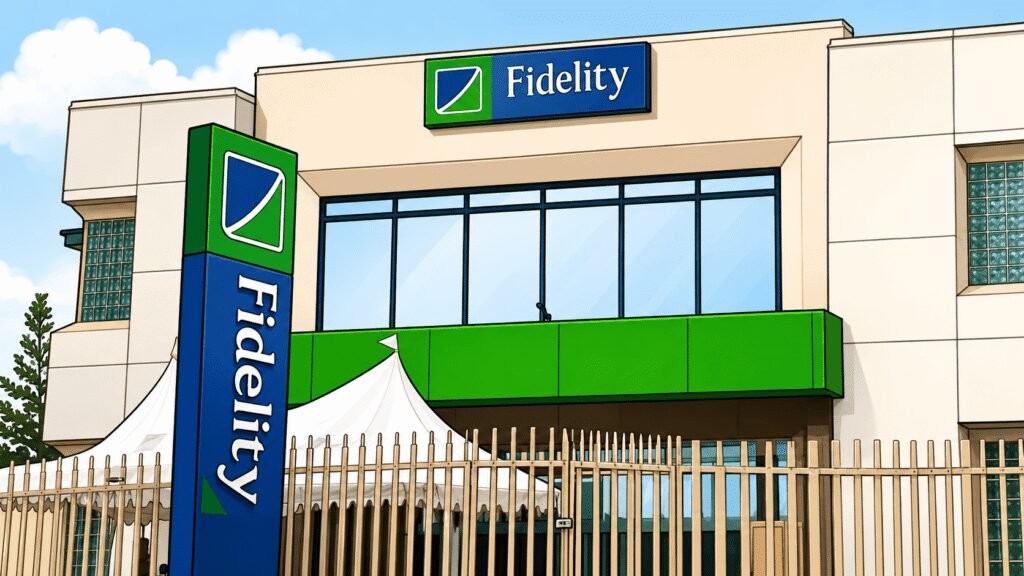
Fidelity Bank emerged as the standout individual name of the period, gaining 14.01% to close at ₦24.00 per share over five sessions.
ABC Transport topped the entire weekly gainers chart with a 20.66% rally from ₦6.05 to ₦7.30, the exchange’s data confirmed.
Nigeria’s broader push to attract investment capital through innovation platforms could support long-term sentiment across the equity market.
The final session on October 23 offered a glimpse of recovery, with trading volume surging to 611.66 million shares across 33,541 deals on the exchange.
That total nearly doubled the daily average for the rest of the week, suggesting buyers stepped back in during the closing session, the NGX weekly report showed.
Cowry Asset Securities attributed the broader market direction to corporate earnings expectations, dividend prospects, and shifting macroeconomic conditions, according to a GhanaMM report citing the firm.
Key figures from the NGX week ended October 23, 2026
- The ASI fell 0.13% to 247,222.27, with market capitalization at ₦160.519 trillion, the NGX weekly report showed.
- Market breadth reversed to 55 decliners versus 20 gainers, from 30 versus 50 the prior week, the report confirmed.
- The Insurance Index dropped 2.79%, the steepest weekly sector decline across all tracked indices, the exchange confirmed.
- The Industrial Goods Index gained 1.95%, the only meaningful upward move in the sector over the period, the report noted.
- Equity turnover climbed 22% in volume to 2.024 billion shares, worth ₦110.773 billion, over the five sessions, the exchange confirmed.