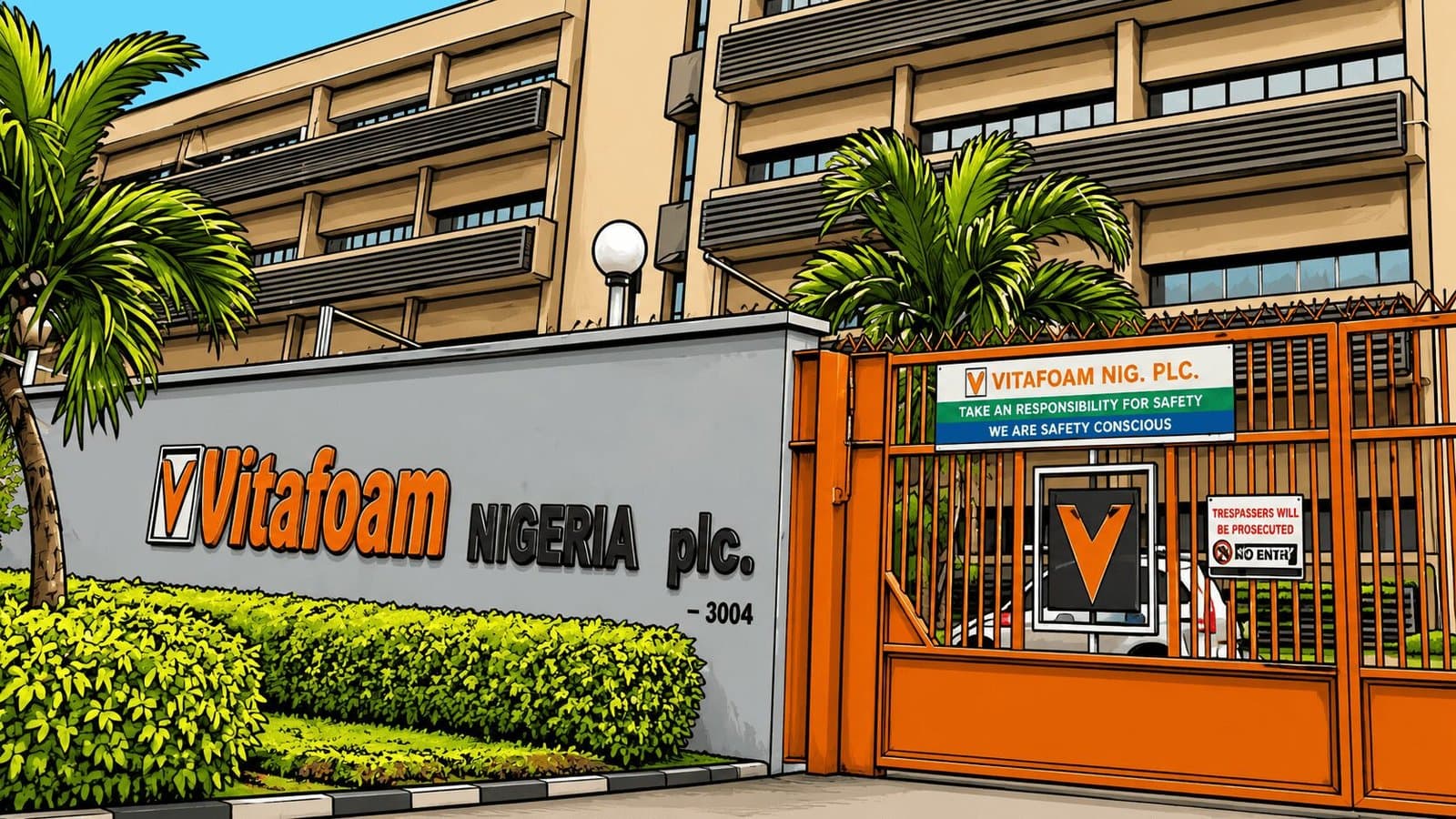

Vitafoam Nigeria opened June 15 at its 52-week high of ₦210 per share, a level first reached on June 10 after an 8.25% single-day rally on the Nigerian Exchange. The milestone was short-lived, as sellers overwhelmed buyers and dragged the stock sharply lower across the board.
The foam manufacturer closed that session at ₦193, shedding more than 8% of its value in a matter of hours. The retreat erased the gains of the prior week, and the pattern behind it reveals a broader story unfolding across the consumer goods segment.
Nearly every major consumer goods name on the exchange posted losses that day, from Nestle Nigeria to NASCON Allied Industries. If you hold any consumer-facing stock on the NGX, the June 15 session deserves a closer look.
Vitafoam drops from 52-week peak as consumer goods stocks retreat on the NGX
Vitafoam opened June 15 at ₦210.00 and closed at ₦193.00, a decline of ₦17 that wiped out recent gains, data from the NGX Daily Official List showed. The stock matched its 52-week high of ₦210.00 at the open, a peak first set on June 10, meaning investors who bought at that level absorbed an immediate 8% loss. Trading volume was modest at just 495 shares, suggesting limited liquidity and heightened price sensitivity on the day.
The selloff extended well beyond Vitafoam into the broader consumer goods sector listed on the Nigerian Exchange. NASCON Allied Industries dropped 9.7% to ₦198.10, while Cadbury Nigeria fell 9.2% to ₦62.65, NGX data confirmed. PZ Cussons declined 8.4% to close at ₦87.00, and Nestle Nigeria shed 6.2% to settle at ₦2,930.20 during the session.
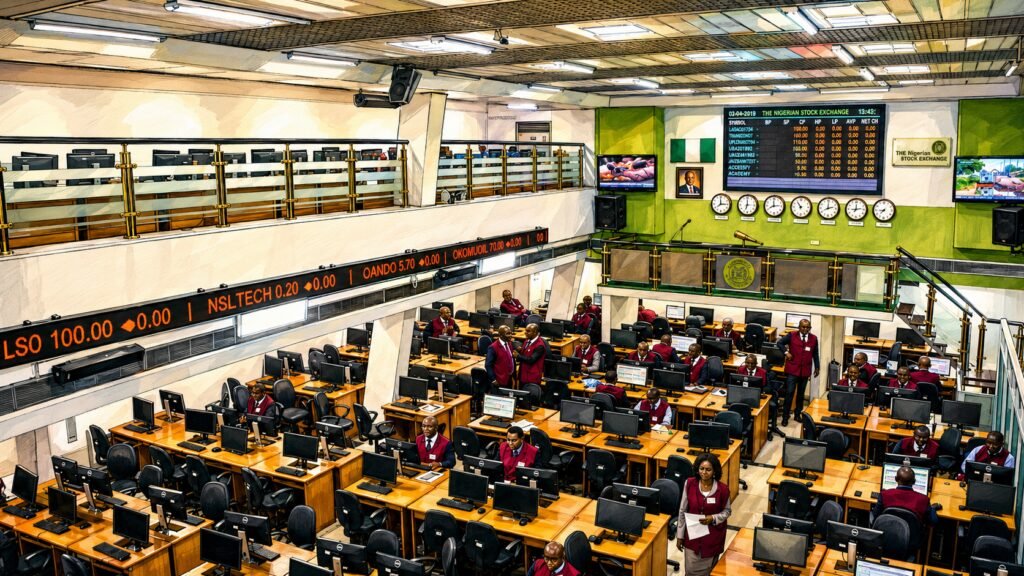
BUA Foods and Unilever Nigeria also posted declines of 5.3% and 5.5% on the day, reinforcing the broad-based weakness. The NGX Consumer Goods Index fell 0.39% during the session, though individual stock losses were far more severe than the index decline suggested.
Profit-taking drives ₦984 billion market cap loss across the Nigerian Exchange
The NGX All-Share Index dropped 0.63% to settle at 243,204.73 points on June 15, erasing ₦984 billion from total market capitalization, Legit.ng reported. Market breadth was firmly negative, with 48 stocks declining against just 15 that posted gains during the session.
Total trading volume fell 39.3% to 744.90 million shares worth ₦36.40 billion across 80,873 deals, reflecting diminished investor appetite. The oil and gas index posted the sharpest sectoral decline at 3.2%, while banking dropped 1.0% and insurance lost 0.68%, Tribune Online reported. Consumer goods retreated 0.39% on the session.
“We expect cautious trading in the local market this week, as investors anticipate the inflation report for May.” — Analysts at Atlass Portfolio Limited, via Legit.ng
Analysts at Cowry Assets Management Limited warned that bearish sentiment may persist, citing continued profit-taking and lingering uncertainties in global energy markets, Leadership reported. The broader market has shed roughly ₦4.9 trillion from its May peak capitalization of ₦160.9 trillion, according to data from Nairametrics and Legit.ng.
Vitafoam’s strong H1 2026 earnings failed to shield the stock from the selloff
The selloff came despite Vitafoam posting its strongest half-year results in recent memory just weeks before the June decline. Revenue rose 10.9% year-over-year to ₦62.9 billion for the six months ended March 31, 2026, African Financials reported. Profit after tax surged 44% to ₦9.64 billion, while earnings per share climbed to 710 kobo from 502 kobo.
A closer look at the second quarter reveals where the improvement was concentrated. In Q2 alone, finance costs fell to ₦447 million from ₦1.44 billion a year earlier. Vitafoam slashed its total borrowings from ₦9.3 billion to ₦3.3 billion during the period, freeing up substantial earnings capacity, Nairametrics reported. Q2 operating profit advanced 19% to ₦8.33 billion, lifting the operating margin to 24% for the quarter.
Qudus Adebara, a research analyst at DLM Capital Group, noted the company maintained a strong balance sheet throughout H1 2026. Total equity grew to ₦40.04 billion from ₦35.55 billion, while total liabilities shrank to ₦26.69 billion from ₦29.72 billion, Adebara wrote in his analysis.
What the NGX correction means for consumer goods investors
The June correction reflects a market adjusting after one of its strongest rallies in any calendar year on record. The benchmark index has delivered a year-to-date return exceeding 55%, making it one of the top-performing equity markets globally, Naija247news reported. That kind of rapid appreciation naturally invites rounds of profit-taking across every sector.
The NGX Consumer Goods Index has lost 1.55% over the past week and carries a year-to-date gain of roughly 18.98%, NGX data showed. That performance trails the broader All-Share Index substantially, indicating consumer goods stocks have lagged banking, industrial, and energy names.
For Vitafoam specifically, the gap between strong earnings growth and a declining share price represents a market recalibrating expectations. The stock surged more than 295% over the past year before the June retreat, TradingView data showed. The 8% single-session drop may signal investors locking in gains rather than questioning the underlying fundamentals.