
Nigeria’s biggest ride-hailing shakeup just sent a clear signal about how the country regulates its fast-growing urban transport sector.
Uber wound down its Nigerian operations on September 2, 2026, ending a 12-year presence that started in Lagos and expanded across major cities. The company attributed the decision to a review of its business priorities and investment focus across the African continent.
But a growing number of industry voices now say the exit has exposed structural weaknesses in how Nigeria regulates mobility platforms. The questions have reached Nigeria’s most powerful consumer regulator and one of its most prominent private-sector policy organizations.
What Dele Oye’s AERE statement reveals about Nigeria’s transport regulation
The Alliance for Economic Research and Ethics (AERE) has called for a comprehensive review of how Nigeria regulates mobility platforms after Uber’s departure.
AERE Chairman Dele Oye said the departure exposed gaps in competition policy, consumer choice, airport operations, and governance transparency. He stressed that regulation must protect public safety without creating unnecessary barriers to competition or inflating transport costs.

Oye pointed to a specific fare disparity to illustrate the problem within regulated airport transport environments across the country. An airport car-hire desk reportedly quoted a traveler ₦30,000 for a ride to Ikeja GRA, while ride-hailing fares cost ₦6,000 to ₦8,000.
He warned against what he described as “regulation by invoice,” where licensing fees and access charges become indistinguishable from revenue collection. Every airport transport requirement should identify the safety risk it addresses and the compliance cost it imposes, Oye stated.
FAAN’s airport transport framework becomes the central flashpoint
The dispute between the Federal Airports Authority of Nigeria (FAAN) and ride-hailing operators preceded Uber’s exit and became a flashpoint. FAAN temporarily restricted e-hailing pickups at its airports while finalizing a licensing framework, drawing traveler complaints over higher fares.
The agency cleared Bolt to resume airport operations on August 27, 2026, after both parties reached an agreeable operational framework, The Guardian Nigeria reported.
FAAN Managing Director Olubunmi Kuku denied responsibility for Uber’s exit, saying the company’s departure reflected its own economic considerations. She said FAAN had received passenger complaints about intimidation and fare exploitation at airports, Vanguard reported.
“I work for the Federal Airports Authority of Nigeria, and my first responsibility is to ensure that our passengers are safe, protected, and have a seamless passenger experience.” — Olubunmi Kuku, FAAN Managing Director

Oye acknowledged that airports are legitimate security environments but insisted that regulatory treatment across all operators must be evidence-based. He called for comparable rules covering driver identification, vehicle standards, insurance, and incident reporting for every licensed platform.
FCCPC probe raises the consumer protection question after Uber’s exit
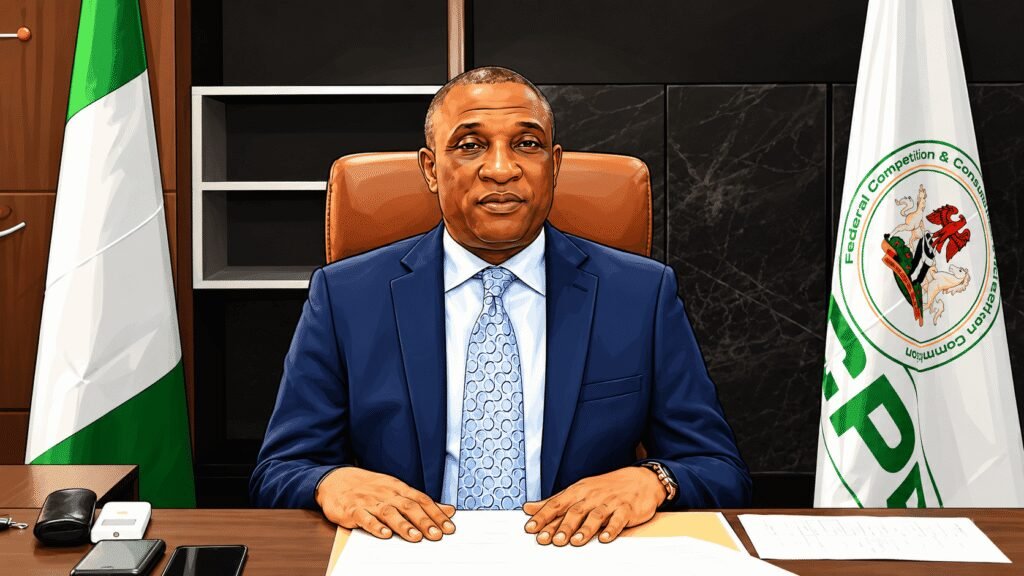
Nigeria’s Federal Competition and Consumer Protection Commission (FCCPC) has opened an investigation into how Uber handled its market departure. The probe focuses on whether the company left customers with unresolved payments, outstanding services, or other unfulfilled consumer obligations.
FCCPC Chief Executive Tunji Bello confirmed the investigation, saying officials were examining the circumstances surrounding Uber’s withdrawal from Nigeria.
“We are looking into the manner of their exit, particularly in respect of unfulfilled services to the customers,” Bello told Bloomberg, BusinessDay reported.
Uber has said its Help Center will remain available until September 23 for riders and September 24 for drivers with outstanding issues. Oye urged the FCCPC to continue its examination but cautioned that the investigation should not be treated as evidence of wrongdoing beforehand.
Bolt and inDrive now battle for Uber’s share of a $450 million market
Uber’s departure has intensified competition in a ride-hailing market that research firm Ken Research valued at $450 million in 2025. The firm projects the sector could reach $982 million by 2032 at a compound annual growth rate of 11.8%, MSME Africa reported.
“The market share capture conversation is not new to us. It has always been the result of our investment in a market we deeply understand,” Oladimeji Timothy, inDrive Nigeria Country Representative, told MSME Africa.
But capturing Uber’s share is not as simple as switching apps, because driver earnings, fuel costs, and vehicle maintenance remain pain points. Drivers staged coordinated protests against ride-hailing platforms in March 2026 over fares and operating expenses in Lagos, BusinessDay reported.
Key facts about Uber’s Nigeria exit
- Uber wound down operations on September 2, 2026, after 12 years in Nigeria, Techpoint Africa reported.
- The FCCPC opened a consumer protection investigation into the manner of Uber’s withdrawal, BusinessDay reported.
- FAAN cleared Bolt to resume airport operations on August 27 after reaching an operational framework, The Guardian Nigeria reported.
- Nigeria’s e-hailing market was valued at $450 million in 2025 and is projected to reach $982 million by 2032, MSME Africa reported.