
Beta Bionics cleared a regulatory hurdle for Mint on September 14, but the approval immediately created a short-term problem for its existing business. Prospective iLet buyers now have another option coming early next year, giving some customers a reason to delay purchases.
The company expects that delay to reduce 2026 revenue by as much as $10 million. For investors, the bigger question is whether Mint can replace that lost sales volume quickly enough once commercialization begins.
The updated forecast therefore turns a product launch into a near-term revenue test, while giving Beta Bionics a new position in the growing tubeless insulin pump market.
Beta Bionics now expects full U.S. commercialization of Mint in the first quarter of 2027, earlier than the second-quarter target announced in May. The company said manufacturing capacity should support at least 1.5 million disposable Mint units during 2027.
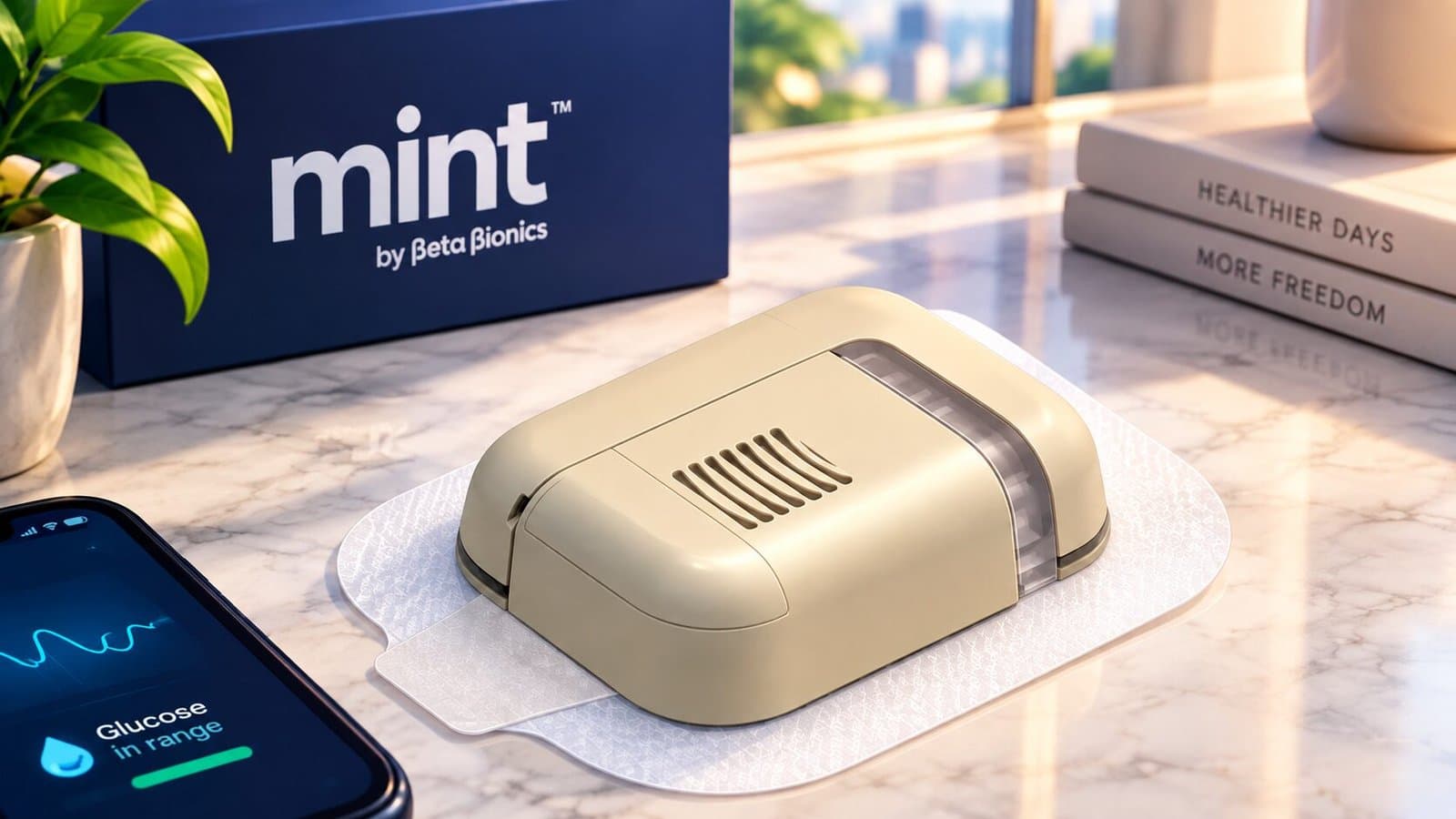
Mint uses a reusable controller with disposable components, offering three days of wear and a 200-unit insulin reservoir. The system does not require recharging and can connect with Dexcom and Abbott continuous glucose monitors.
The company plans to sell Mint exclusively through pharmacy channels, where about 40% of insured U.S. lives are expected to have access at launch. Beta Bionics expects that coverage to reach at least 50% during the first year.
That distribution strategy matters because pharmacy sales already represent an expanding part of Beta Bionics’ business. In the second quarter, pharmacy benefit plan sales reached $11.6 million, up 153% from the same period last year.
Key numbers behind the Mint launch
- Full-year 2026 revenue guidance cut to $121 million to $126 million from $131 million to $136 million (Beta Bionics, September 14, 2026)
- Fourth-quarter 2026 revenue deferral of up to $10 million attributed to buyers awaiting MINT (Beta Bionics, September 14, 2026)
- Full-year 2026 gross margin guidance reiterated at 58.5% to 59.5% (Beta Bionics, September 14, 2026)
- 2027 production target of at least 1.5 million disposable MINT units (Beta Bionics, September 14, 2026)
- Full MINT commercialization expected in the first quarter of 2027 (Beta Bionics, September 14, 2026)
- BBNX closed at $16.73, up 0.97% on the day, against a 52-week range of $8.80 to $32.71 (Stock Analysis, September 14, 2026 close)
- Insulet cut full-year 2026 U.S. Omnipod growth guidance to 17% to 19% from 20% to 22% (Insulet, August 5, 2026)
Why the revenue cut matters for investors
The forecast reduction is unusual because Beta Bionics is not citing weaker demand for its products. The company expects some customers to wait for Mint, delaying purchases that would otherwise have been recorded through iLet.
Beta Bionics said it expects Mint to recapture the deferred revenue during 2027. That makes the timing of adoption more important than the headline $10 million reduction alone.
The company also left its 2026 gross margin outlook unchanged at 58.5% to 59.5%. It expects Mint to modestly reduce gross margin in 2027 before improving the long-term margin profile as production reaches scale.
Sean Saint, Beta Bionics’ president and CEO, said the new platform is intended to expand customer choice across hardware formats and dosing experiences.
“Delivering choice is critical to the community we serve,” — Sean Saint

The next financial reports will show whether customers who delayed iLet purchases return to Beta Bionics when Mint becomes commercially available.
Insulet faces a new tubeless pump competitor
Mint also changes the competitive landscape for Insulet, whose Omnipod platform has led the tubeless insulin pump market.
Insulet reported second-quarter revenue of $801.7 million on August 5, up 23.5% from a year earlier. Omnipod revenue reached $795.9 million, while U.S. Omnipod revenue increased 20.1%.
Despite that growth, Insulet reduced its 2026 U.S. Omnipod growth forecast to 17% to 19%, from 20% to 22%. The company linked the revision to lessons from expanding Omnipod among people with type 2 diabetes.
Mint will compete in the same pharmacy channel, adding another product to a segment that already has strong adoption. MedTech Dive previously reported that Leerink Partners, analyst Mike Kratky viewed launch timing and manufacturing scale as key investor concerns around Beta Bionics.
The competitive field is also expanding beyond Beta Bionics. Medtronic’s MiniMed business submitted its MiniMed Fit patch pump to the FDA in September, while Tandem continues developing a tubeless version of its Mobi pump.
Beta Bionics now has a 2027 execution test
Beta Bionics has accepted a weaker 2026 revenue outlook in exchange for bringing Mint to market sooner than previously expected.
The company expects up to $10 million of sales to move from the fourth quarter of 2026 into 2027, while maintaining its gross margin forecast. Its 1.5 million-unit production capacity target gives investors another measurable benchmark for the launch.
The company is also pursuing FDA clearance for 3D Intelligence, its next-generation insulin dosing algorithm. Beta Bionics expects iLet 3D to reach the U.S. market by the end of 2026, subject to clearance, with Mint 3D planned alongside the full Mint launch.
For investors, the key developments are now commercial rather than regulatory. Mint has cleared the FDA, but revenue recovery will depend on manufacturing, pharmacy access, customer adoption, and the company’s ability to convert delayed iLet demand into Mint sales.