
Corporate travel budgets keep climbing, but the systems companies use to track that spending have barely evolved. Between the flight booking and the expense report, billions of dollars slip through workflows that no single tool controls.
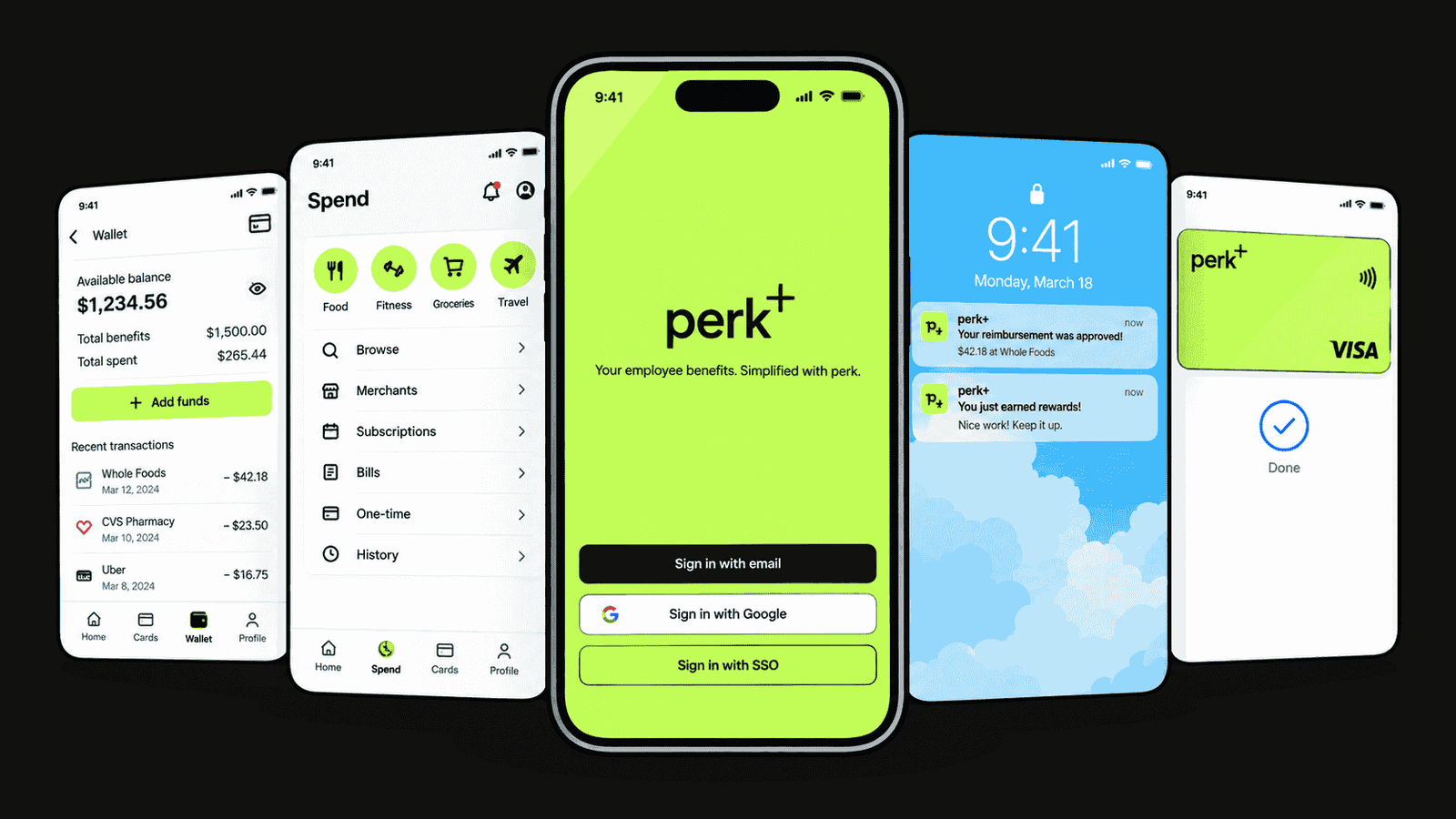
That gap sits at the center of Perk’s latest move. The London-and-Boston-based fintech, formerly known as TravelPerk, launched its Perk Spend product in the United States on September 15, 2026, expanding from travel booking into full expense management for American employers.
The timing is deliberate. The US already accounts for 30% of Perk’s new global business, and its existing customers route more than $1 billion in annual travel transactions through the platform.
Perk targets a 28% domestic booking surge with its unified spend platform
Domestic travel bookings from US companies using the platform jumped 28% year over year between January and August 2026, while international return flights departing the US rose 14% over the same window, Perk’s proprietary booking data showed.
A Censuswide survey of 2,000 US professionals, conducted on Perk’s behalf in April 2026, found that one in four American companies still operate without a formal expense management tool. Nearly a third of those surveyed said they continue to file expense reports by hand, creating bottlenecks as trip volumes rise.
The broader expense management software market is valued at roughly $8.62 billion in 2026 and is projected to reach $19.24 billion by 2034, growing at a 10.55% compound annual rate, Straits Research reported, reflecting a structural shift toward cloud-based automation.
“US companies are spending more on travel every year, but the tools to manage it aren’t keeping up,” Avi Meir, co-founder and chief executive officer at Perk, said in the company’s announcement.

How Perk evolved from a travel booker into a $300 million fintech contender
Perk’s US expansion did not happen overnight. The company, founded in Barcelona in 2015, spent a decade building a corporate travel booking engine before acquiring Swiss spend management firm Yokoy in early 2025, Business Travel News Europe reported. That deal gave Perk the technology to merge travel, expenses, invoices, and card payments under a single data layer.
The company rebranded from TravelPerk to Perk in November 2025, pairing the name change with a Forrester Consulting study showing that hidden administrative tasks cost businesses $1.7 trillion annually across six major economies. By its US spend launch, Perk had crossed $300 million in annualized revenue.
In Europe, up to 40% of new Perk deals now bundle travel and spend management together, and the company expects similar adoption stateside. Its automation engine processes 96% of travel bookings and 90% of expense reports without human intervention.
The $423 billion US travel market Perk aims to consolidate
Perk’s bet arrives as global business travel spending reaches a record $1.71 trillion in 2026, with the United States alone accounting for $423 billion, the Global Business Travel Association (GBTA) forecast in August 2026.
“The big story this year is that companies haven’t stepped away from travel, but they are increasingly more selective and productivity-focused,” Suzanne Neufang, chief executive officer of the GBTA, said when presenting the index.

Corporate travel budgets globally are set to rise 5% in 2026, with US travel managers specifically projecting a 4.9% increase, a Morgan Stanley survey of 160 travel managers overseeing roughly $5 billion in combined spending found. Jamie Rollo, who leads Morgan Stanley’s Europe Travel and Leisure Research, said the survey responses could indicate that corporate travel remains resilient despite mounting economic and geopolitical headwinds.
What Perk Spend offers US companies
- Bring Your Own Corporate Card (BYOC): Companies connect existing card programs so travel and non-travel transactions reconcile through one system (Perk)
- Direct Reimbursement: Employees who pay out of pocket receive funds directly to their bank account after automated receipt matching and approval (Perk)
- Global Per-Diem Automation: Smart limits pull in country-level and city-level per diem rates that adjust automatically on multi-country trips (Perk)
- Native ERP Integrations: Direct connections with NetSuite, Microsoft Dynamics, QuickBooks, and SAP S4 (Perk)
“Finance leaders don’t want to choose between control and flexibility, they want both,” Nikita Miller, president of product and technology at Perk, said in the announcement.

Perk’s US launch signals a broader reckoning for fragmented expense tools
Perk’s expansion underscores a widening mismatch between how much US companies spend on travel and how poorly many of them track it. With GBTA projecting global spending to surpass $2 trillion by 2030, companies still relying on disconnected systems face mounting pressure to modernize.
The fintech has already earned recognition on CNBC’s 2026 list of the world’s top fintech companies and won PayTech’s Best Spend Management award. Whether Perk can replicate its European bundling success in a more competitive American market will depend on how quickly finance teams prioritize consolidation over the patchwork tools many of them inherited.