
Chip stocks led a market selloff on Monday after top AI leaders floated the idea of slowing the technology’s development. This caused investor anxiety over fears that AI spending cannot be sustained.
Nvidia Corp. shares fell 3.4%, trading at $210.96 at the close of trading. It saw modest gains in premarket hours, recovering to around $212.
It maintains a price-to-earnings ratio of about 26.5, in line with the S&P 500, against a PEG ratio of just 0.57. This implies the stock is cheap relative to its projected earnings growth.
Broader sell-off plagues market
Other assets saw similar losses.
- Micron Technology dropped as much as 5.3%
- Broadcom and Advanced Micro Devices each slid over 4%.
- The Philadelphia Semiconductor Index tumbled to 5.9%, even as it is up more than 55% for the year.
- The Nasdaq Composite closed down 147 points, or 0.6%, at 26,186,
- S&P 500 and Dow Jones Industrial Average lost 0.5% and 0.3%, respectively.
- South Korea’s SK Hynix slid 7.6% as well.
AI leaders sound alarm for a slowdown
The selloff can be attributed to an essay published over the weekend by Anthropic CEO Dario Amodei, who called on the industry to “pace the frontier” of AI development.
Amodei argued that while AI has its upside, its risks are serious enough to warrant deliberate restraint.
He pointed to dangers ranging from loss of control over advanced systems to misuse in cyberattacks and bioterrorism.
His statement was surprisingly supported by other leaders. OpenAI CEO Sam Altman and xAI’s Elon Musk endorsed Amodei’s position, with Musk writing on X that “Dario is right.”

The warnings compounded a more alarming signal from the AI research community.
A former Google DeepMind researcher, Bilal Chughtai, said he believes AI “has the potential to kill us all,” adding that the industry needed to “pace AI development to a speed that society can handle,” Reuters reported.
Markets pitch pace change, not a total pullback
The topic of debate over the past couple of months has not been whether AI development would continue, but how fast, and who stands to lose if the pace slows.
Adam Crisafulli, head of advisory firm Vital Knowledge, said the “pick and shovel” companies supplying AI infrastructure bore the brunt of early selling.
Also, David Royal, chief financial and investment officer at Thrivent, told CBS News markets are still trying to “figure out what the pace is,” and that the reaction so far didn’t alarm him, even as certain chip names were “getting hit pretty hard.”
Meanwhile, not everyone thinks a slowdown is the right call. Bank of America semiconductor analyst Vivek Arya dismissed the selloff as just background noise.
He noted the sector’s earnings growth is running about seven times faster than the overall market despite trading near similar valuation multiples.
“We view these events as noise relative to a secular market where AI-capex could surge 3x to $3tn+ by decade-end, Arya said in a Bloomberg interview
Longer-term, some strategists are still cautious. Capital Economics expects the S&P 500 to reach 8,250 by year-end but warned that the “AI bubble” could burst in 2027. Crisafulli also said the current AI spending pace is “absolutely not sustainable.”
Trump pushes back
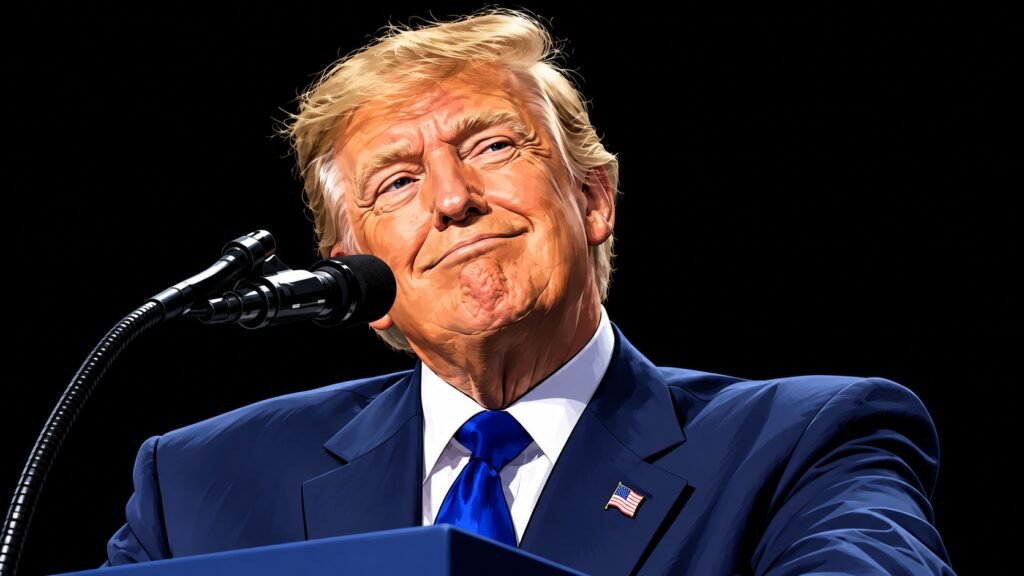
U.S. President Donald Trump totally dismissed the concerns. Speaking by phone with Nvidia CEO Jensen Huang during a live appearance at the All-In Summit in Los Angeles, President Donald Trump dismissed the AI-risk warnings as “a hoax.”
He opined that data centers make “people wealthy” and states wealthy, and compared AI’s economic role to that of oil over the next two decades, FOX Business reported.
He suggested that calls for slower development served the interests of critics who don’t want to see the U.S. succeed in the technology race, adding that “the robots are not going to be taking over the world.”
Trump shared more comments on his Truth Social, calling fears that AI could “destroy humanity” a hoax and criticized calls for tighter regulation of the industry.
A debate still unresolved
Markets are currently split between Monday’s warnings. One, an overdue check on an unsustainable spending cycle.
Secondly, noise in a buildout that, by Wall Street’s own estimates, still has years of growth ahead of it.
All of this comes just as the 10-year Treasury yield topped 5% for the first time since 2023, days ahead of an expected Federal Reserve rate decision
The upcoming FOMC meeting could shed more light on where the industry could likely lean.