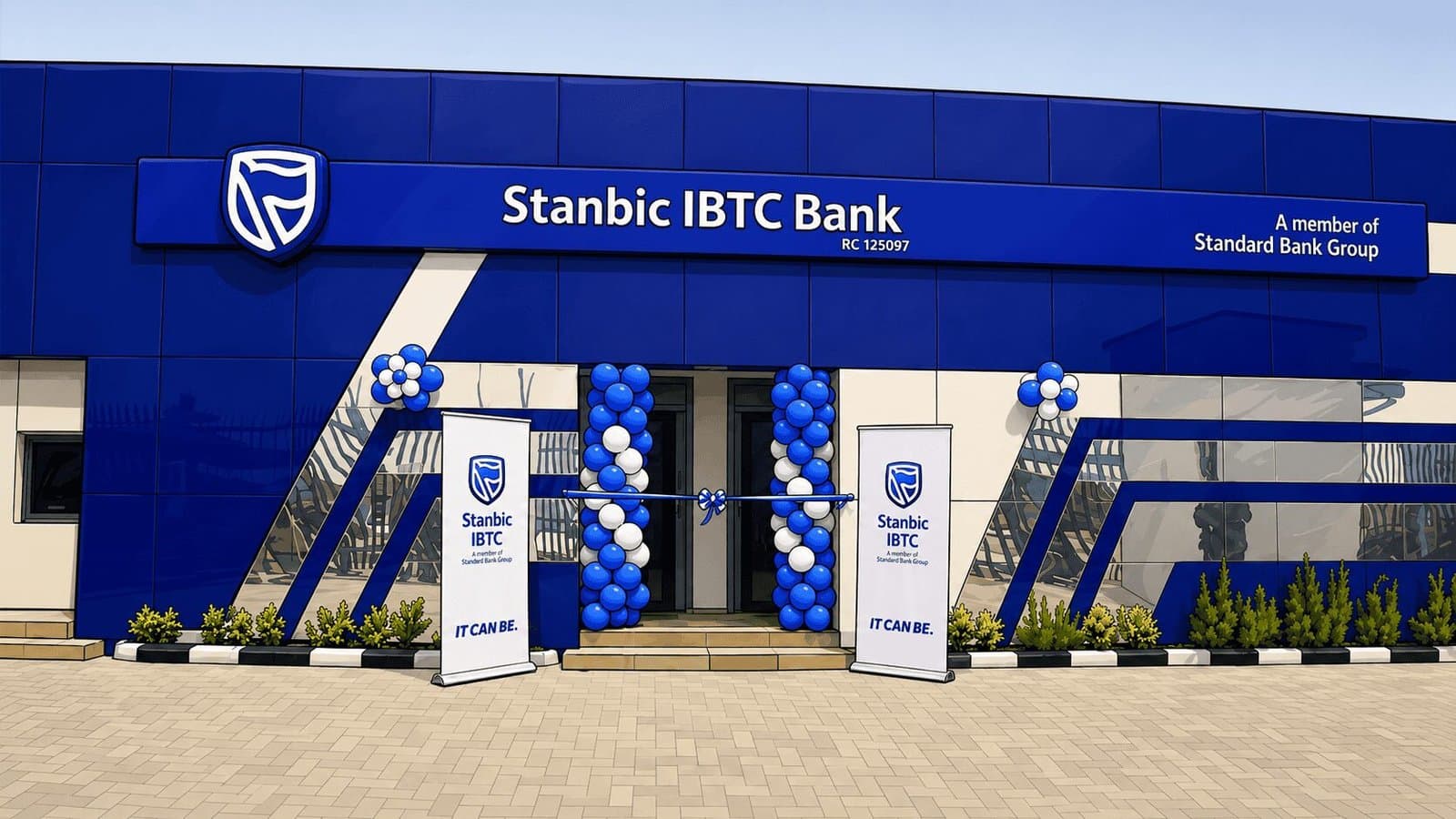

You do not often see a fund lose 10% and still carry a 905% year-to-date gain, but that is where the Stanbic IBTC ETF 30 landed on June 17, 2026.
The passively managed exchange-traded fund, which tracks the 30 largest and most liquid companies on the Nigerian Exchange, closed at ₦3,078 per unit. That represented the maximum single-session decline allowed under the exchange’s rules, triggered on the back of just one recorded trade.
The fund’s year-to-date return still sits above 905%, a figure that sounds like a misprint until you look at its 52-week low of ₦295.30. Yet the June 17 drop tells a more complicated story, one that involves thin volume, structural market limits, and a persistent gap between price and underlying value.
Stanbic IBTC ETF 30 slams into NGX’s daily price floor
The fund dropped ₦342 from its previous close of ₦3,420 to settle at ₦3,078, a decline of exactly 10%, according to the NGX Daily Official List for ETFs. The exchange’s daily price band caps any security’s movement at 10% in either direction during a single session.
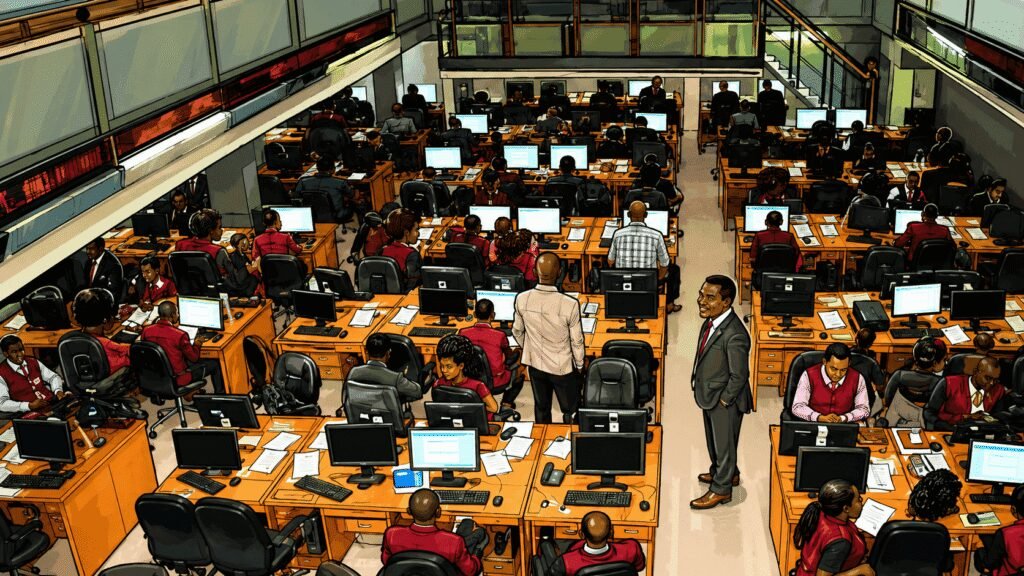
The session data shows only one unit changed hands at the closing price of ₦3,078, with a bid of ₦3,500 and an ask of ₦3,078. The inverted spread, where the bid sits above the ask, reflects the 10% price floor locking the traded price below what willing buyers were offering. Unlike major global exchanges that use circuit breakers to temporarily pause and reopen trading, the NGX enforces a hard cap that simply halts further price movement for the rest of the session, as EBC Financial Group noted in a January 2026 analysis of Nigerian market mechanics.
That means a single aggressive sell order on a low-volume fund can push the price straight to the daily floor, and no further price discovery occurs until the next trading session opens.
Stanbic IBTC ETF’s 905% gain masks a volatile 2026 trajectory
The fund opened 2026 at ₦969.22 per unit on January 2 and staged an aggressive rally, reaching an all-time high of ₦7,003.96 within roughly six weeks, according to an analysis by Gilbert Ayoola published in MarketForces Africa. That rally was powered by thin liquidity, aggressive retail participation, and momentum-driven bid stacking.
The problem was that while the ETF traded above ₦7,000, its net asset value remained below ₦3,700, creating a premium of nearly 90% over the portfolio’s actual worth. When valuation-conscious participants began taking profits, the correction was swift and severe, pulling the price back toward fundamentals.
“Nigerian ETFs are currently responding to the law of gravity: what goes up must surely come down. Let’s see how deep the correction will be. Still trading at a significant premium to their NAV.” — Ayodeji Ebo, Managing Director, Optimus by Afrinvest, told BusinessDay in February 2026

The fund’s 52-week range tells the entire story in two numbers: a low of ₦295.30 and a high of ₦7,003.96. That spread of over 2,200% between the annual extremes underscores how disconnected price action can become from the underlying NGX 30 Index.
Three NGX ETFs hit the 10% floor on June 17, 2026
The Stanbic IBTC ETF 30 was not the only exchange-traded fund to reach the maximum daily decline on June 17. Two other funds also fell exactly 10%, according to the NGX Daily Official List: the SIAML Pension ETF 40 closed at ₦5,507.92 with a 1,786% year-to-date return, and the Greenwich Alpha ETF settled at ₦802.71.
The broader NGX All-Share Index maintained a 55.5% year-to-date gain, closing at 241,984.80 on June 16, Naija247news reported. That divergence between the broader equity market and the ETFs tracking its components points to a liquidity problem, not a fundamental one.
What thin liquidity means for NGX ETF investors
Nigeria’s entire exchange-traded fund market consists of just 12 listed products, with a combined net asset value of ₦18.08 billion at the end of 2025, according to Nairametrics, citing Securities and Exchange Commission valuation reports. That total is smaller than many individual ETFs listed on exchanges in the United States or Europe.
Weekly trading value across all 12 NGX ETFs hovered between ₦815 million and ₦1.18 billion in May 2026, NGX Pulse noted. At those volumes, a handful of trades can drive double-digit price swings that have no connection to movements in the underlying index constituents.
Key data points from the June 17, 2026 ETF session
- Stanbic IBTC ETF 30 (STANBICETF30): Closed at ₦3,078, down 10%, YTD return 905.88%
- SIAML Pension ETF 40 (SIAMLETF40): Closed at ₦5,507.92, down 10%, YTD return 1,786.21%
- Greenwich Alpha ETF (GREENWETF): Closed at ₦802.71, down 10%, YTD return 133.14%
- Vetiva Banking ETF (VETBANK): Closed at ₦29.48, up 5.17%, YTD return 140.65%
- Vetiva S&P Nigeria Sovereign Bond ETF (VSPBONDETF): Closed at ₦245.00, up 5.60%, YTD return -20.97%
Stanbic IBTC ETF’s trajectory hinges on NGX structural reform
The fund tracks the NGX 30 Index, which holds the 30 most capitalized and liquid securities on the Nigerian Exchange, with an expense ratio of 2.71%, TradingView data confirmed. The broader market continues to benefit from an ongoing bank recapitalization cycle and growing investor participation, with total NGX market capitalization sitting around ₦155.2 trillion.
A recent analysis published in Nairametrics argued that the exchange’s ±10% daily cap does not function as a true circuit breaker used on the NYSE or London Stock Exchange. Instead of pausing and reopening trading to allow fresh price discovery, the NGX rule locks the price at the cap for the remainder of the session.
For you as an investor watching Nigeria’s ETF space, the numbers might look extraordinary on paper. A 905% gain that can evaporate by 10% on a single trade tells you everything about how differently this market behaves from more liquid exchanges elsewhere.