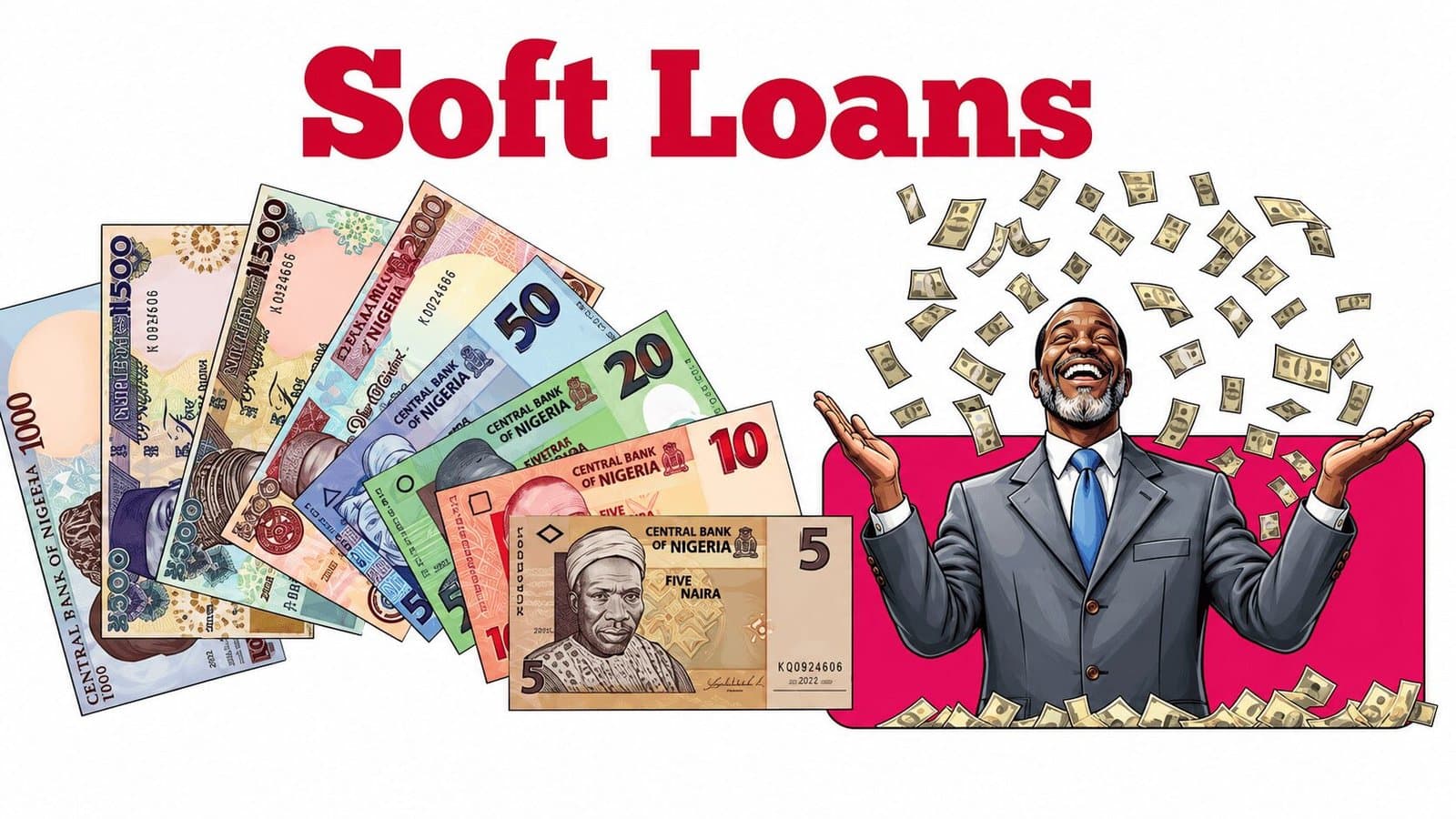

Search for a zero-interest loan in Nigeria online, and you will find dozens of fintech apps promising free borrowing with instant approval. Most of those promises collapse once processing fees, mandatory service charges, and penalty structures are factored into the total repayment amount. The Federal Competition and Consumer Protection Commission blacklisted 45 digital lending apps in January 2026 for violating consumer protection rules, Legit.ng reported.
Genuine interest-free loans in Nigeria do exist, but they come from a narrow set of sources that most borrowers completely overlook. Government-backed micro-credit programs, registered cooperative societies, and non-interest banks licensed by the Central Bank of Nigeria represent the only legitimate paths to truly zero-cost borrowing in the country.
Your search for a soft loan without interest in Nigeria should begin with these programs, not with flashy download buttons on unregulated apps. This guide maps where each option lives, who qualifies, and what the real costs look like beyond the headline promise of free money.
GEEP 3.0 remains Nigeria’s largest interest-free micro-loan program
The Renewed Hope Government Enterprise and Empowerment Programme 3.0 provides collateral-free, interest-free micro-loans to petty traders, market vendors, and smallholder farmers across Nigeria. The Tinubu administration officially launched the third phase of this initiative on August 21, 2025, under the National Social Investment Programme Agency, the Nigerian Journal of Sustainability Research reported.
More on credit and loans:
- Personal loans without collateral in Nigeria: banks, salary loans, and how to qualify
- NELFUND student loan: login, eligibility, and repayment guide
GEEP operates through three targeted products designed for different segments of Nigeria’s informal economy, each with distinct loan ceilings. TraderMoni targets petty traders and artisans with initial amounts that increase after successful repayment over a six-month interest-free cycle. MarketMoni serves market women and small business owners through registered associations, typically offering between ₦50,000 and ₦100,000 per beneficiary.
FarmerMoni provides agricultural financing of up to ₦300,000 for small-scale farmers, with a grace period before repayment begins. Applicants must be Nigerian citizens aged 18 or older with a valid Bank Verification Number and an active bank account. Current 2026 rollout reports indicate pilot disbursements with loan amounts commonly reaching up to ₦100,000, subject to further review, CutOffMark reported.
Cooperative society loans offer near-zero borrowing costs for members
Cooperative thrift and credit societies have operated as an alternative financial system in Nigeria for decades, filling gaps left by commercial banks. These member-owned organizations pool regular contributions from their members and redistribute those funds as loans at minimal or zero cost to qualifying participants.
The CBN Multipurpose Cooperative, for instance, extends interest-free loans to qualified members up to four times per year, according to its published bylaws. Many workplace and community cooperatives across Nigeria follow a similar model, with monthly rates ranging from zero to about 3%.
Joining a registered cooperative typically requires a registration fee and consistent monthly savings over a qualifying period of three to six months. Loans are secured by fellow members serving as guarantors rather than physical collateral, keeping the process accessible for informal workers. The federal government launched a nationwide advocacy program in May 2026 to establish a dedicated Cooperative Bank of Nigeria to strengthen the entire sector, MSME Africa reported.
Non-interest banks provide Sharia-compliant financing across Nigeria
Nigeria’s non-interest banking sector has grown well beyond a niche market, with five full-fledged Islamic banks now licensed by the Central Bank of Nigeria. Jaiz Bank, TAJ Bank, Lotus Bank, The Alternative Bank, and Summit Bank all offer financing products structured around profit-sharing rather than fixed interest charges.
These banks do not charge conventional interest on any financial product, instead using trade and partnership-based instruments, the Daily Trust reported. Both the bank and the borrower share in the risk and the return under profit-sharing arrangements governed by Sharia-compliant principles.
Jaiz Bank, the sector’s largest player, has funded thousands of small businesses across agriculture and trading through its ethical financing windows, New Telegraph reported. Borrowers should understand that Sharia-compliant financing is not entirely cost-free, even though no conventional interest applies. Profit margins, administrative charges, and risk-sharing structures still create a total financing cost that varies by product and institution.
NDE and state empowerment funds bundle training with soft capital
The National Directorate of Employment runs multiple training and resettlement schemes for unemployed Nigerians under the Renewed Hope Employment Initiative program. NDE’s vocational skills development, entrepreneurship training, and community programs provide stipends between ₦10,000 and ₦35,000, with starter kits distributed to participants upon completion, NigeriaStartupAct reported.
The Phase 3 NDE program opened registration on July 23, 2026, targeting 21,824 beneficiaries across all 36 states and the FCT, Tribune Online reported. Applications are submitted through the official NDE registration portal at nderegistrationportal.ng, with training scheduled to run for six months across approved facilities. Several state governments also operate their own youth empowerment loan and grant programs with soft terms or zero interest requirements for qualifying applicants.
Why most “no interest” fintech apps in Nigeria still cost you money
A loan app advertising zero percent interest in Nigeria is almost certainly collecting revenue through mechanisms that function identically to interest charges. Processing fees deducted upfront from the disbursed amount, mandatory insurance charges, and short repayment windows that trigger steep penalties combine to create effective borrowing costs that rival conventional bank loans in total repayment amounts.
“Access to credit for the average Nigerian remains almost zero, noting that real access only exists when loans are affordable, timely, and structured around realistic repayment terms.” — Adedeji Olowe, Founder and CEO of Lendsqr and Board Chairman of Paystack, speaking to Finance in Africa

The FCCPC’s Digital, Electronic, Online, and Non-Traditional Consumer Lending Regulations of 2025 now require all digital lenders to display the complete loan cost before a borrower accepts any offer. Licensed platforms must show the total amount payable, including principal, fees, and penalties, before the borrower taps the accept button. Any app hiding the total repayment figure until after approval is violating the 2025 regulations, nairaCompare noted.
Before downloading any app promising a free government loan in Nigeria or an interest-free loan in Nigeria, verify the platform’s status on the official FCCPC register at fccpc.gov.ng.
Key options for interest-free and near-zero-interest borrowing in Nigeria
- GEEP 3.0 (TraderMoni, MarketMoni, FarmerMoni): Interest-free micro-loans up to ₦300,000 for traders, vendors, and farmers through NSIPA.
- Registered cooperative societies: Zero to 3% monthly rates on member loans, secured by guarantors, governed under the Cooperative Societies Act of 2004.
- Non-interest banks (Jaiz, TAJ, Lotus, Alternative, Summit): Profit-sharing financing with no conventional interest, licensed by the CBN.
- NDE Renewed Hope Employment Initiative: Training stipends and starter kits for artisans, youths, and graduates through NDE.
- State youth empowerment funds: Soft-term or zero-interest loans administered through state agencies in Lagos, Kaduna, and other participating states.