

Nigeria’s merchandise trade balance delivered a number in the first quarter of 2026 that underscored a dramatic shift in the country’s external sector dynamics. The country posted a ₦7.55 trillion trade surplus between January and March, a figure that dwarfs the ₦1.71 trillion recorded in the previous quarter.
That 341% quarter-on-quarter jump, confirmed by the National Bureau of Statistics on June 8, reflects a convergence of forces you need to understand. Exports climbed modestly, but the real story unfolded on the import side of the national trade ledger.
Total imports fell 21% from Q4 2025, driven almost entirely by a single category that collapsed faster than anything in recent trade history. If you follow Nigeria’s external sector, the composition of this surplus matters far more than the headline number.
The shift signals something structural rather than seasonal, and the implications stretch well beyond a single quarter’s data release from Abuja.
Petroleum import collapse drives Nigeria’s ₦7.55 trillion trade surplus
The headline number is staggering, but the mechanism behind it is even more revealing for Nigeria’s trade trajectory going forward. Imports of refined petroleum products crashed 85% compared to Q1 2025, falling from ₦5 trillion to just ₦748 billion, the NBS Foreign Trade report confirmed.
Total exports reached ₦21.17 trillion in the quarter, representing 60.85% of all merchandise trade and a modest 2.77% increase over Q1 2025. Total imports, by contrast, dropped to ₦13.62 trillion, their lowest reading since the second quarter of 2024, the report showed.
The refined petroleum import plunge is tied directly to the Dangote refinery’s expanding production. Jet fuel entered Nigeria’s top five exports for the first time in Q1 2026, while gasoline and diesel emerged as leading exports to African markets, the NBS report showed. The Middle East conflict that erupted in late February 2026 accelerated the trend by disrupting global oil supply routes, BusinessDay reported.
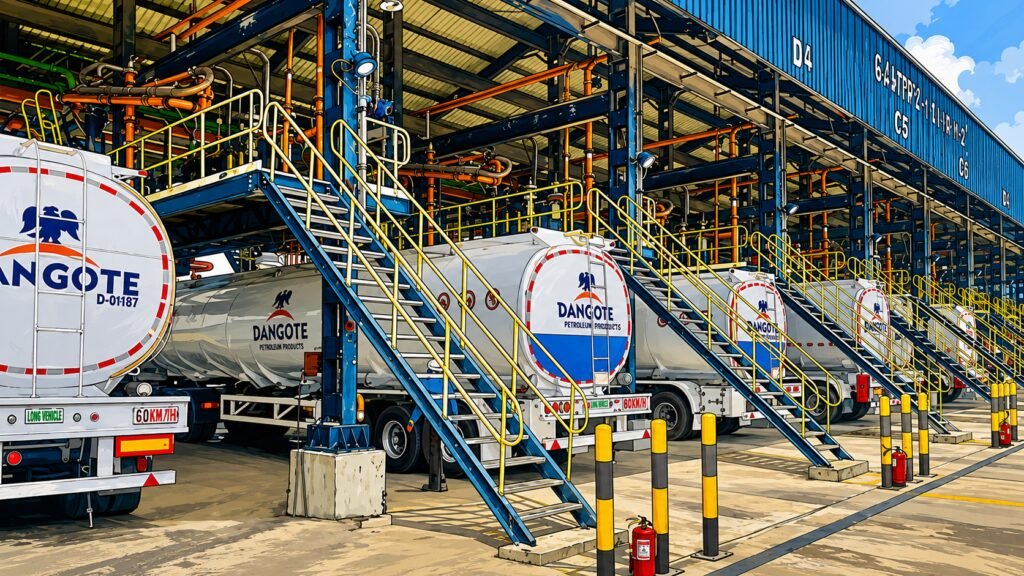
“Because of the blockade, demand for Dangote products, even to the United States, increased. Countries that weren’t importing from Dangote before now do so to compensate for the loss of supply from the Middle East.” — Ayo Teriba, economist, in an interview with BusinessDay
Crude oil remained the single largest export commodity at ₦11.2 trillion, accounting for 52.92% of all exports during the first quarter. Non-crude oil exports, however, surged to ₦9.97 trillion, representing 47.08% of the total, the NBS report indicated.
China and India dominate Nigeria’s Q1 2026 trading partner landscape
The geographic composition of Nigeria’s trade reveals a heavy reliance on two Asian powerhouses that together shape the country’s external balance. China supplied 37.42% of all imports valued at ₦5.1 trillion, while India absorbed 13.09% of exports worth ₦2.77 trillion, the report showed.
Europe emerged as the largest regional destination for Nigerian goods, receiving exports worth ₦7.93 trillion or 37.44% of the total export value. Asia followed closely at ₦6.42 trillion, while exports to African countries totaled ₦4.06 trillion, the NBS data confirmed.
On the import side, the United States accounted for 20.60% of total imports valued at ₦2.81 trillion, the second-largest source behind China. Machinery and transport equipment led all import categories at ₦5.01 trillion, representing 36.79% of the total import bill.
Non-oil exports rise but agricultural shipments decline 31%
The trade data carries a mixed signal for Nigeria’s diversification agenda that policymakers have promoted over the past several years. Non-oil exports reached ₦3.19 trillion in Q1 2026, accounting for 15.05% of total exports, the NBS reported.
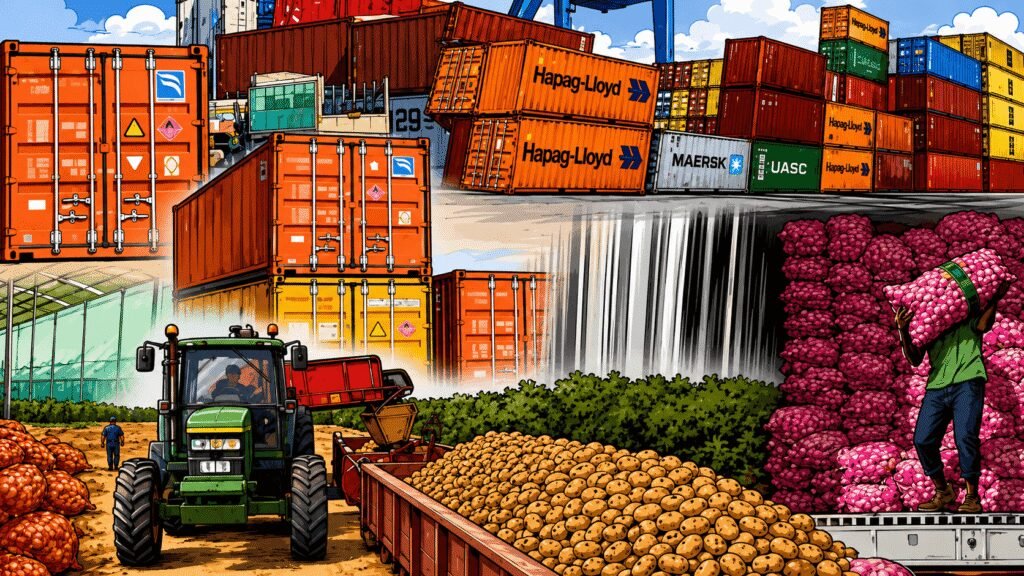
Agricultural exports fell 31.20% to ₦1.17 trillion compared to ₦1.70 trillion in Q1 2025, with cocoa beans, sesame seeds, and soybeans dominating the basket. Raw material exports provided a counterweight, jumping 46.83% to ₦1.53 trillion, driven primarily by urea shipments to Brazil.
Key trade figures from Nigeria’s Q1 2026 NBS report
- Total trade: ₦34.79 trillion, with exports comprising 60.85% of the total, the NBS reported.
- Trade surplus: ₦7.55 trillion, up 341% from ₦1.71 trillion in Q4 2025, the NBS confirmed.
- Refined petroleum product imports: Fell 85% year-on-year to ₦748 billion from ₦5 trillion, the NBS data showed.
- Crude oil exports: ₦11.2 trillion, representing 52.92% of total exports, the report indicated.
- Top export destination: India at ₦2.77 trillion, followed by France at ₦1.97 trillion, the NBS stated.
- Top import source: China at ₦5.1 trillion, accounting for 37.42% of all imports, the NBS confirmed.
Nigeria’s West African trade surplus signals growing regional dominance
Within West Africa, the trade imbalance in Nigeria’s favor is enormous and growing, a dynamic with significant implications for regional economics. Exports to West African nations reached ₦2.27 trillion while imports from the region totaled just ₦76.54 billion, the NBS data showed.

Togo was the largest West African buyer of Nigerian goods at ₦1.08 trillion, followed by Côte d’Ivoire at ₦505 billion and Senegal at ₦352 billion. Crude oil, diesel, and jet fuel dominated the export basket to the region, reflecting Nigeria’s growing role as a refined fuel supplier to its neighbors, the NBS data showed.
What Nigeria’s record trade surplus means for the rest of 2026
The data points to a structural shift in Nigeria’s trade composition rather than a one-off seasonal gain. The 85% collapse in refined petroleum imports and the emergence of fuel products among Nigeria’s top exports reflect changes in domestic refining capacity that the NBS data captured for the first time this quarter.
March 2026 alone generated ₦8.88 trillion in exports, the highest single-month figure shown in NBS data going back to January 2024, driven partly by Middle East conflict disrupting global oil supply routes, BusinessDay noted. Whether that extraordinary pace holds depends on geopolitical factors outside Nigeria’s control.
The 31% decline in agricultural exports, however, introduces a vulnerability that deserves attention over the next several quarters of trade data releases. If commodity prices for cocoa and sesame weaken further, the non-oil export pillar could soften even as petroleum-related shipments continue strengthening.