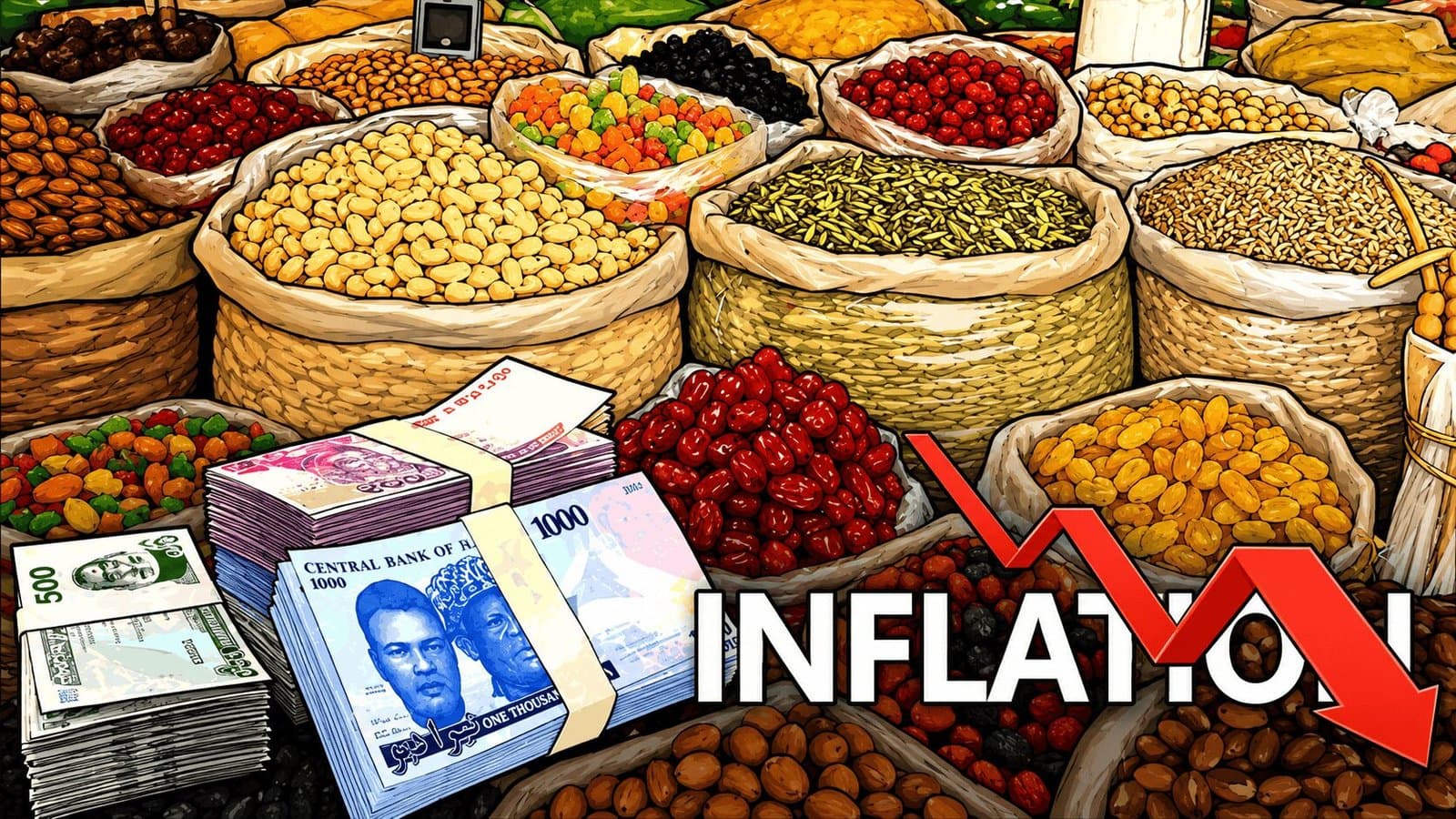

Grocery bills and fuel costs kept climbing for Nigerian households during May as the country’s annual inflation rate rose for a third consecutive month.
The National Bureau of Statistics pegged headline inflation at 15.93% for May, extending an upward streak that reversed brief price relief earlier this year.
Yet the data contain a twist that complicates the narrative, buried deeper inside the monthly figures within the full CPI report.
The monthly rate of price increases fell to 1.75% from 2.13% during April, hinting at a potential slowdown beneath the surface of the headline number.
What the NBS Consumer Price Index reveals about May’s uptick
Nigeria’s Consumer Price Index reached 140.7 points during May, a 2.4-point jump from April’s 138.3, the NBS confirmed in its latest CPI release.
The 15.93% annual reading is the highest since November 2025 and extends an upward climb that began after inflation fell to 15.06% during February.
Even so, the current figure stands far below the 26.06% recorded during May 2025, confirming broad disinflation across the past twelve months of data.
The 12-month rolling average for headline inflation dropped to 18.36%, compared with 30.57% recorded during the same period one year ago, the report noted.
The Central Bank of Nigeria held its benchmark interest rate at 26.50% during the 305th Monetary Policy Committee meeting in May, Vanguard reported.
That decision reflected the central bank’s measured pace of easing, which began with a 50-basis-point cut in September 2025 and continued with a second reduction in February 2026.
“Headline inflation moderated on a month-on-month basis from 2.13% in April to 1.75% in May, while food inflation eased from 3.63% to 2.98%. This suggests that although inflationary pressures persist, the pace of price escalation is slowing.” — Dr. Muda Yusuf, CEO, Centre for the Promotion of Private Enterprise (Punch Newspapers)

Food and staple costs continue to squeeze Nigerian households
Food inflation accelerated to 16.96% on an annual basis during May, up from 16.06% in April, and contributed 6.38 percentage points to headline inflation.
The NBS identified onions, maize, egusi, water yam, cassava flour, crayfish, fresh pepper, and tomatoes among the items with the steepest price increases.
On a monthly basis, however, food inflation eased to 2.98% from the 3.63% recorded in April, offering temporary relief for household grocery budgets.
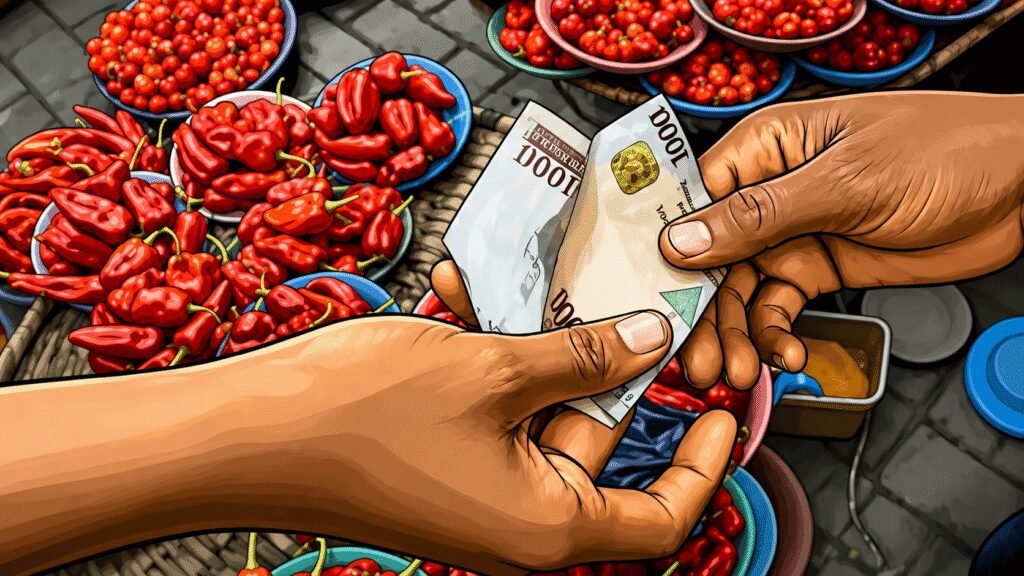
The 12-month average food inflation rate stood at 16.99% for the period ending May 2026, down sharply from 33.21% recorded one year earlier.
Core inflation, which excludes farm produce and energy prices, reached 16.82% annually but surged to 1.94% on a monthly basis from 1.03% in April.
Geopolitical tensions amplify domestic price pressures across Nigeria
External factors compounded Nigeria’s inflation challenge during May as global commodity benchmarks continued to push higher across energy and food markets.
The World Bank Energy Index climbed to 146.4 points from 130.6 points, while the FAO Food Price Index rose 1.6% to 130.7 points, Nairametrics reported.
Segun Kuti-George, Deputy President of NASSI, linked the rising costs directly to the Iran conflict and disruptions in global petroleum trade, Punch reported.
Dr. Femi Egbesola, President of the Association of Business Owners of Nigeria, noted the inflation impact from geopolitical events would take months to ease.

Egbesola estimated a lag of four to six months before any easing of international tensions translates into lower prices for Nigerian consumers.
The CPPE’s policy brief identified food, transport, housing, energy, health, and education as contributing roughly 87% of the headline inflation figure.
Insecurity across farming communities has also compounded the challenge, with displaced farmers and broken supply chains driving food costs higher, Dr. Yusuf noted.
State-level inflation gaps reveal uneven price pressures across Nigeria
The national average obscures enormous differences in how inflation affects individual states, with some regions facing price pressures nearly eight times worse than others.
Yobe recorded the highest annual inflation at 24.94%, followed by Anambra at 23.29% and Sokoto at 22.60%, the NBS report confirmed.
At the opposite end, Niger State posted just 3.07% annual inflation, followed by Plateau at 7.10% and Edo at 7.73% in the same period.
For food costs specifically, Adamawa led the country with 29.62% annual food inflation, while Borno experienced food deflation of 6.53% during May.
The gap between the highest and lowest state-level inflation rates exceeds 21 percentage points, underscoring the stark regional disparities Nigerian consumers now face.
Key takeaways from Nigeria’s May 2026 CPI data
- Headline inflation rose to 15.93% annually, up from 15.69% in April, marking the third consecutive monthly increase in the year-on-year rate.
- Monthly inflation fell to 1.75% from 2.13%, suggesting the pace of price growth may be slowing even as the annual figures continue climbing.
- Food inflation hit 16.96% annually and contributed 6.38 percentage points to the headline figure, remaining the single largest inflation driver overall.
- Core inflation stood at 16.82% annually, while the monthly rate jumped sharply to 1.94% from 1.03% in April, signaling underlying cost pressures.
- Services inflation reached 17.92% annually, the highest among all newly introduced sub-indices under the rebased CPI framework using 2024 as its base year.
- The 12-month average headline inflation fell to 18.36% from 30.57% one year earlier, reflecting continued broad disinflation across the Nigerian economy overall.