
If you held a basket of Nigerian exchange-traded funds heading into June 10, 2026, the closing bell probably left a mark on your portfolio. Six of the twelve ETFs tracked on the Nigerian Exchange closed the session in negative territory, with three products dropping by more than 8%. The damage was not evenly distributed; it clustered around bond-linked, gold-linked, and growth-index products that had experienced choppy trading throughout May 2026.
The session served as a sharp reminder that thin liquidity in the ETF segment can amplify price swings well beyond what the underlying assets justify. For retail investors still finding their footing in passive products, the numbers on this particular trading day raised an uncomfortable question about risk exposure.
What happens when a rising market suddenly gives back ground across multiple asset classes in a single afternoon on the NGX?
Sovereign bond ETF and Meristem Growth lead the steepest declines on June 10
The Vetiva S&P Nigeria Sovereign Bond ETF fell 9.62% to close at ₦245 on June 10, marking one of its sharpest single-session declines this year. The Meristem Growth ETF dropped 9.70% to ₦138, extending a punishing stretch that has left the fund down 66.75% year to date, according to the NGX Daily Official List.

The NewGold ETF, which tracks international gold prices, tumbled 8.97% to settle at ₦114,702 after trading just a single unit during the entire session. Greenwich Alpha ETF shed 7.83% to close at ₦906.02, and the Vetiva Griffin 30 ETF slipped 1.68% to ₦117 on only 854 units traded.
The bond ETF’s decline came on the same day that average yields on Federal Government of Nigeria bonds climbed 13 basis points to 16.68%, Naija247news reported. That move signaled weaker demand for sovereign debt as investors sought greater compensation for holding long-term naira-denominated assets.
Nigeria’s ETF segment still faces a persistent liquidity challenge
The 12 exchange-traded funds listed on the NGX represent a relatively young corner of the Nigerian capital market that has grown steadily over recent years. Total net asset value across all ETFs climbed 41.7% from ₦12.77 billion in 2024 to ₦18.08 billion in 2025, according to SEC valuation reports cited by Nairametrics.
Nairametrics Research has repeatedly noted that ETF price movements on the NGX do not always reflect the true value of underlying holdings accurately. Thin trading volumes allow small or concentrated transactions to push prices sharply in either direction, creating swings that often overstate fundamental changes.
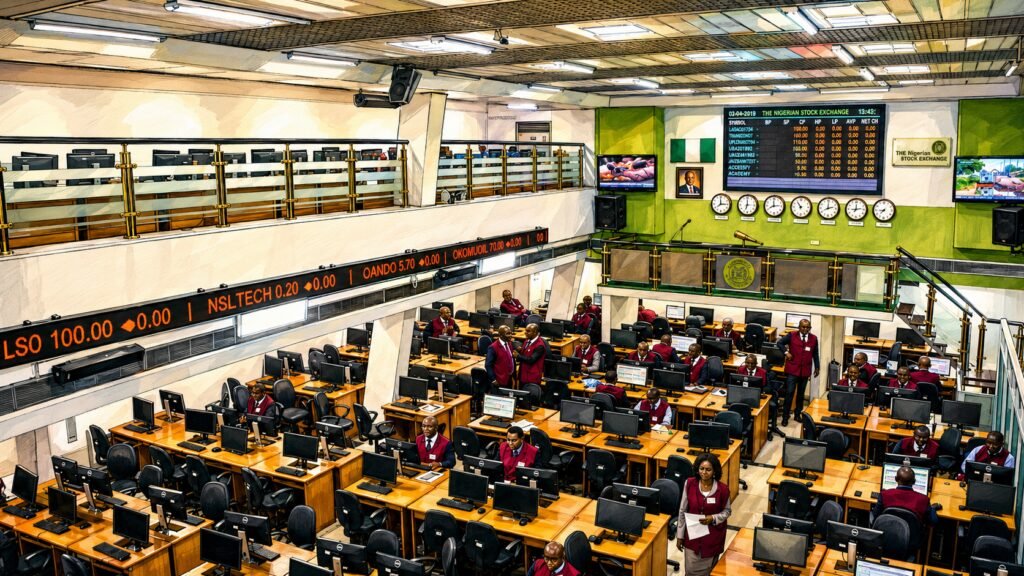
The SIAML Pension ETF 40, for instance, traded just 99 units on June 10 yet posted a 6.67% gain, the Daily Official List showed. That pattern mirrors the fund’s history of extreme price volatility driven by illiquidity rather than meaningful shifts in the pension index it tracks.
Five ETFs posted gains as Meristem Value and Stanbic IBTC defied the selloff
Not every fund on the board finished lower, and the contrast between winners and losers highlighted meaningful divergence within the ETF segment on June 10. The Meristem Value ETF surged 9.01% to ₦144, while the Stanbic IBTC ETF 30 gained 8.13% to settle at ₦4,325, based on the NGX data.
The Vetiva Consumer Goods ETF rose 6.27% to ₦58.98, and the Vetiva Banking ETF climbed 3.64% to ₦30.44 during the same session. Each of those funds tracked equity indices tied to sectors that benefited from the broader NGX rally earlier in 2026, which pushed the All-Share Index up more than 57% year to date.
Investment banker Tajudeen Olayinka noted that improved liquidity and sustained investor appetite for naira assets helped underpin gains in select equities throughout the first half of 2026. He indicated, however, that he expects a more moderate performance in June as the market waits for additional catalysts, Leadership reported.
“Nigeria’s ongoing reforms are strengthening domestic capital formation, and the market is responding positively.” — Temi Popoola, GMD/CEO, Nigerian Exchange Group, commenting on the broader NGX market’s record turnover, via Leadership

What the June 10 session signals for Nigeria’s growing ETF market
Aruna Kebira, managing director of Globalview Capital, noted that strong fundamentals in manufacturing stocks and macroeconomic stability have continued to support overall market sentiment through the first quarter of 2026. That support, however, has not been distributed evenly across passive investment products on the exchange, Leadership reported.
For the Vetiva S&P Nigeria Sovereign Bond ETF specifically, the June 10 decline reflects a broader fixed-income selloff that pushed benchmark FGN bond yields from 16.31% at the start of June to 16.68% in just over a week, according to data tracked by Naija247news. Rising yields translate directly into falling bond prices, which in turn drag the value of any fund holding those instruments.
NGX Group CEO Temi Popoola stressed at the 2026 Nairametrics Capital Market Awards that expanding participation in the capital market remains a critical priority for the exchange. He noted that wealth creation must extend beyond a small segment of society to reach a broader population of Nigerians, Nairametrics reported.
Key data from the June 10 NGX ETF session
- Vetiva S&P Sovereign Bond ETF: Fell 9.62% to ₦245, among the steepest single-session losses on the NGX (source: NGX Daily Official List).
- Meristem Growth ETF: Dropped 9.70% to ₦138, deepening its year-to-date decline to 66.75% (source: NGX Daily Official List).
- NewGold ETF: Slid 8.97% to ₦114,702 on just one unit traded, highlighting the illiquidity distortion in gold-linked products (source: NGX Daily Official List).
- Meristem Value ETF: Rose 9.01% to ₦144, diverging sharply from its growth-focused sibling fund (source: NGX Daily Official List).
- Stanbic IBTC ETF 30: Gained 8.13% to ₦4,325, reflecting continued demand for broad-market equity exposure (source: NGX Daily Official List).
- FGN bond yields: Average benchmark yield climbed 13 basis points to 16.68% on June 10, one of its sharpest daily rises recently (source: Naija247news).