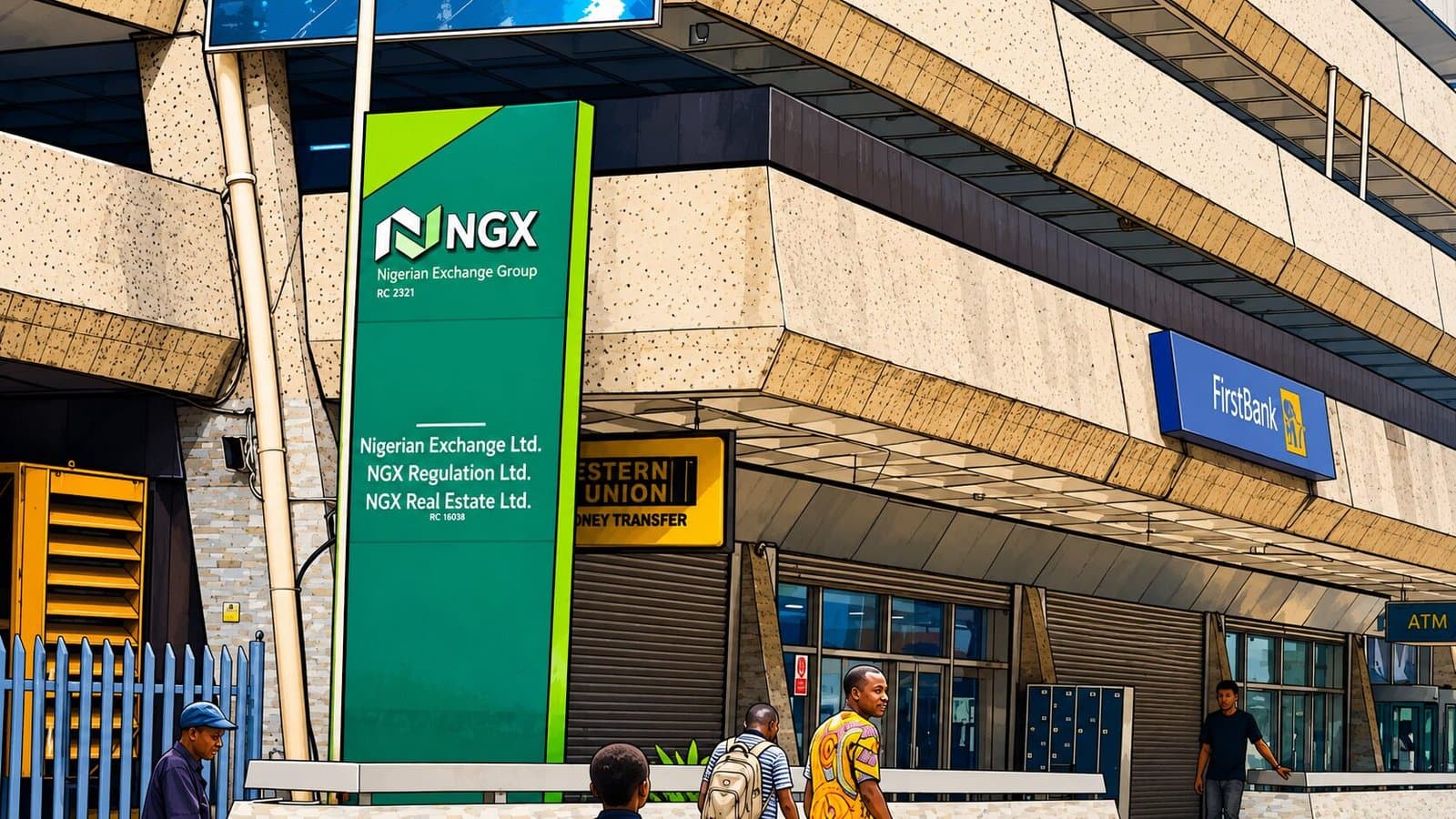

Something unusual happened on the Nigerian Exchange (NGX) during the week ended September 4, 2026, and it went beyond the numbers. Investors poured enough capital into equities to add ₦3.72 trillion to the market’s total value in just five trading sessions. That kind of weekly gain does not show up without a catalyst, and the one behind this rally has been building quietly for months.
The NGX All-Share Index (ASI) closed the week ended September 4, 2026, at 246,992.44 points after climbing 2.36% from the prior week’s close of 241,298.47 points. That pushed year-to-date returns to 58.72%, putting the Nigerian bourse on track for one of its strongest annual performances in recent memory. Yet the figure that stopped traders in their tracks was not the index level itself.
Aggregate market capitalization settled at ₦159.56 trillion, leaving the exchange less than ₦500 billion from the ₦160 trillion mark. For context, the NGX opened 2026 with a total market value below ₦100 trillion, which means the market has created roughly ₦60 trillion in shareholder wealth since January. The pace of that expansion is accelerating, and the question now is whether the next milestone will hold.
The story behind these numbers involves a global index decision, a dramatic surge in trading volume, and a handful of heavyweight stocks that carried the market higher while dozens of smaller names struggled to keep up.
NGX trading volume surges 74% as FTSE Russell reclassification fuels buying
The most striking detail from the week was not the price movement but the volume behind it. Investors traded 4.36 billion shares worth ₦210.33 billion across 223,284 deals, a staggering 74% increase in volume from the prior week’s 2.51 billion shares. That kind of jump signals conviction, not speculation, and the driver is no secret: FTSE Russell confirmed on August 27 that Nigeria’s reclassification from “Unclassified” to “Frontier Market” status would take effect at the market open on September 21, 2026, the index provider announced in a press release.
Financial services stocks dominated the activity, accounting for 82.10% of total turnover by volume with 3.58 billion shares valued at ₦88.64 billion, the NGX weekly market report showed. Three stocks alone carried more than half of the exchange’s entire traded volume: Fortis Global Insurance, United Bank for Africa (UBA), and Access Holdings collectively accounted for 52.46% of all shares exchanged during the five-day period.
Market breadth confirmed that the rally had broad participation, with 56 equities advancing against 35 decliners and 56 unchanged. That represents a sharp reversal from the prior week, when only 24 stocks advanced and 55 declined, which suggests that buying pressure spread across multiple sectors rather than concentrating in just a few names.
The buying spree reflects what analysts at Lagos-based CardinalStone described as a pre-positioning phase. “We expect the reclassification to provide support to the Nigerian equities market, with stocks previously linked to the index likely to see notable traction between the announcement and the effective date of September 21, 2026,” Philip Anegbe and his research team at CardinalStone noted in April, following the initial reclassification announcement, in a report covered by BusinessDay.
Oil and gas stocks lead NGX sectors with a 112% year-to-date return
The sectoral breakdown from the week reveals where the real money is flowing. Four of five major NGX sector indices closed higher, with the Oil and Gas Index delivering the week’s strongest performance at 9.10%, pushing its year-to-date return to an extraordinary 111.86%. That means oil and gas stocks have more than doubled in value since January, driven by sustained buying in Seplat Energy, Oando, and Aradel Holdings.
The NGX Banking Index rose 3.58% during the week, extending its year-to-date gain to 73.90%. Zenith Bank climbed 6.3% to ₦128.60 and First HoldCo added 3.4% to ₦149.95, according to Nairametrics. Insurance stocks gained 3.85%, and the Consumer Goods Index advanced 3.52% on the back of a stunning 18.80% weekly surge in Nigerian Breweries shares to ₦82.45, the exchange’s report confirmed.
The lone laggard was the Industrial Goods Index, which slipped 0.35% as profit-taking weighed on select counters. On the individual stock level, Royal Exchange led all advancers with a 25% gain, while Beta Glass recorded the week’s steepest decline at 17.38%. NASCON Allied Industries fell 15.90% and Red Star Express dropped 13.62%, both suggesting that pockets of selling pressure persist even in a broadly bullish environment.
Nigeria’s return to the FTSE Russell index follows a three-year absence after the country was dropped to “Unclassified” status in September 2023. Persistent foreign exchange shortages and difficulties repatriating capital had made Nigeria an impractical market for international institutional investors, Nairametrics reported. The reversal came after FTSE Russell’s advisory committee found “no material settlement, operational or funding issues” following Nigeria’s transition to a T+1 settlement cycle on June 1.
Temi Popoola, chief executive of NGX Group, said the reclassification carries implications that extend beyond a simple index label change for the exchange and its listed companies.
“This is an important moment for Nigeria’s capital market, but the real significance of returning to Frontier Market status is the opportunity it creates for the next phase of our market’s development,” Popoola said, according to Tribune.
Four insurers list 11.79 billion new shares as recapitalization reshapes the NGX
While index heavyweights drove price action, a quieter but equally significant development unfolded in the supplementary listings section of the exchange. Six companies listed a combined 14.44 billion additional shares valued at ₦37.19 billion during the week, and four of them were insurance firms racing to meet the National Insurance Commission’s (NAICOM) recapitalization requirements, Nairametrics reported.
Coronation Insurance led the listings with 4.53 billion shares from a private placement at ₦2.16 per share, raising approximately ₦9.79 billion and increasing its total issued capital to 28.53 billion shares. Sterling Financial Holdings followed with 2.57 billion shares at ₦4.00 each through a separate private placement valued at roughly ₦10.29 billion, making it the largest single transaction by value among the six companies.
Three insurance firms strengthened their balance sheets through rights issues: Sovereign Trust Insurance listed 2.51 billion shares at ₦2.00 each, SUNU Assurances added 2.08 billion shares at ₦4.50 per share, and Regency Alliance Insurance listed 2.67 billion shares at ₦0.95 each. Eunisell Interlinked rounded out the group by converting ₦200 million in debt to equity, adding 68.73 million shares at ₦2.91 per share.
These listings are part of a broader recapitalization wave sweeping Nigeria’s insurance sector, as companies scramble to meet higher minimum capital requirements set by NAICOM. The four insurers alone contributed 81.70% of all new shares admitted to the exchange during the week, signaling that the sector’s restructuring is accelerating as regulatory deadlines approach.
What the NGX rally signals for investors ahead of September 21
The window between FTSE Russell’s August 27 confirmation and the September 21 effective date has created what market watchers are calling a critical accumulation phase. Global passive funds and frontier market exchange-traded funds (ETFs) that track FTSE indices will be required to add Nigerian equities to their portfolios once the reclassification takes effect, which creates a predictable source of demand.
Analysts at CardinalStone identified specific stocks likely to benefit, including GTCO, Zenith Bank, UBA, Access Holdings, MTN Nigeria, Airtel Africa, Dangote Cement, Lafarge Africa, Seplat Energy, and Nestle Nigeria. The firm noted that traction in these index-eligible names “may also catalyze some re-rating even for other stocks, with investors likely to leverage peers’ trading strategies,” BusinessDay reported.

Not everyone expects a smooth ride. Analysis from TRW Stockbrokers flagged that market breadth remains fragile beneath the headline gains, warning that “foreign institutional money is unlikely to spread evenly across the NGX,” and that much of the buying is likely to concentrate in the six largest and most liquid stocks included in the FTSE Frontier 50, the firm noted. The Nigerian Economic Summit Group (NESG) separately projected that inflation would average 15.5% in the second half of 2026, which could weigh on real returns even as nominal gains accelerate, Vanguard reported.
Meristem research analysts offered a more optimistic read, describing the reclassification as a development that “reinforces confidence in recent improvements to market accessibility and infrastructure” for the Nigerian exchange, BusinessDay reported. That vote of confidence from multiple analyst desks suggests the debate is not whether foreign flows will arrive but how deeply they will penetrate beyond the top-tier names.
Key NGX data for the week ended September 4, 2026
- NGX ASI closed at 246,992.44 points, up 2.36% (5,693.97 points) from 241,298.47 the prior week (NGX weekly report)
- Market capitalization: ₦159.56 trillion, up 2.40% from ₦155.84 trillion (NGX weekly report)
- Year-to-date return: 58.72% (NGX weekly report)
- Total shares traded: 4.36 billion worth ₦210.33 billion in 223,284 deals, up 74% from 2.51 billion shares the prior week (NGX weekly report)
- Top weekly gainer: Royal Exchange, +25% to ₦1.10 (NGX weekly report)
- Top weekly decliner: Beta Glass, -17.38% to ₦465.00 (NGX weekly report)
- Best-performing sector: NGX Oil and Gas Index, +9.10% for the week, +111.86% year to date (NGX weekly report)
- Supplementary listings: 14.44 billion new shares from six companies valued at ₦37.19 billion (Nairametrics)
- FTSE Russell Nigeria Frontier Market reclassification effective date: September 21, 2026 (FTSE Russell)
The NGX has now gained roughly ₦60 trillion in market capitalization since January, a pace of wealth creation that few African exchanges have matched in a calendar year. With the FTSE reclassification just weeks away and trading volumes already at elevated levels, the ₦160 trillion threshold that beckoned at the close of this week may prove to be less of a ceiling and more of a waypoint. Whether the momentum sustains beyond September 21 will depend on whether foreign portfolio flows actually materialize at the scale domestic investors are betting on.