
A 10% single-session decline in one of Nigeria’s most recognizable infrastructure stocks would normally trigger urgent conversations across the trading floor. The signal becomes far less clear, though, when only 32 shares are responsible for the entire move during the session.
Julius Berger Nigeria Plc closed at ₦279.80 on June 15, 2026, tumbling from an opening price of ₦310.80 on the Nigerian Exchange. That 9.97% drop ranks among the steepest single-session losses for the construction heavyweight in recent months of trading on the bourse.
The decline landed just two weeks after the stock went ex-dividend and three days before the company’s scheduled 56th Annual General Meeting. For shareholders tracking the stock’s trajectory through this year’s volatile stretch, the timing and thinness of trading raise more questions than answers.
Only 32 shares drove Julius Berger’s sharpest recent decline
The June 15 session produced one of the most lopsided outcomes in Julius Berger’s recent trading history on the Nigerian Exchange. The stock opened at ₦310.80 and finished the full trading session at ₦279.80, data from the NGX Daily Official List for equities confirmed.
Just 32 units changed hands during the entire session, making this one of the lowest-volume days for the ticker in 2026. The JBERGER ticker averaged roughly 434,000 shares per session over a three-month window ending in early March, Afx Kwayisi data showed. That means the June 15 volume represented far less than 0.01% of the stock’s typical daily throughput on the exchange.
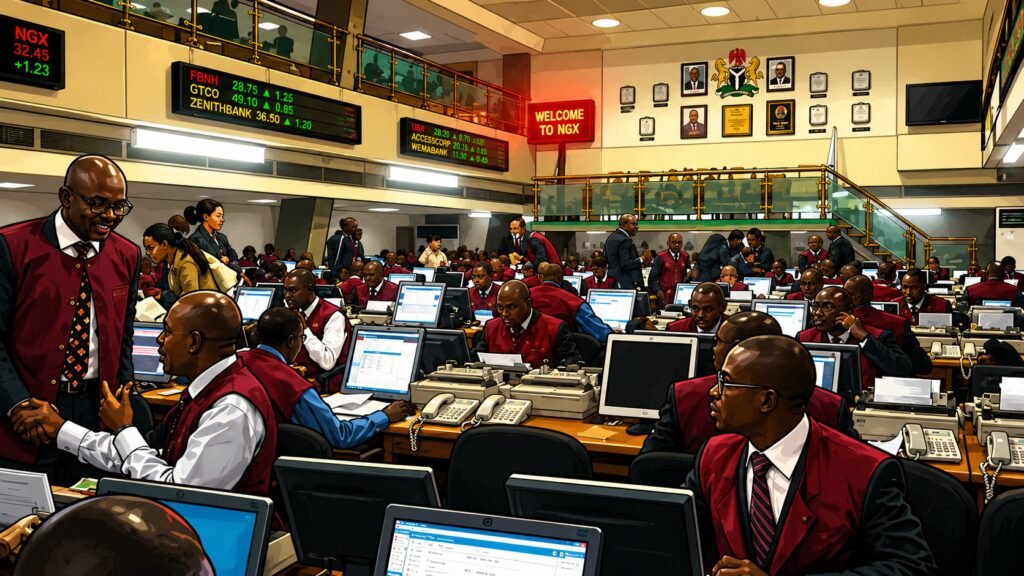
Thin-volume sessions can produce outsized price swings that do not reflect genuine shifts in overall investor sentiment or underlying company fundamentals. Several other blue-chip stocks also traded on remarkably light volumes during the June 15 session on the broader exchange.
Ex-dividend adjustment set the stage for Julius Berger’s June slide
The stock went ex-dividend on June 1, 2026, after the board proposed a final payout of ₦4.25 per share for fiscal year 2025. The NGX adjusted the reference price to ₦310.80 from a last closing price of ₦315.00 to reflect the deducted dividend amount. NGX price-adjustment data confirmed.
That mechanical adjustment alone represented a 1.3% reduction in the reference price before any market-driven selling occurred during subsequent sessions. The additional 9.97% decline on June 15 pushed the stock further from its 52-week high of ₦315.00 reached earlier this year.
The stock’s 52-week low sits at ₦110.00, meaning shares have still gained over 154% from that trough over the trailing twelve months, NGX data confirmed. Julius Berger’s ₦4.25 dividend was backed by a 94.5% year-over-year surge in profit after tax to ₦30.17 billion for fiscal year 2025. The payout delivered a yield of 1.37% at the ex-dividend price, a Nairametrics analysis of NGX price-adjustment data showed.

Julius Berger’s 2025 earnings paint a different picture than the stock chart
Behind the June 15 price decline sits a company that just posted one of its strongest financial performances in recent history. Revenue rose 34.1% from ₦566.71 billion in 2024, with pretax profit jumping 38.5% to ₦40.95 billion, ThisDay reported, citing the company’s annual report.
Earnings per share nearly doubled, climbing 96% from ₦9.54 to ₦18.69, and the board proposed a total dividend payout of ₦6.8 billion to shareholders. First-quarter 2026 results extended the earnings momentum, with pretax profit reaching ₦9.8 billion and marking a 66.1% increase over the prior-year period, Nairametrics reported, citing the company’s Q1 financial statements.
The construction firm also established a new subsidiary in the Republic of Benin during 2025, marking its first formal entry into the wider West African market. The firm filed the Q1 results on the exchange in late April, triggering a 9.38% single-session rally to ₦315, the publication reported at the time.
Dr. Abdulaziz Isa Kaita, Julius Berger’s Director of Administration, spoke about the company’s legacy at the 2026 West Africa Innovation Awards ceremony.
“Tonight, we celebrate more than concrete, steel, and asphalt—we celebrate vision, resilience, and the transformative power of infrastructure in shaping economies, connecting communities, and improving lives.” — Dr. Abdulaziz Isa Kaita, Director of Administration, Julius Berger Nigeria Plc, at the 2026 West Africa Innovation Awards (ThisDay)

What comes next for Julius Berger shareholders as the AGM nears
The company’s 56th Annual General Meeting was set for June 18, 2026, in Abuja, just three trading sessions after the thin-volume selloff on the exchange. Shareholders attending will vote on the proposed ₦4.25 per share final dividend and receive updates on Julius Berger’s forward strategic direction.
Key Julius Berger data points for investors
- Stock price (June 15 close): ₦279.80
- Session volume: 32 shares traded
- 52-week range: ₦110.00 to ₦315.00
- FY2025 revenue growth: 34.1% year-on-year
- FY2025 pretax profit: ₦40.95 billion (up 38.5%)
- Earnings per share (FY2025): ₦18.69 (up 96%)
- Q1 2026 pretax profit: ₦9.8 billion (up 66.1%)
- Proposed dividend: ₦4.25 per share (₦6.8 billion total payout)
Investors watching the stock through the rest of June will track whether the AGM delivers clarity on new contract awards and regional expansion plans. The company’s pipeline of infrastructure projects and its new Benin Republic subsidiary could serve as catalysts for the next move in the share price.
Construction remains one of the most capital-intensive sectors on the Nigerian Exchange, and stocks in this space often see pronounced volatility near dividend dates. The disconnect between Julius Berger’s strong earnings trajectory and its thin-volume price action highlights a structural challenge that affects sector-specific names across the bourse.