
Merck is seeking to move a significant share of Keytruda patients from the infusion chair to a patented under-the-skin shot before its main US compound patent expires in December 2028.
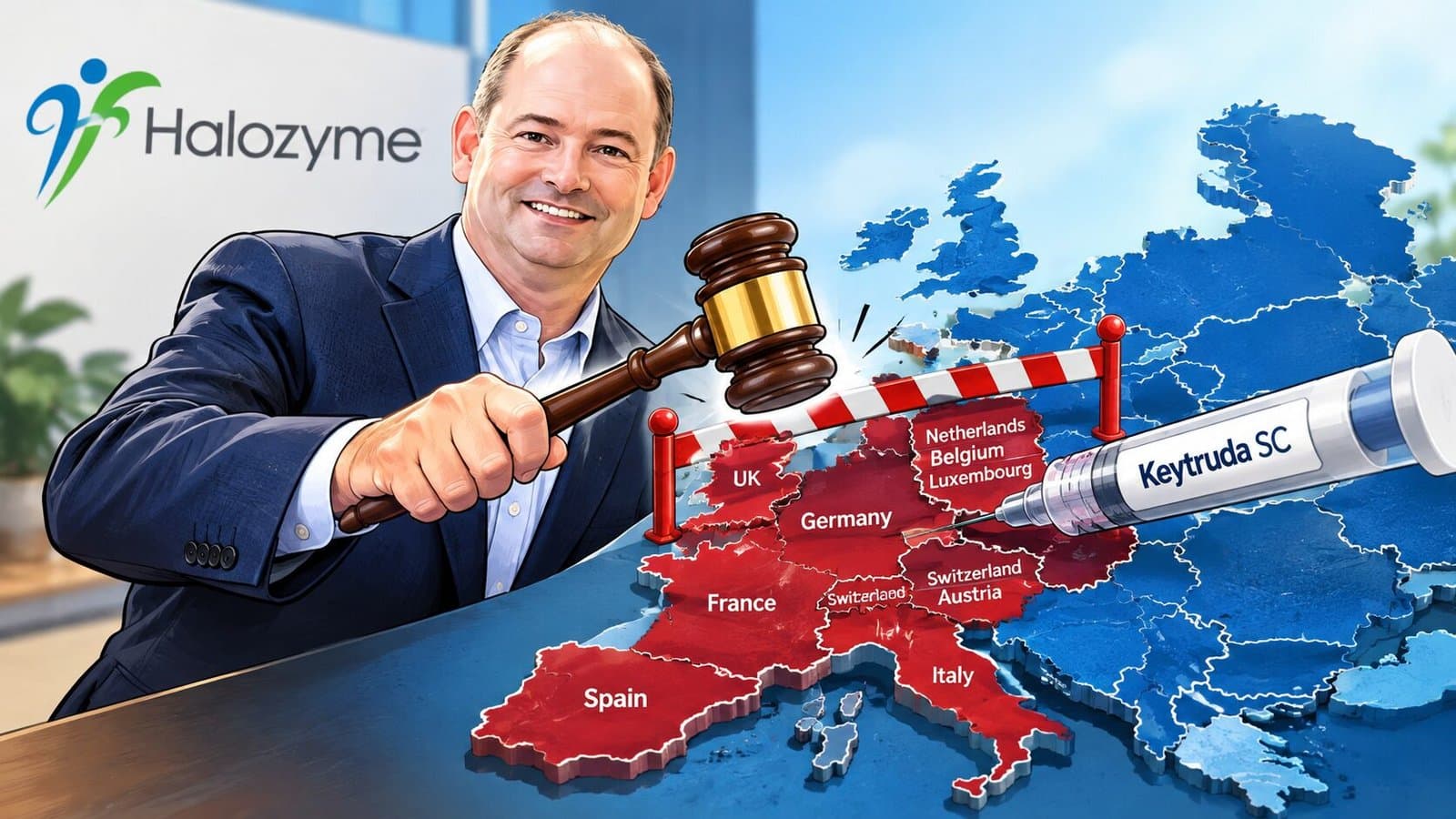
That shot, Keytruda SC, is now barred from eight more European countries, joining a German ban in force since December 2025, Halozyme announced on 7 October 2026.
The enzyme at the center of the fight was developed by South Korea’s Alteogen, which disclosed its first Keytruda SC sales milestone on 31 August 2026.
The Hague’s order reaches eight countries and Merck’s European hub
The specialized Dutch patent court in The Hague found that Merck infringed Halozyme’s MDASE patent EP 2,797,622 and rejected Merck’s invalidity arguments, the release confirmed.
The order targets MSD BV, which serves as Merck’s central European marketing authorization holder and its worldwide packaging and distribution hub.
MSD BV must stop making, offering, importing and stocking Keytruda SC for Belgium, Denmark, France, Ireland, Italy, Sweden, Switzerland and the Netherlands, Halozyme stated.
The court also barred MSD BV from letting affiliates use its European marketing authorization to sell the product in those markets.
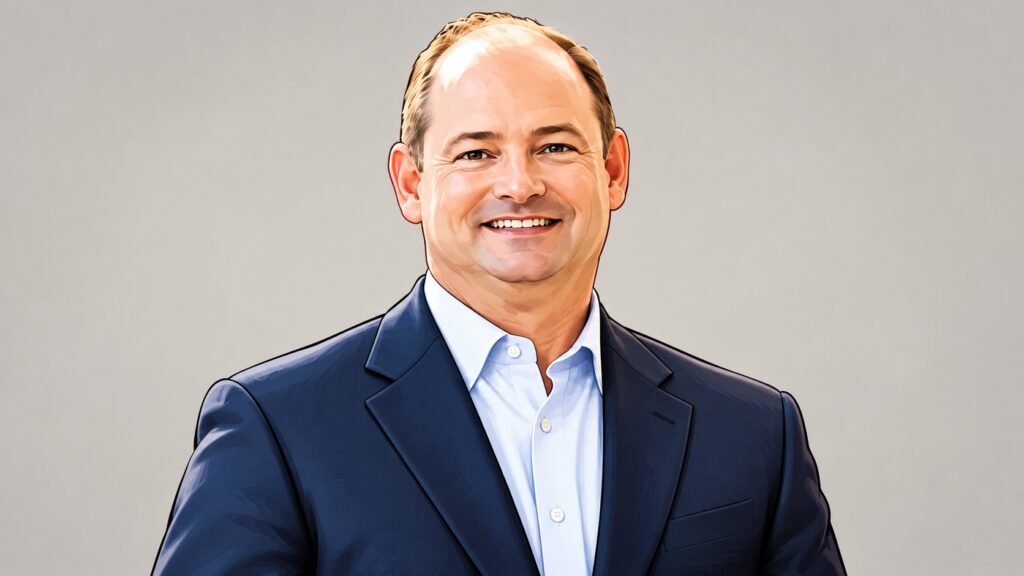
“We’re very pleased the Dutch court recognized the validity and infringement of Halozyme’s MDASE patent EP622 and granted an injunction halting Merck’s launch of Keytruda SC in multiple European markets.” — Mark Snyder, chief legal officer, Halozyme, in a company statement
Snyder tied the win to years of company research into rapid, high-volume delivery of drugs under the skin. The intravenous version of Keytruda sits outside both the patent and the order, so patients keep access to the infusion, Halozyme noted.
More on pharma and healthcare stocks:
- Ionis stock eyes royalties up to 20% on Roche drug win
- FDA clears Medtronic’s vessel sealer for the Hugo robot
Merck’s patent-cliff defense rests on switching patients to the shot
Keytruda and Keytruda Qlex generated $8.37 billion in Q2 2026, or 50.4% of Merck’s $16.61 billion in total sales, Merck’s second-quarter results showed.
Qlex, the US brand name for the shot, contributed $463 million of that total, up from $128 million in Q1 2026, Zacks reported. That conversion carries weight because pembrolizumab’s primary US compound patent expires in December 2028, Labiotech noted.
A patented subcutaneous product would not be a like-for-like copy target for biosimilar makers who reproduce the infused drug.
Europe is now a key test for that plan. Nine markets, including Germany, France and Italy, are shut to the shot, and the patent at issue runs until December 2032, JUVE Patent reported.
Key Keytruda SC figures shaping Merck’s bridge
- Keytruda franchise sales, Q2 2026: $8.37 billion, up 5% year-over-year (Merck)
- Keytruda Qlex sales, Q2 2026: $463 million, versus $128 million in Q1 2026 (Merck, Zacks)
- Qlex share of franchise sales: 5.5% in Q2 2026, up from 1.6% in Q1 2026 (Seoul Economic Daily)
- European markets closed to Keytruda SC, as of 7 October 2026: nine, including Germany (Halozyme)
- EP 2,797,622 expiry: December 2032 (JUVE Patent)
Alteogen built the enzyme Halozyme says crosses its patent
Keytruda SC pairs pembrolizumab with berahyaluronidase alfa, the enzyme Alteogen markets as ALT-B4, which helps large doses disperse under the skin, Alteogen explained.
Halozyme has alleged that patents in its MDASE portfolio cover an ingredient in the product, Merck’s June-quarter 10-Q disclosed.
That ingredient is now a revenue line for Alteogen. The company disclosed a $25 million sales milestone from MSD on 31 August 2026, the first of up to $1 billion tied to Keytruda SC sales, BioSpectator reported.
A low-single-digit royalty on net sales becomes payable after all sales-based milestones are achieved, according to Merck’s filing. Alteogen registered a European composition patent on the ALT-B4 and pembrolizumab formulation on 23 September 2026, with a term running to 2040, Medical Times reported.
That patent gives Alteogen the right to exclude rivals from the formulation. It does not cancel an earlier patent held by Halozyme.
Shinhan Investment Securities analyst Eom Min-yong forecast in August that Keytruda SC adoption would top 15% by December 2026, E-Daily reported. The US, where the shot launched first, remains open while Halozyme’s 15-patent case against Merck proceeds in New Jersey.
Halozyme’s Dutch win reverses a summer of European losses
On 14 July 2026, the same Hague court refused Halozyme’s bid for a preliminary injunction covering Denmark and Sweden, Pearce IP reported.
In May 2026, Halozyme had consented to revocation of the patent’s UK version, Merck’s 10-Q showed. Merck has contested the patent on every front, filing revocation actions in seven European countries, the filing indicated.

“We consider Halozyme’s patent to be invalid globally” — Merck spokesperson, Merck & Co., speaking to Fierce Pharma in December 2025
Merck has also described the infringement allegations as without merit, a position the Dutch court has now rejected for eight countries.
TD Cowen analyst Brendan Smith said in a client note that the decision could improve Halozyme’s path toward a license or other economic resolution, BioPharma Dive reported.
A license would add a second potential royalty claim on Keytruda SC sales, alongside the sales milestones Alteogen is already receiving. Halozyme stressed that its MDASE patents sit outside the ENHANZE licensing program, so ENHANZE partners and their license fees are unaffected.
Halozyme closed at $110.79 on 7 October 2026, up 0.98%, while Merck closed at $142.79, up 0.60%, StockAnalysis data showed.
What the Hague ruling signals for Merck and Alteogen investors
Merck’s shot is now blocked in nine European markets, including Germany, France and Italy, while the US market stays open.
Alteogen’s milestone income now depends in part on Keytruda SC sales, while any eventual royalty stream remains tied to the contract’s sales-milestone structure.
Two dates now carry the story. Merck reports Q3 2026 results on 29 October 2026, its first earnings call since the ruling, and the German appeal hearing is set for 19 November 2026.