

The company that put thousands of Nigerian ride-hailing drivers behind the wheel of brand-new cars is leaving the country that birthed it.
Six years after launching in Lagos with 76 vehicles, Moove is winding down its Nigerian operations and closing the chapter that made it a unicorn.
The farewell includes a plot twist that reshuffles ownership on Lagos streets heading into the final quarter. It also sends an unmistakable signal to the lenders and mobility startups still betting their business models on Nigerian ride-hailing economics.
Moove’s ₦35bn farewell gift reshapes Nigerian driver ownership
Moove will transfer full ownership of its Nigerian fleet, valued at roughly ₦35 billion, to the drivers currently operating the vehicles under its Drive-to-Own program.
Drivers will inherit the cars outright and owe no further payments to the company from October 1, 2026 onward, Technext reported in Moove’s official statement.
More stories on FinanceTracked:
- PlotWeaver and EndowPay are rewriting the bill script
- Lagos Life pulls in $46,000 days after launch
- ProTaxi launched in Abuja with Aso Rock in the room
The handover sits inside a program called “Thank You Nigeria,” framed as a gesture to drivers and staff who shaped the business from Lagos.
More than 9,000 customers used Moove’s Drive-to-Own and rental products in Nigeria, generating about ₦57 billion in revenue since the 2020 Lagos launch.
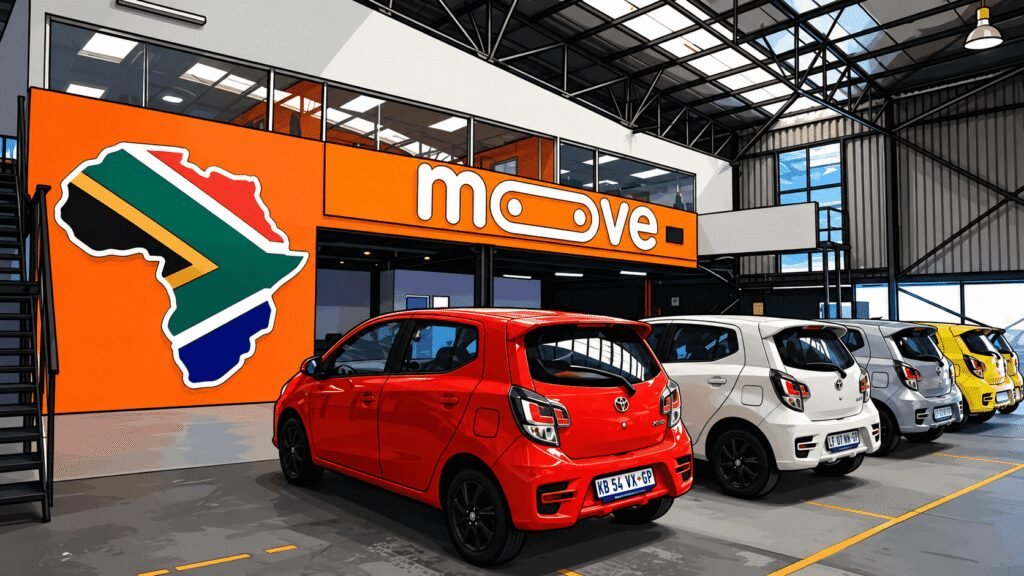
Moove will also give every staff member a free car as a parting gesture under the same Thank You Nigeria framework.
The scale of that combined handover is among the largest voluntary asset transfers an African venture-backed startup has ever made to its own base.
Each inheriting driver effectively walks away with a usable, debt-free asset that can keep generating income on Bolt, inDrive, or any other platform they choose.
Drivers negotiating with new platforms can now also escape the exclusivity restriction that previously locked them into UberGo under Moove’s terms.
How Uber’s Nigeria exit undercut Moove’s financing model
Moove’s shutdown lands a little over a month after Uber ditched Nigeria in September 2026 after 12 years in the ride-hailing market.
Uber was also one of Moove’s largest investors, and the companies ran a tight loop where Moove-financed vehicles were deployed by Uber drivers.

The arrangement bound Moove’s weekly repayments to income earned on the Uber app, mainly under the compact UberGo category featuring Suzuki S-Presso cars.
When Uber withdrew, Moove allowed drivers to migrate to Bolt and inDrive, but that alone could not replace the Uber trip pipeline the exit removed.
Ladi Delano, co-founder and co-CEO of Moove, framed the exit as recognition of the drivers and staff in Lagos who shaped the business.
“Nigeria is where Moove began, and everything we have built since carries something of Lagos with it,” Delano said in Moove’s statement.
Moove started with 76 vehicles in Lagos and built a Drive-to-Own model that gave gig workers a route to car ownership. Today, the firm operates 42,000 vehicles across 29 cities worldwide, a scale that dwarfs its Lagos origins.

Moove’s global pivot explains the Nigeria wind-down
Nigeria is now a small line in a global business that just hit unicorn status with heavyweight institutional backing. Moove bagged $250 million in a Series C at a $2.1 billion valuation in August 2026, with Mubadala leading and Woven Capital and Ion Pacific co-leading alongside, Ecofin Agency reported.
The company is pivoting hard into autonomous vehicle operations, managing fleet logistics, charging and depot work for Waymo in several US cities.
Those operations contribute to roughly $420 million in annualized recurring revenue, Moove reported in its Series C disclosure, as cited by Ecofin Agency.
Moove’s balance sheet has leaned heavily on dollar-denominated financing used to buy vehicles, while Nigerian drivers earned revenue in naira.
The repayment math under that structure deteriorated as the naira depreciated and local operating costs rose through 2024 and 2025.
Earlier this year, Moove reported disabling and repossessing vehicles from Nigerian drivers who fell behind, then softened some installment terms to protect its collections.
That credit cycle, combined with Uber’s exit, left Moove with limited options to run its original financing model profitably inside Nigeria.
The upshot is that Moove’s long-term economics hinge on robotaxi fleets abroad, not Lagos drivers servicing dollar-denominated vehicle loans in a naira economy.
The Nigeria exit also removes the one market where its original credit model had lost traction after Uber’s September withdrawal from Lagos.
Nigerian drivers inherit the cars, mobility lenders inherit the pressure
The handover marks a turning point for Nigeria’s mobility finance ecosystem, where the decade’s biggest driver-financing experiment exits with cars distributed free to its base.
For drivers, the gain is simple: cars become debt-free assets from October 2026, changing daily income math across Lagos households.
AUATON, the Amalgamated Union of App-based Transporters of Nigeria, asked Moove and other financiers to suspend daily remittances ahead of October 12, Innovation Village reported.
The demand is moot for Moove’s inherited fleet, but it signals the pressure other mobility lenders face as Nigeria’s ride-hailing sector restructures.
Lenders including Ibile Holdings, LagRide and Finatrust Microfinance Bank remain exposed to the same squeeze that forced Moove’s exit from Lagos operations.