
BUA Foods opened trading on June 9, 2026, at ₦939 per share, a price that suggested stability for the consumer goods heavyweight. By the time the closing bell rang on the Nigerian Exchange, the stock had slipped to ₦890.90, breaching the ₦900 level.
The nearly 5.1% intraday slide came just two trading days after BUA Foods went ex-dividend on June 5, having declared a record ₦28 per share payout. That timing raises a question every shareholder of the food manufacturing giant should be asking.
If a company posts 95% profit growth, hikes its dividend by 115%, and earns a spot on the Financial Times Africa’s fastest-growing companies list, why is the stock losing ground? The answer may have less to do with BUA Foods itself and more to do with what happens when dividends leave the building.
BUA Foods drops nearly ₦50 as post-dividend selling pressure mounts
The NGX Daily Official List for June 9 shows BUA Foods opened at ₦939 and settled at ₦890.90, with only two shares changing hands during the session, according to data published by the Nigerian Exchange Group. That razor-thin volume suggests the decline reflected a mechanical ex-dividend adjustment rather than broad-based investor selling.
BUA Foods went ex-dividend on June 5 with a ₦28 per share payout for its 2025 fiscal year, the largest dividend in the company’s listing history, Nairametrics reported. The payout represented a 115% increase over the ₦13 per share distributed in 2024, amounting to a total shareholder distribution of ₦504 billion.

When a stock goes ex-dividend on the NGX, the exchange adjusts the opening reference price downward by the dividend amount. For BUA Foods, that built-in ₦28 haircut explains a significant portion of the slide from the pre-qualification levels above ₦960 that the stock traded at earlier in the week.
BUA Foods’ record dividend follows a breakout year of profit growth
The record payout was powered by a transformative 2025 fiscal year for BUA Foods, which manufactures and distributes sugar, flour, pasta, rice, and edible oils. Group revenue climbed 16% to ₦1.77 trillion, while profit after tax surged 95% to ₦518.4 billion, BusinessDay reported. Earnings per share reached ₦28.80, nearly double the ₦14.78 recorded the prior year.
That momentum carried into the first three months of 2026, even as revenue dipped 11% to ₦394.6 billion due to softer pricing in a more stable foreign exchange environment. Profit after tax still climbed 14% to ₦142.32 billion, and the operating margin expanded by 800 basis points to 39%, Vanguard reported.
BUA Foods CEO points to margin discipline as the driver behind earnings resilience
BUA Foods Managing Director Ayodele Abioye addressed the company’s performance during a recent earnings disclosure, framing the Q1 results as evidence of operational discipline rather than weakening demand across the company’s five core product divisions.
“BUA Foods delivered resilient earnings in Q1 2026, underpinned by strong margin performance despite a challenging operating environment. “Profit After Tax increased by 14% year-on-year to ₦142.32 billion, notwithstanding an 11% decline in revenue and modest volume growth” Abioye stated, via The Independent.

Research analyst Qudus Adebara of DLM Capital Group offered a broader assessment of the company’s trajectory, calling BUA Foods’ FY2025 results a breakout year marked by exceptional profit expansion and sharply lower financing costs. Adebara noted the company’s improved balance sheet and dominant food sector position as key supports for continued earnings resilience, according to a published research note on Simply Wall St.
NGX market rally hit 57% returns as BUA Foods shares lagged behind
BUA Foods’ soft session on June 9 stood in contrast to the broader Nigerian Exchange, which extended its bullish run that same day. The All-Share Index gained 0.53% to close at 244,697.62, pushing year-to-date returns to 57.25%, DMarket Forces reported. Market capitalization climbed ₦835 billion in a single session, settling at ₦156.94 trillion.
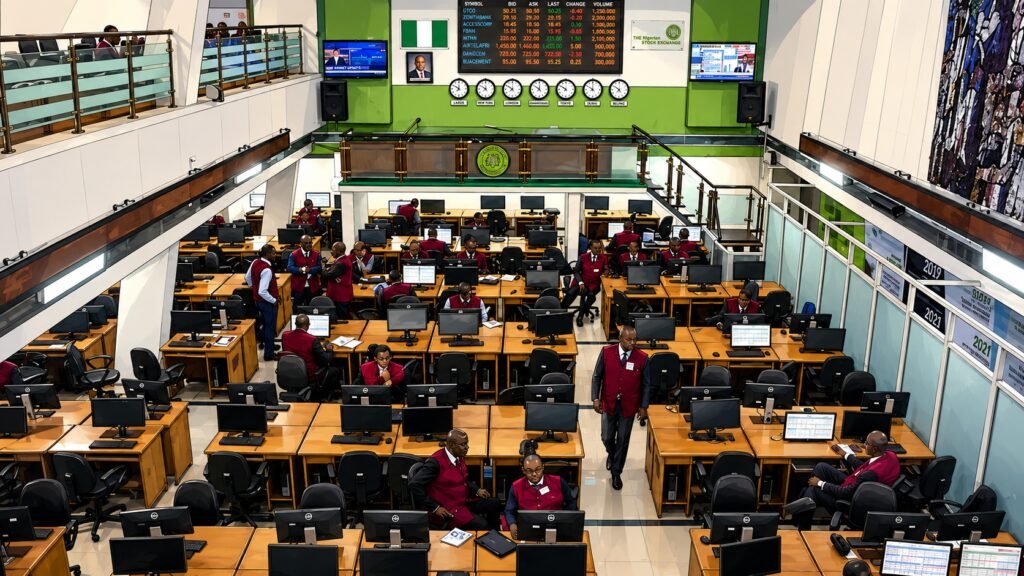
Consumer goods stocks have been among the strongest performers on the NGX over the past 18 months, with the sector’s index delivering a 129.6% total return in 2025 alone. One senior equity analyst at a Lagos-based brokerage explained to BusinessDay that consumer companies with pricing power and dependable demand offered investors a strong risk-adjusted opportunity during a period of elevated currency risk.
BUA Foods’ planned over 50% capacity expansion could reshape the stock’s path
The company earned recognition on the 2026 Financial Times list of Africa’s fastest-growing companies, supported by a compound annual revenue growth rate of 66.13% between 2021 and 2024, Milling Middle East & Africa Magazine reported. That recognition arrives as BUA Foods pursues a planned capacity increase of over 50% across all of its business divisions.
For you as an investor watching this stock, the June 9 price dip fits a familiar post-ex-dividend pattern that repeats across the NGX each earnings season. The question worth watching is whether BUA Foods’ underlying fundamentals, from margin expansion to its backward integration strategy, can generate enough forward momentum to close the gap.
Key takeaways for BUA Foods shareholders
- BUA Foods opened at ₦939 and closed at ₦890.90 on June 9, 2026, a decline of roughly 5.1% (Source: NGX Daily Official List)
- The stock went ex-dividend on June 5 with a record ₦28 per share payout, up 115% from the prior year (Source: Nairametrics)
- FY2025 profit after tax surged 95% to ₦518.4 billion on revenue of ₦1.77 trillion (Source: BUA Foods 2025 Annual Report)
- Q1 2026 profit after tax rose 14% to ₦142.32 billion despite an 11% revenue decline (Source: BUA Foods Investor Relations)
- Only two shares traded on June 9, suggesting thin volume rather than broad selling pressure (Source: NGX Daily Official List)
- The NGX All-Share Index gained 0.53% to 244,697.62 the same day, with YTD returns at 57.25% (Source: DMarket Forces)