
Nigeria’s e-hailing market just welcomed a new player, and this one walked in carrying a guest list nobody in the industry expected.
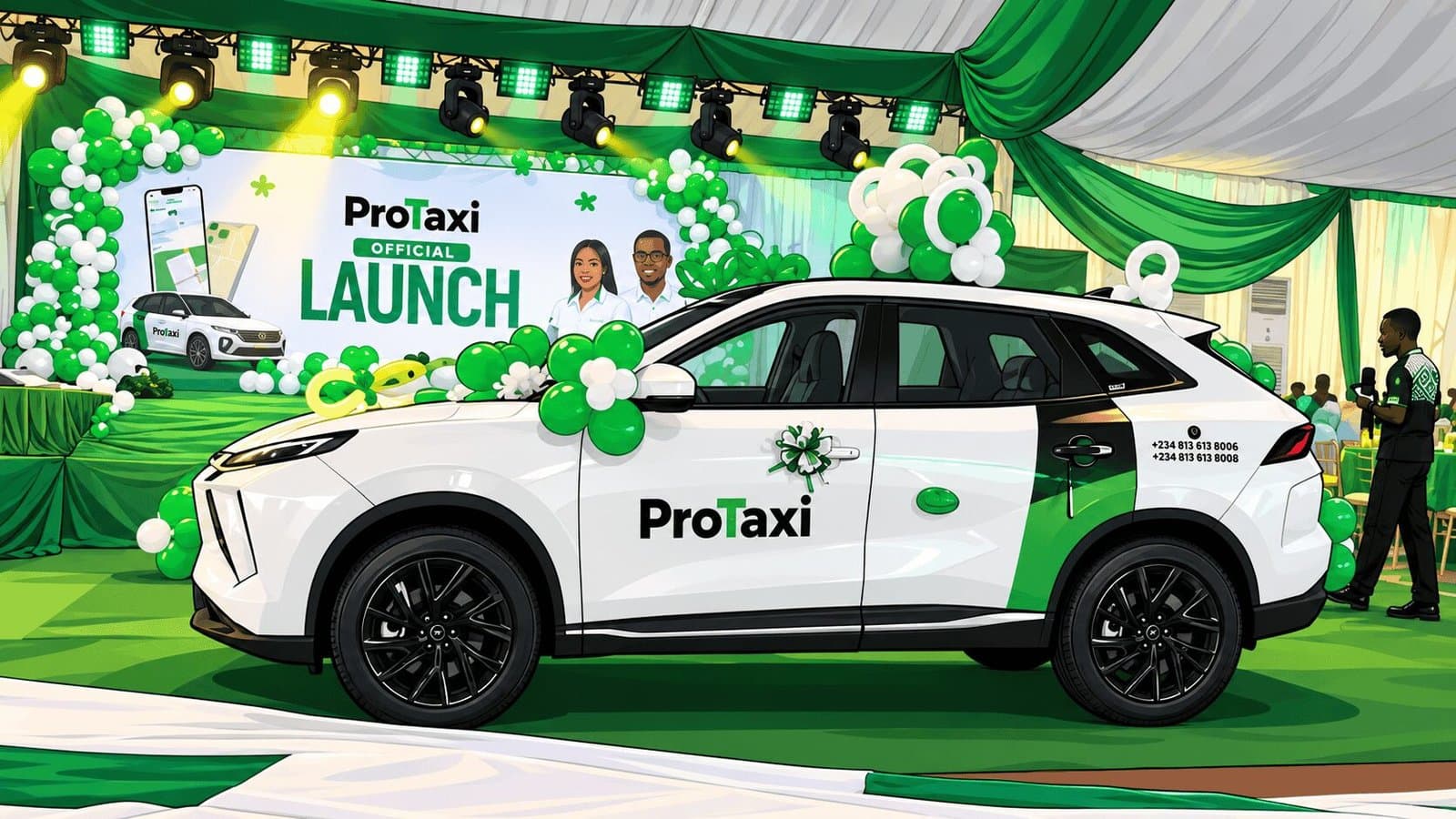
ProTaxi, an electric ride-hailing platform from PromiseLand Innovations, officially kicked off operations in Abuja on October 1 alongside Nigeria’s Independence Day celebrations.
The launch had been anticipated, but what turned heads was the weight of the political endorsement that followed once the ceremony was underway.
For a market still processing Uber’s sudden departure from Nigeria just weeks earlier, this was a signal no serious observer could afford to ignore.
PromiseLand’s Abuja launch drew an endorsement from the presidency
Prince Adetokunbo Ademola Ade-John, the Senior Special Assistant to the President on Transportation and Mobility, attended the ProTaxi launch event in Abuja.
He publicly praised PromiseLand CEO Ambassador Emmanuel Lawrence Oloche for rolling out 1,000 electric vehicles through the ProTaxi platform, TechCabal reported.
More Nigerian business stories:
- Dangote IPO stirs a fintech resilience awakening
- Airtel Money shows its cards ahead of London listing
- MTN’s $2.2B IHS play just passed its South Africa test
“I am very confident that Mr. President will be very, very happy with this initiative,” Ade-John said at the event, Ripples Nigeria reported.
Oloche described ProTaxi as rooted in PromiseLand’s broader vision of using technology to move Nigerian families from poverty toward sustainable prosperity, framing it not as another ride-hailing app but as an empowerment vehicle for drivers and their families.
“Today, we introduce a ProTaxi that is not just another e-hailing application,” Oloche stated at the launch, TheCable reported.

Each ride on the platform, Oloche explained, supports a driver whose family livelihood depends directly on the income that ProTaxi helps generate.
Uber’s exit reshuffled the competitive landscape for Nigerian ride-hailing
ProTaxi’s launch arrived at a pivotal moment for Nigeria’s ride-hailing industry, coming barely four weeks after Uber ditched Nigeria in its third African market withdrawal in a single year.
The ride-hailing giant ended its 12-year Nigerian presence effective September 2, 2026, citing a review of its business priorities, ThisDay reported.
Uber’s departure left thousands of drivers scrambling for alternatives on remaining platforms like Bolt, inDrive, and the Lagos state-backed LagRide service across major cities.
Bolt’s Senior General Manager for West Africa, Teddy Appa-Dankyi, reassured the market that Nigeria remained a strategic priority, Sahara Reporters reported.

The reshuffling, which also exposed regulatory gaps in Nigeria’s ride-hailing oversight, created a rare opening for indigenous platforms willing to bring a differentiated offering to a mobility market in the middle of a competitive transition.
ProTaxi enters this landscape betting on electric vehicles at a time when fuel costs remain a pressing concern for Nigerian drivers.
The country’s shifting policy environment, including changes under the Nigeria Tax Act 2025, has introduced incentives that could favor EV-focused mobility platforms.
Nigeria’s EV tax incentives create fertile ground for platforms like ProTaxi
The federal government approved tax waivers for nearly 4,000 electric vehicles during the first half of 2026, according to government data reviewed by Reuters.
Nigeria removed VAT on EVs in 2024 and cut import duties from 5% to zero earlier this year, improving the business case for electric mobility ventures.
The country’s 2022 Energy Transition Plan targets electric vehicles at 60% of the national vehicle fleet by 2050, though the current share sits below 1%.
Infrastructure gaps persist, with only about 48 public EV charging stations across Nigeria as of late 2025, most concentrated in Lagos and Abuja.
“If we wait for electricity to become perfect before adopting EVs, the rest of the world will leave us behind,” Bolanle Boboye, an executive at Saglev, Nigeria’s first EV assembly plant, told Reuters.
ProTaxi’s model, which combines ride-hailing with electric vehicle ownership opportunities for drivers, taps into the same economic logic powering Nigeria’s broader fintech expansion across underserved markets.
Key facts about ProTaxi and Nigeria’s EV landscape
- ProTaxi deployed 1,000 electric vehicles to driver-families across Nigeria at launch, TechCabal reported
- Operations launched in Abuja on October 1, 2026, with expansion to other states planned, Premium Times reported
- Nigeria approved tax waivers for nearly 4,000 EVs in H1 2026, Reuters reported
- EV import duties fell from 5% to 0% in 2026; VAT on EVs was removed in 2024
- Nigeria’s Energy Transition Plan targets EVs at 60% of the vehicle fleet by 2050
- Electric motorcycles and tricycles cut operating costs by two-thirds versus petrol alternatives, Donda X co-founder Stanley Nwankwo told Reuters
What PromiseLand’s presidential backing signals for Nigeria’s EV push
Presidential endorsements rarely land on startups in Nigeria’s transportation sector, making Ade-John’s public commendation at the ProTaxi launch an especially noteworthy development.
His expressed confidence in presidential support could open doors to policy backing, procurement opportunities, or infrastructure partnerships for PromiseLand.
Whether political backing translates into tangible government support remains a question only the coming months will answer.
The real test for ProTaxi will come in navigating a market where charging infrastructure is scarce and the electricity supply stays unreliable.
PromiseLand’s dual interests in real estate and electric mobility position the company across two sectors that shape everyday life for Nigerian families.
Nigeria’s broader corporate landscape is seeing major players place aggressive bets across energy and infrastructure, creating an opportunity-rich environment for anyone willing to bet on the transition.