

A single share of Nestle Nigeria changed hands on the Nigerian Exchange on July 15, 2026, and it was enough to move the stock by ₦312.50 in one session, sending it from its ₦3,125 opening price to a close of ₦2,812.50.
That 10% intraday drop on a volume of exactly one unit illustrates a recurring challenge for high-priced consumer goods stocks across the NGX. When institutional buyers sit on the sidelines and retail participation thins out, even the most prominent names on the board can swing wildly.
The session itself was subdued, with the broader All-Share Index declining 0.21% to settle at 242,366.75 points while market capitalization rose by ₦390.32 billion to ₦156.24 trillion. Nestle’s move stood out because of the sheer disconnect between the size of the trade and the magnitude of the price change.
You might expect a stock worth over ₦2 trillion in market value to need thousands of shares changing hands before its price shifts by that much. On this particular session, it took just one.
Nestle Nigeria drops 10% to ₦2,812.50 on ultra-thin volume
Nestle Nigeria opened the July 15 session at ₦3,125 and closed at ₦2,812.50, shedding ₦312.50 on just one unit traded, according to the NGX Daily Official List. The stock’s 52-week range spans ₦1,600 to ₦3,395, meaning the current close sits roughly 17% below its annual peak.
The consumer goods sector declined 0.27% on the session while the banking sector led all sectors with a 2.20% advance, DMarketForces reported. Market breadth was positive overall, with 33 gainers against 18 losers, but heavyweight consumer names absorbed most of the selling pressure across the board.
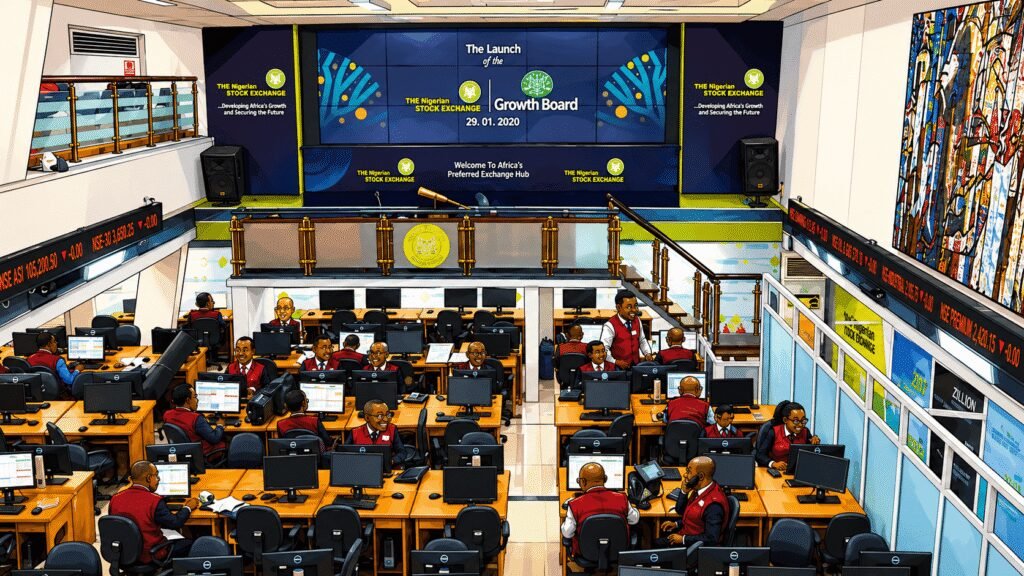
The thin volume on Nestle’s ticker is not an isolated event for the stock, which ranks among the least frequently traded blue chips on the exchange. Data compiled by AFX shows Nestle was the 112th most traded stock on the NGX between October 2025 and January 2026, with daily volumes as low as 3,944 shares on some sessions.
Nestle Nigeria’s Q1 2026 recovery adds context to the price swing
The price decline on July 15 contrasts with the company’s improving operational fundamentals over the past twelve months. Nestle Nigeria posted Q1 2026 revenue of ₦326.1 billion and profit after tax that rose 29% year-over-year to ₦38.99 billion, Business Elite Africa reported.
For the full year ending December 2025, the company reported revenue of ₦1.21 trillion, a 26% increase from the prior year, with profit before income tax reaching ₦166.85 billion. That figure represented a 175% swing from the ₦221.59 billion loss posted in 2024, the company’s annual report showed.
An analyst at Cordros Research noted in a May 2025 note that the turnaround was structural rather than cosmetic.
“Factoring Nestle’s robust pricing power, solid operational execution, and a more stable macroeconomic environment, our model estimates significant improvements in key operating margins in 2025E,” the analyst said, BusinessDay reported.
Ultra-low volume exposes NGX liquidity risks for high-priced stocks
Nestle’s one-unit trade on July 15 is part of a broader pattern across the NGX, where high-priced stocks frequently record minimal volumes that leave prices vulnerable to outsized swings. Nestlé Switzerland holds 70.81% of the company’s issued share capital, meaning the free float available for daily trading is already constrained by its ownership structure.

Caroline Whitmore, Senior Equity Analyst for Emerging Consumer Markets, described the dynamic around the stock in a March 2026 analysis.
“Nestle Nigeria represents the intersection of African urbanisation, currency risk, and consumer-staples resilience in one of the world’s fastest-growing populations,” Whitmore wrote, warning that returns remain tightly linked to naira stability, Ad Hoc News reported.
The broader session on July 15 saw 476.34 million shares change hands in 40,992 deals, worth ₦29.63 billion across the entire exchange. FirstHoldCo dominated volume with 16.55% of total shares traded and led gainers at 9.98%, while Trans-Nationwide Express paced losers with a 9.85% drop, DMarketForces reported.
Nestle Nigeria earnings report on July 29 could reset sentiment
Nestle Nigeria is scheduled to release its next earnings report on July 29, 2026, a date that could serve as a meaningful catalyst for the stock’s near-term direction. The company’s shares have gained approximately 44% year-to-date based on the January 2026 opening price of ₦1,958, reflecting the strong momentum its financial turnaround has generated among investors, Investing.com data confirmed.

A single analyst tracked by Investing.com places the 12-month price target for Nestle Nigeria at ₦3,553.92, with a high estimate of ₦3,816.45 and a low of ₦3,403.18. That range implies meaningful upside from the July 15 closing price of ₦2,812.50, though the thin trading conditions suggest you may see wide price gaps between sessions before any catalyst arrives.
Key data points from the July 15 NGX session
- Nestle Nigeria closed at ₦2,812.50, down ₦312.50 from its ₦3,125 open, on a single unit traded (NGX Daily Official List).
- The NGX All-Share Index declined 0.21% to 242,366.75 points, while market capitalization rose ₦390.32 billion to ₦156.24 trillion (DMarketForces).
- Consumer goods sector fell 0.27% on the session, while the banking sector gained 2.20% to lead all sectors (DMarketForces).
- Nestle Nigeria Q1 2026 profit after tax rose 29% to ₦38.99 billion on revenue of ₦326.1 billion (Business Elite Africa).
- The company’s next earnings release is scheduled for July 29, 2026, with one analyst targeting a price of ₦3,553.92 (Investing.com).
- Nestlé Switzerland holds 70.81% of issued shares, limiting the free float available for daily trading (Nestle Nigeria 2025 Annual Report).