
You earn ₦70,000 every month and your employer still deducts income tax from your paycheck without explaining the new rules. You assume you owe the government a portion of your salary because that has always been the case. The Nigeria Tax Act 2025, signed into law on June 26, 2025, may have removed your tax obligation entirely starting this year.
The law introduced an ₦800,000 annual tax-free threshold that took effect on January 1, 2026, replacing the old personal income tax relief structure. Any individual whose chargeable annual income falls at or below ₦800,000 now pays zero personal income tax under the reformed system. This single provision touches the financial lives of millions of Nigerian workers, from junior civil servants to factory workers and artisans.
Before you check your next payslip, you need to understand who qualifies for this tax exemption nigeria new threshold and what it means.
How the ₦800,000 tax free Nigeria exemption replaced the old CRA system
The Nigeria Tax Act 2025 eliminated the Consolidated Relief Allowance that had served as the foundation of personal income tax relief for years. Under the old system, workers received a Consolidated Relief Allowance calculated as the higher of ₦200,000 or 1% of gross income, plus 20% of gross income, before progressive tax rates were applied. The previous structure taxed the first ₦300,000 of chargeable income at 7%, and even low-income earners faced deductions on the first taxable income band.
More on Nigeria’s tax changes:
New PAYE tax bands in Nigeria 2026 — what you actually pay
The new system is structurally different because the first ₦800,000 of chargeable annual income is now taxed at a flat 0% rate. PwC Nigeria confirmed this in its detailed analysis of the reform package signed by President Bola Ahmed Tinubu. The CRA’s complex formula has been replaced by a simpler rent relief system allowing a deduction of 20% of annual rent paid, capped at ₦500,000, Nairametrics reported. Pension contributions at 8% of pensionable income, National Housing Fund payments, and health insurance premiums remain fully deductible under the framework.

This overhaul represents a shift from the previous 7% to 24% rate structure to a new progressive system spanning 0% to 25%. KPMG’s analysis noted that the zero-rate band on the first ₦800,000 provides meaningful relief for lower-income earners compared to the old tax brackets, KPMG reported in its review of the personal income tax regime changes under the Nigeria Tax Act 2025.
Who qualifies for the tax exemption nigeria new threshold under the 2026 framework
Eligibility for the exemption is straightforward in principle: any individual whose chargeable annual income totals ₦800,000 or less pays zero tax. The exemption applies equally to employees on PAYE, self-employed professionals, freelancers, and traders operating across Nigeria’s formal and informal economies. Workers earning the national minimum wage or below receive automatic exemption from any personal income tax obligation under the reformed law, the National Assembly Legislative Think Factory confirmed.
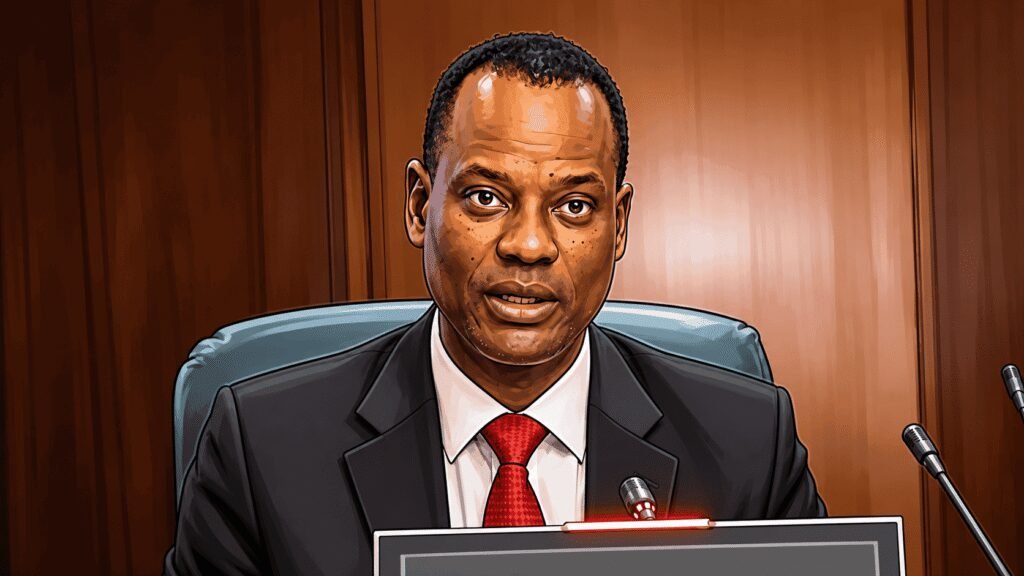
Taiwo Oyedele, Chairman of the Presidential Committee on Fiscal Policy and Tax Reforms, said at the Cowry Quarterly Economic Discourse that common confusion about the threshold stems from mixing up gross and chargeable income figures, Blueprint reported.
“The N800,000 people talk about is taxable income, not gross income. By the time you remove deductions and allowances, that translates to about N1 million to N1.2 million gross income.” — Taiwo Oyedele, Chairman, Presidential Committee on Fiscal Policy and Tax Reforms
This distinction means workers earning roughly ₦100,000 per month in gross salary could still qualify for full exemption from income tax. Oyedele disclosed at the 31st Nigerian Economic Summit that over 90% of Nigerian workers would either be fully exempted from PAYE or pay significantly lower rates after implementation, Guardian reported.
Gross income versus chargeable income under the widened PAYE base
The most common mistake workers make is confusing gross income with chargeable income under the reformed personal income tax framework. Gross income includes your total earnings before any deductions, combining base salary, housing allowance, and transport allowance into one figure. Chargeable income is the amount remaining after subtracting pension contributions, NHF payments, rent relief, and other allowable deductions from gross pay.
The widened PAYE base under the reform also brings non-cash benefits into the gross income calculation for the first time. Employer-provided housing, company vehicles, and other benefits in kind now count toward gross income before deductions are applied, Baker Tilly Nigeria noted in its analysis of the reform’s payroll implications.
Common misconceptions about who pays no tax nigeria 2026
The most widespread misconception is that the ₦800,000 threshold operates monthly, giving each worker a ₦66,667 exemption per pay period. The threshold is calculated strictly on an annual basis, and monthly earnings must be multiplied by 12 to determine eligibility. A worker earning ₦60,000 per month generates ₦720,000 annually in gross income, which falls below the threshold and results in zero tax.
Another misconception involves partial-year earners who start or leave employment mid-year during the 2026 tax assessment period. The threshold applies to the full assessment year regardless of when employment begins or ends within the calendar year. Additionally, homeowners who do not pay rent cannot claim rent relief, leaving the ₦800,000 zero-rate band as their only personal relief, KPMG noted in its assessment.
Worked example comparing ₦70,000 and ₦80,000 monthly earners under new rules
A worker earning ₦70,000 per month takes home ₦840,000 in gross annual income before any statutory deductions are subtracted. After removing pension contributions of approximately ₦43,680 (8% of pensionable income, assuming a standard salary structure where pensionable income comprises roughly 65% of gross pay) and NHF contributions, the worker’s chargeable income falls below the ₦800,000 ceiling. This worker owes zero personal income tax under the 2026 framework and keeps their full salary minus statutory contributions only.
A worker earning ₦80,000 monthly generates ₦960,000 in gross annual income, which appears to exceed the threshold before deductions. After pension contributions of roughly ₦49,920 (using the same 65% pensionable income assumption) and NHF deductions, chargeable income drops to approximately ₦880,000 or lower depending on salary structure. If rent relief of up to ₦200,000 further reduces the figure below ₦800,000, this worker also pays zero tax under new rules.
The distinction between these two scenarios illustrates how statutory deductions interact with the ₦800,000 chargeable income ceiling precisely. Workers whose gross income slightly exceeds the threshold may still qualify for full exemption once pension, NHF, and rent relief are applied. The Nigeria Revenue Service framework confirms that chargeable income, not gross pay, determines whether you owe any personal income tax.
Key facts about the ₦800,000 tax-free threshold in Nigeria
- The exemption is annual, not monthly, and applies to chargeable income after all allowable deductions are subtracted from gross pay.
- Workers earning ₦66,667 or less monthly before deductions are likely fully exempt from personal income tax obligations under the reformed structure.
- The old Consolidated Relief Allowance baseline of ₦300,000 has been replaced entirely by the ₦800,000 zero-rate band (PwC Nigeria).
- Rent relief of 20% of annual rent, capped at ₦500,000, can further reduce chargeable income below the threshold (Nairametrics).
- Pension contributions, NHF, and NHIS premiums remain deductible before the threshold calculation is applied to any worker’s chargeable income figure.
- The filing deadline for annual tax returns is March 31, and late filing carries a ₦100,000 penalty for the first month (NALTF).