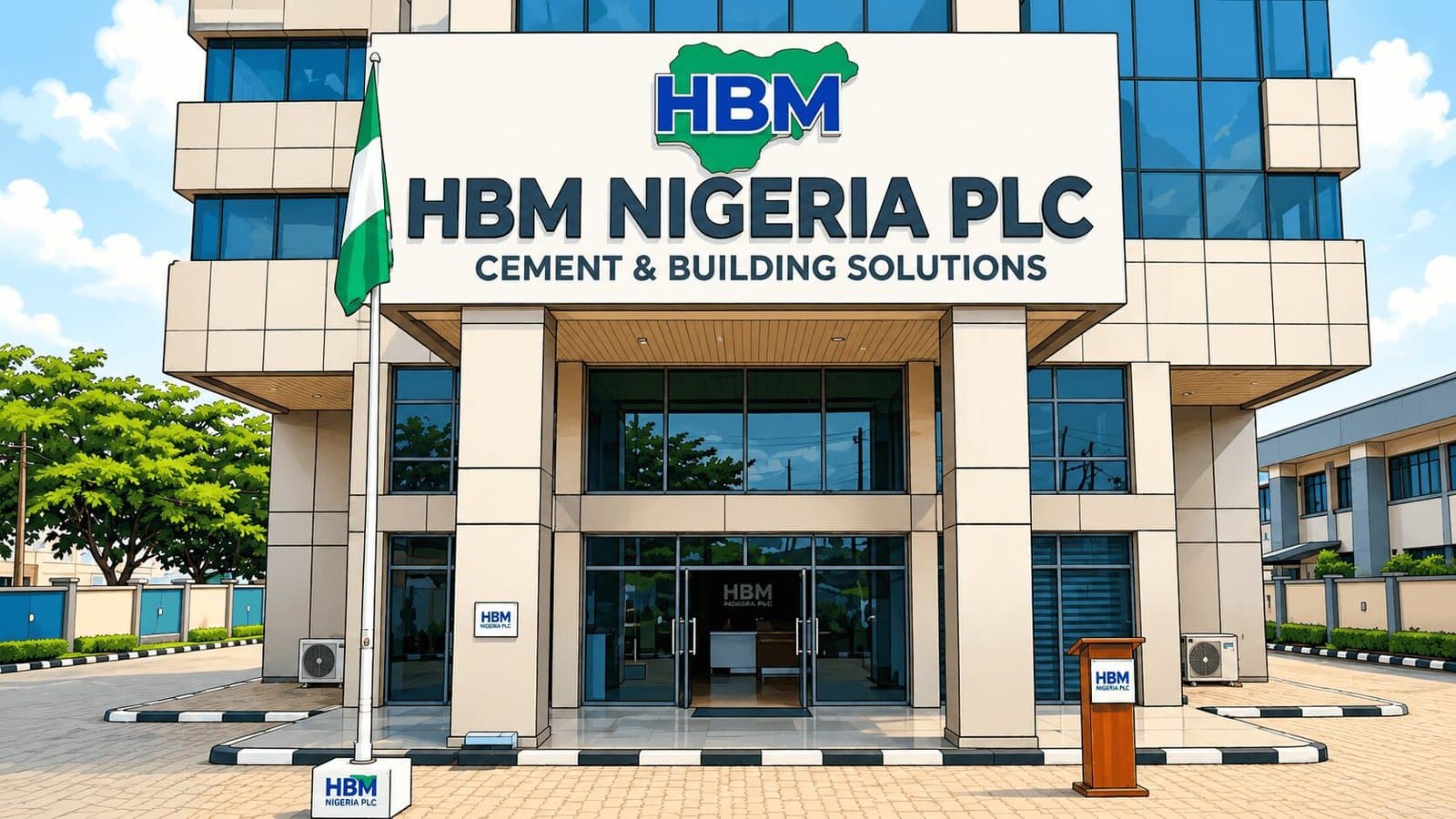

If you searched for the WAPCO ticker on the Nigerian Exchange this week, you found nothing but an empty screen. The trading symbol that represented one of Nigeria’s oldest cement manufacturers for decades has been retired from the exchange floor. In its place stands a new acronym that most Nigerian investors are still learning to recognize on their trading platforms.
HBM Nigeria Plc, formerly Lafarge Africa Plc, now trades under the ticker HBMNG after the Nigerian Exchange completed the symbol migration. The change follows a shareholder vote at the company’s 67th Annual General Meeting held on April 30, 2026, and a new certificate of incorporation issued by the Corporate Affairs Commission, the company confirmed in a notice to the NGX.
Shareholders do not need to take any action, as existing holdings will automatically reflect under the new HBMNG symbol across all trading platforms. But the cosmetic change on your brokerage screen belies a far deeper transformation happening inside the company and across Nigeria’s cement industry.
How a $1 billion Chinese acquisition erased the Lafarge name from the NGX
The ticker swap completes the final step of a corporate overhaul that started when Swiss cement giant Holcim agreed to sell its 83.81% stake in Lafarge Africa to China’s Huaxin Cement in December 2024. That transaction, valued at roughly $1 billion, closed in August 2025 and handed control of Nigeria’s third-largest cement producer, behind Dangote Cement and BUA Cement, to a Chinese multinational, Nairametrics reported.
HBM stands for Huaxin Building Materials, the parent company’s rebranded global identity adopted to reflect its expansion beyond cement into aggregates, ready-mix concrete, and eco-friendly building products. Martin Kriegner, Holcim’s Regional Head for Asia, Middle East and Africa, said at the closing that Huaxin was a trusted buyer committed to growing the business, Holcim said in a statement.
HBM Nigeria’s record-breaking 2025 financials powered the transition
The rebrand arrives on the back of the strongest financial year in the company’s 67-year history. Revenue surged 53% to ₦1.07 trillion in 2025, crossing the trillion-naira threshold for the first time. Profit after tax jumped 173% to ₦273 billion from ₦100.1 billion the prior year, while operating profit more than doubled to ₦392 billion.
Earnings per share climbed from ₦6.22 to ₦16.96, and the board proposed a final dividend of ₦6.00 per share for 2025, a fivefold increase from the ₦1.20 paid the prior year, the company’s annual report confirmed.
HBM Nigeria’s key 2025 financial metrics at a glance
- Revenue: ₦1.07 trillion (up 53% from ₦696.8 billion in 2024)
- Profit after tax: ₦273 billion (up 173% from ₦100.1 billion in 2024)
- Operating profit: ₦392 billion (up from ₦193 billion in 2024)
- Earnings per share: ₦16.96 (up from ₦6.22 in 2024)
- Proposed dividend: ₦6.00 per share (up from ₦1.20 in 2024)
HBMNG shares have surged over 470% since the Huaxin deal was announced
The stock’s trajectory tells a dramatic story of investor enthusiasm around the ownership change and operational turnaround. Before Holcim announced its exit in December 2024, shares traded at around ₦58 on the NGX, according to African Markets. By mid-July 2026, shares under the new HBMNG ticker trade at approximately ₦335, pushing the market capitalization to roughly ₦5.4 trillion, Investing.com data showed.
“We are confident that HBM Nigeria Plc will continue to create sustainable value for shareholders, strengthen stakeholder trust, and deliver on its long-term ambitions.” — Gbenga Oyebode, Chairman, HBM Nigeria Plc, via BusinessPost

For the week ended July 10, 2026 alone, the stock gained 15.1%, making it one of the best-performing equities on the exchange, Nairametrics reported.
What HBM Nigeria’s rebrand signals for the wider cement industry
The shift from European to Chinese ownership at Nigeria’s oldest cement maker mirrors a trend playing out across African industrial sectors. Huaxin Building Materials already operates in seven African countries with manufacturing facilities spanning 14 nations globally, IndexBox noted.
Lolu Alade-Akinyemi, the company’s CEO, assured stakeholders that operations across its four cement plants in Ogun, Cross River, and Gombe states would continue without disruption. The company maintains installed production capacity of 10.5 million tonnes per year, BusinessDay reported.

Risks and opportunities investors are watching under HBM Nigeria
Nigeria’s cement sector remains exposed to volatile energy costs, currency fluctuations, and logistics bottlenecks that no ownership change can eliminate overnight. Analysts at Simply Wall St have noted that the stock trades at a forward price-to-earnings ratio of roughly 13x, above the 12x average for basic materials companies across African exchanges, the platform’s data indicated.
On the opportunity side, Huaxin’s global production capacity exceeding 120 million tonnes annually could accelerate technology transfers and cost efficiencies at the Nigerian operations, MyEngineers reported. The company’s next earnings report, scheduled for July 29, 2026, will offer the first look at performance under the fully rebranded HBM Nigeria identity.