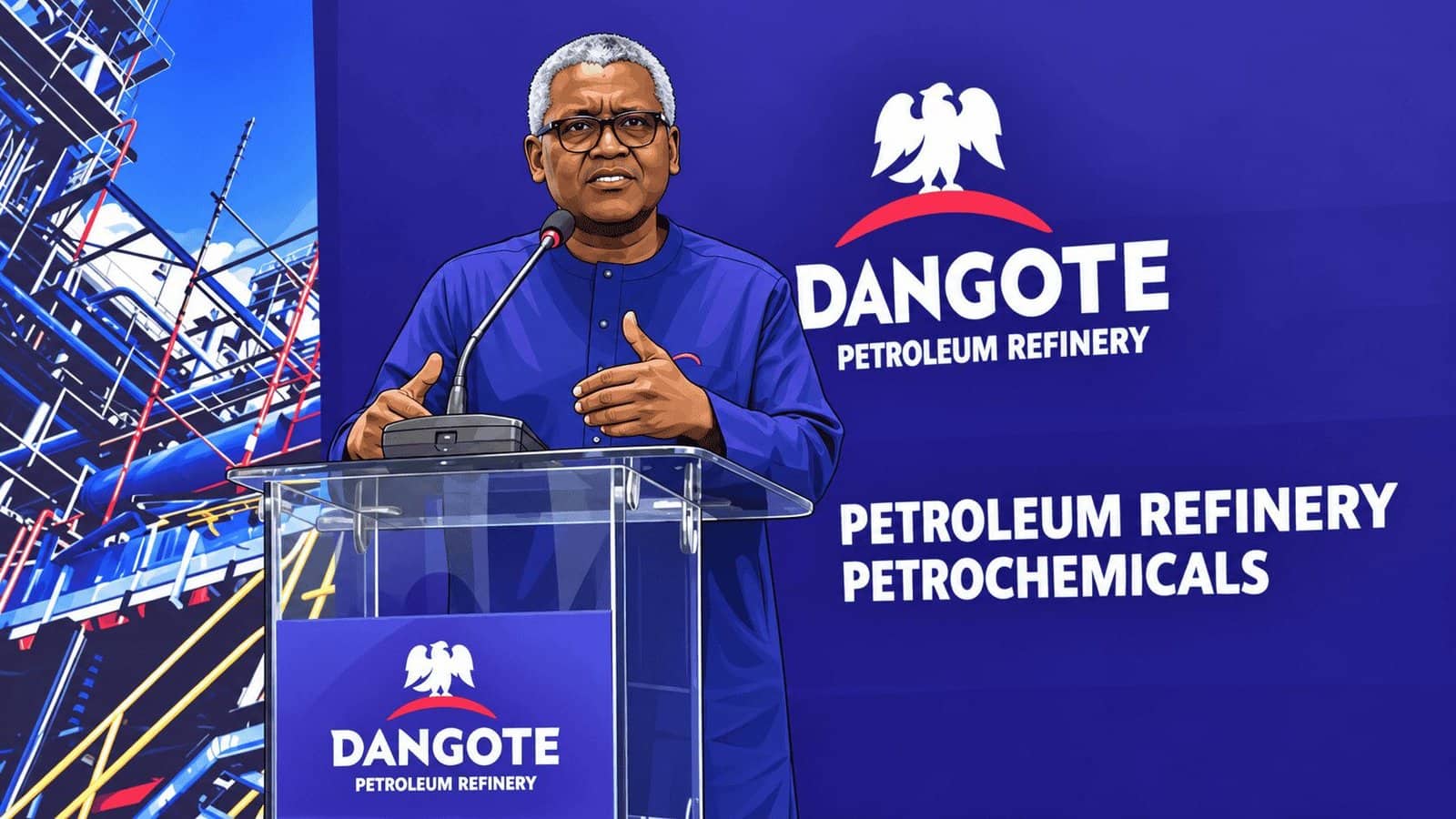

Every serious Nigerian energy investor now faces one comparison that refuses to settle quietly into a simple choice between two familiar oil names.
On one side stands Seplat Energy, a listed producer that already trades daily, pays dollar dividends, and reports audited numbers to shareholders. On the other sits the Dangote Refinery, a downstream giant preparing what could become the largest public offering the continent has ever attempted to price.
The two businesses share a country, an energy sector, and enormous ambition, yet they occupy completely different rungs of the oil value chain. That single difference reshapes how each stock behaves, how it earns, and which kind of investor should reasonably lean toward one over the other.
Our full Dangote Refinery IPO guide tracks the listing mechanics, timelines, and account steps that retail subscribers still need to complete. This head-to-head instead benchmarks the two names across revenue, debt, dividends, valuation, and risk for different investor profiles. You will finish with a clear sense of which company matches income seekers, and which suits patient growth buyers chasing scale.
Why the Dangote Refinery vs Seplat matchup compares two very different businesses
The clearest split between these two companies is where each one sits along the petroleum chain, and that placement drives everything else. Seplat Energy explores for and produces crude oil and gas across eleven onshore and shallow water blocks in the Niger Delta region.
The Dangote Refinery buys crude, processes it, and sells refined petrol, diesel, jet fuel, and petrochemicals into Nigeria and export markets. Upstream producers like Seplat live and die by crude prices, while refiners earn on the margin between crude cost and product prices. That distinction means the two stocks can move in opposite directions during the same oil price swing across a single trading quarter.
Seplat already delivers the disclosure public investors expect, reporting audited 2025 revenue of $2.73 billion, up 144%, in its results filing. Group production averaged 131,506 barrels of oil equivalent per day last year, a 148% jump driven by its first full year operating offshore assets.
The Dangote Refinery, by contrast, has not yet published audited public accounts, and no prospectus had reached the Securities and Exchange Commission by mid-2026. Investors weighing the Dangote Refinery vs Seplat question therefore compare one transparent income stock against one enormous, still private, soon-to-list industrial asset.

Balance sheet strength and dividends separate Seplat Energy from the Dangote Refinery
Balance sheet health is where the gap between the two names becomes easiest for ordinary investors to see and understand quickly. Seplat closed 2025 with net debt of $673 million, down 25% year on year, and a conservative net debt to EBITDA ratio of 0.53 times.
That low leverage let the producer raise its total 2025 dividend by 52% to 25 US cents per share, worth about $150 million. The company has committed to a minimum annual dividend of $120 million, or 20 cents per share, running from 2026 onward. Seplat also pays those distributions in US dollars, a rare feature that shields shareholder income from persistent naira depreciation over time.
The Dangote Refinery carries a heavier load, with roughly $3.65 billion in debt sitting on its balance sheet ahead of the listing. That debt must be serviced before any cash reaches shareholders, which clouds the dividend outlook that early retail subscribers can realistically expect. Dangote Group has proposed paying dividends in US dollars too, though that structure still awaits final approval from Nigerian regulators. The refinery raised $1 billion in June 2026 through a private placement priced at a $39.1 billion valuation, Billionaires Africa reported. Unusually for a project this size, about 72% of the build was equity funded rather than debt, Africa Oil and Gas Report noted.
Seplat’s leadership frames its dividend record as central to the investment case, tying capital returns directly to the strength of its asset base.
Chief Executive Roger Brown said the company is “already well positioned to deliver on our planned $1 billion cumulative return of capital to shareholders by 2030,” in its full-year statement.

That commitment gives income-focused investors a concrete, published target, something the Dangote Refinery cannot yet offer before its prospectus lands publicly.
Valuation, free float, and FX exposure in the Dangote Refinery vs Seplat decision
Valuation is where the two stocks diverge most sharply, because scale and disclosure sit on opposite sides of this particular comparison. Seplat trades on the NGX Premium Board and in London, and NGX Pulse recently put its market capitalization near ₦6.82 trillion. The stock has surged about 96% year to date, yet its price still rests on published earnings that investors can independently test.
The Dangote Refinery, valued between $39.1 billion and $50 billion, cannot yet be measured against public profit figures until its prospectus arrives. Analysts therefore price the refinery on scale, strategic weight, and export potential rather than the earnings multiples that anchor a mature producer like Seplat.
Liquidity and free float also favor different investor types across the Dangote Refinery vs. Seplat choice for very practical reasons. Seplat has about 600 million shares outstanding, though large holders like Heirs Energies, which took a 20.07% stake, tighten the tradable float. The Dangote Refinery plans to float only 5% to 10% of equity, with a 365-day lock-up restricting how fast early shares trade.
On currency, Seplat hedges oil price risk using put options and reports in dollars, while its dollar dividends soften naira exposure for holders. Citi analyst Oliver Connor raised his Seplat price target to 655 pence from 415 pence while keeping a buy rating, StockAnalysis noted.
Regulatory risk and ESG profile shape each Nigerian energy stock differently
Regulatory and geopolitical risk touches both companies, yet each one absorbs those pressures through a different operational and reputational channel. Seplat operates aging Niger Delta assets, where pipeline security, community relations, and periodic labor disputes can interrupt production and dent quarterly output.
The producer cut onshore emissions intensity to 24.3 kilograms of CO2 per barrel of oil equivalent in 2025, a 24% drop, strengthening its transition story. The Dangote Refinery faces different scrutiny, including a June 2026 SEC pause on unauthorized marketing tied to its offer, which briefly unsettled prospective subscribers. Its sheer scale also concentrates strategic and governance risk inside one family-controlled group operating across cement, food, fertilizer, and now refining.
Dangote Refinery vs Seplat Energy at a glance
| Metric | Seplat Energy (NGX / LSE) | Dangote Refinery (planned IPO) |
| Business model | Upstream oil and gas E&P | Downstream refining and petrochemicals |
| Listing status | Trading since 2014 | IPO targeted for 2026, not yet trading |
| 2025 revenue | $2.73 billion, up 144% | Not yet publicly disclosed |
| Adjusted EBITDA | $1.28 billion | Not yet disclosed |
| Net debt | $673 million (0.53x EBITDA) | About $3.65 billion |
| Dividend | 25.0 US cents in 2025 ($150m) | Dollar dividends proposed, pending approval |
| Valuation | About ₦6.82 trillion market cap | $39.1 billion to $50 billion |
| Stake / free float | ~600m shares, large blocks held | ~5% to 10% offered, 365-day lock-up |
| Output/capacity | 131,506 boepd (2025) | 650,000 bpd refining capacity |
Sources: Seplat Energy 2025 audited results, NGX Pulse, and Reuters and Billionaires Africa reporting on the Dangote offer.
Which profile fits which Nigerian energy stock
- Income seekers may prefer Seplat, given its audited $150 million 2025 payout and dollar-denominated dividend commitment through 2030, its results showed.
- Growth and scale buyers may lean toward the Dangote Refinery, whose $39.1 billion to $50 billion valuation targets Africa’s largest ever listing, analyst estimates indicated.
- Liquidity-focused traders may favor Seplat, since the refinery’s 365-day lock-up and thin float restrict early trading, its offer terms showed.
- Risk-averse investors may weigh Seplat’s 0.53 times leverage against the refinery’s $3.65 billion debt before choosing exposure, the companies’ disclosures confirmed.
What the Dangote Refinery vs Seplat verdict means for your portfolio
The Dangote Refinery vs Seplat decision ultimately rewards clarity about your own goals rather than any single verdict on which company wins. Seplat offers audited numbers, a decade-long dividend record, and daily liquidity that income and value investors can act on immediately today.
The Dangote Refinery offers scale, national strategic weight, and a rare chance to buy into Africa’s largest energy asset near the ground floor. Neither profile is objectively superior, since one prioritizes proven cash returns while the other prioritizes exposure to a transformational, still unproven public company.
Readers preparing to subscribe can revisit our Dangote Refinery IPO guide for the account steps, timelines, and documents the offer will require. Watching the prospectus, the final float, and Seplat’s next dividend will sharpen this comparison considerably as concrete listing details finally arrive.