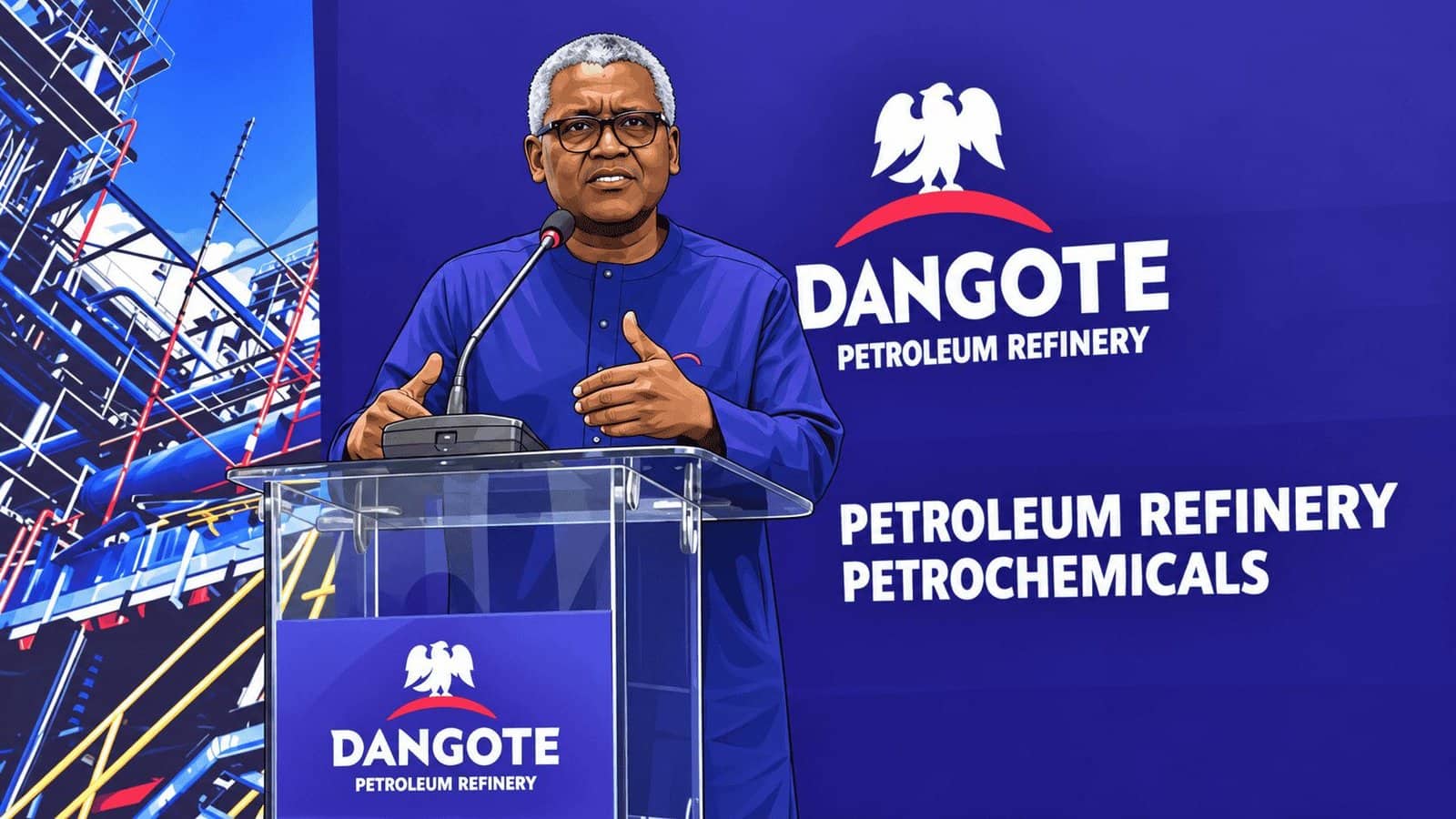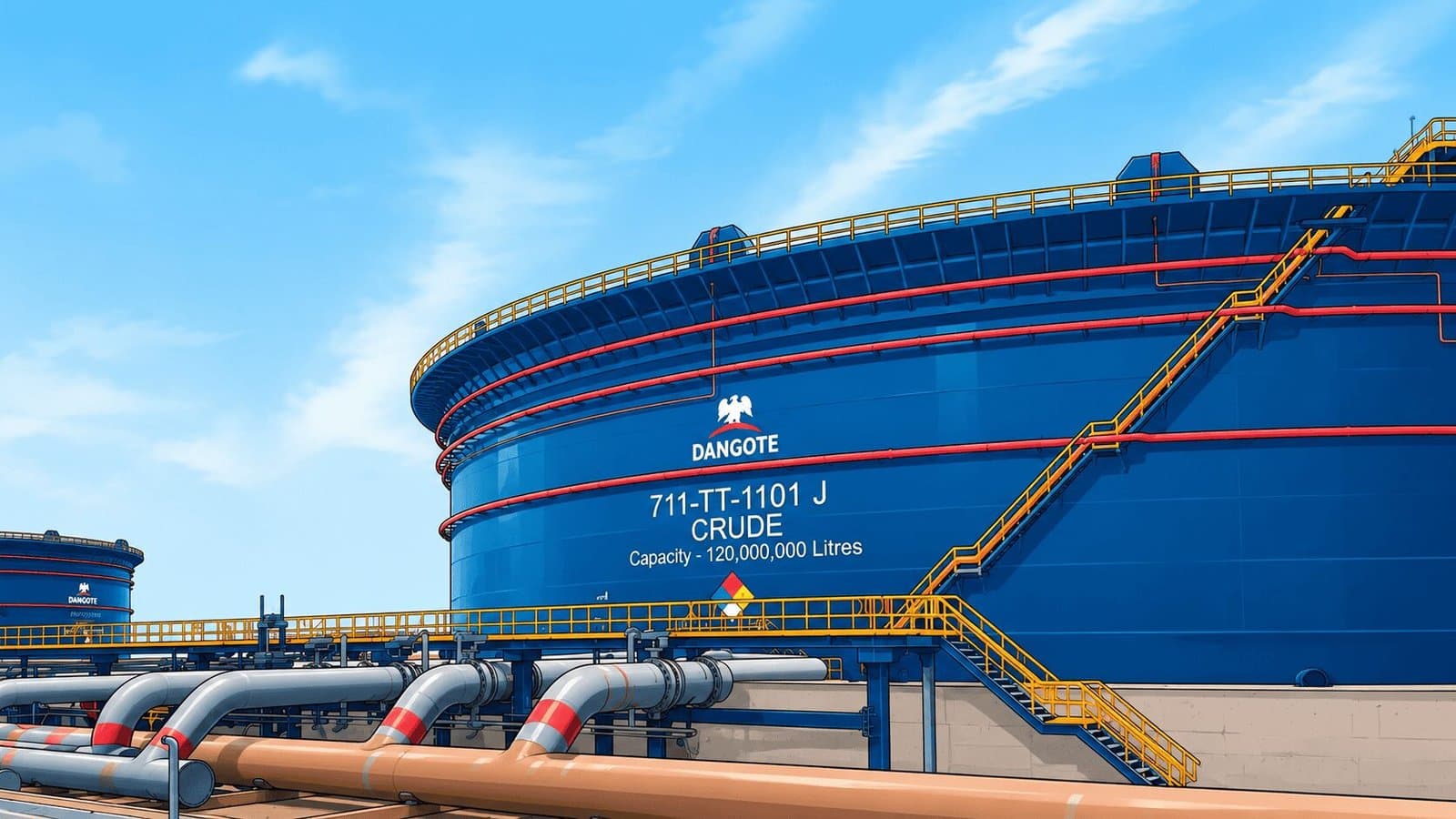

A private placement priced at $0.35 per share has already attracted more than $2 billion in investor commitments from institutions and billionaires alike. The Dangote Petroleum Refinery and Petrochemicals IPO, expected to open for public subscription around August or September 2026, is generating unprecedented demand across African capital markets.
Nigerian tycoon Femi Otedola has publicly committed $100 million to the pre-IPO round, while a 28-year-old security guard plans to invest $150 borrowed from his grandmother. The range of participants tells you something important about the breadth of anticipation around this listing.
Yet for all the excitement, any serious dangote refinery share price prediction requires confronting a valuation debate that splits seasoned market observers down the middle. The question is whether this $50 billion target reflects operational reality or speculative enthusiasm.
Where analyst valuations stand for Dangote Refinery ahead of the IPO
The valuation range currently sits between $39.1 billion and $50 billion, depending on the methodology and assumptions built into each model. A $1 billion private placement memorandum set the floor at $39.1 billion by pricing roughly 3 billion ordinary shares at $0.35 each, Billionaires.Africa reported. That figure reflects the typical discount applied in pre-IPO private rounds.
More on Nigerian capital markets:
Dangote Refinery Dual Listing: NGX and London Stock Exchange Explained
Analysts at Mystocks Africa identified four primary valuation methodologies in play: replacement cost analysis based on the roughly $19 billion construction outlay, EV/EBITDA multiples of comparable refiners ranging from 5x to 8x, discounted cash flow models using a 10% to 12% discount rate reflecting Nigerian country risk, and a strategic scarcity premium.
At the upper end, Aliko Dangote confirmed the $50 billion target as his internal expectation, which Bloomberg corroborated through sources familiar with the matter. That price point implies an EV/EBITDA multiple of approximately 17.9x against an estimated $2.8 billion EBITDA benchmark, Trade Brains reported, pricing the Lekki asset at a massive premium to the world’s most diversified downstream majors.
The bull case rests on refining margins, export capacity, and scale
Bulls point to the refinery’s operational track record as the strongest argument for a premium dangote refinery share price prediction. By February 2026, the facility reached its nameplate capacity of 650,000 barrels per day, and process licensors certified a test run at 700,000 barrels in June 2026, Billionaires.Africa confirmed.
Jet fuel exports surged by 770% between 2024 and 2026, with Europe receiving roughly 70,000 barrels per day to offset Middle East supply disruptions, Channels Television reported. The refinery became the world’s single largest exporter of jet fuel in April 2026, underpinning both the dollar dividend commitment and the broader growth narrative.
“We want ordinary Africans to participate in the value being created. What companies like Amazon and Apple achieved globally in terms of wealth creation is what we seek to replicate in Africa.” — Aliko Dangote, president of the Dangote Group, in an interview with MoneyCentral, as reported by Trade Brains

Dangote Group revenues have expanded from $3.3 billion to $18 billion over five years, while EBITDA grew from $1.8 billion to $2.8 billion during the same period, Daba Finance reported.
The group’s next generation of leadership, including Dangote’s three daughters who are now driving a $100 billion Vision 2030 strategy, could extend the growth runway if the expansion targets hold.
The petrochemicals division, including a 400,000 metric-ton-per-year polypropylene plant, could add $3 billion to $5 billion to enterprise value beyond pure refining margins, Mystocks Africa’s independent valuation noted.
Risks that could weigh on Dangote Refinery’s post-listing performance
Bears counter that a 17.9x EV/EBITDA multiple for a single-site refinery in a frontier market defies downstream sector valuation norms. The refinery carries approximately $3.65 billion in outstanding debt, Daba Finance reported. That debt was restructured as part of a fresh $4 billion syndicated loan signed in March 2026, with Afreximbank underwriting $2.5 billion of that amount, Africa Oil and Gas Report noted.
Lagos-based savings and investment firm Cowrywise warned that the dollar dividend promise depends entirely on sustained export revenue. “Without strong export revenue, the whole structure weakens,” Cowrywise wrote, adding that if exports decline, the dollar pool shrinks and the dividend shrinks alongside it, Semafor reported. The dollar dividend structure remains pending formal regulatory approval from Nigeria’s SEC and the CBN.
Fitch Ratings downgraded Dangote Industries’ national long-term rating from AA(nga) to B+(nga) in August 2024, citing liquidity deterioration and operational underperformance, BusinessDay Nigeria reported. Fitch subsequently withdrew all ratings for the company in February 2025.
Key risk factors for prospective Dangote Refinery investors
- Oil price volatility: Brent crude price swings directly affect refining margins and revenue projections across all analyst models.
- Currency risk: The naira lost more than 80% of its value against the dollar over the past decade, and share prices are denominated in naira, The Money Recipe noted.
- Debt service: The $3.65 billion in outstanding debt means a meaningful portion of cash flow services interest and principal before dividends reach shareholders.
- Regulatory uncertainty: Nigeria’s SEC halted unauthorized promotional activities for the IPO in June 2026 because no official application had been submitted, Value The Markets confirmed.
Scenario-based price paths over 6, 12, and 24 months after listing
No official share price has been published, and the prospectus will contain the only figures that matter for your investment decision. Based on the valuation range and methodologies analysts have outlined, three distinct scenarios emerge for tracking this dangote refinery share price prediction.
Bull scenario: sustained premium and expansion upside
Under the bull case, analysts expect the IPO to price near the $50 billion target, with shares potentially appreciating 15% to 25% within 12 months as the expansion plan to more than double capacity to 1.4 million barrels per day gains credibility, African Business reported. Cross-listing on Johannesburg, Nairobi, and other African exchanges could broaden the investor base over 24 months.
Base scenario: moderate gains with volatility spikes
The base case assumes listing near the $39 billion to $45 billion midpoint, with initial price volatility in the first six months. Earlier valuations in late 2025 placed the refinery between $20 billion and $25 billion, and the near-doubling reflects stronger-than-expected operational performance, Daba Finance noted. Shares could trade flat to up 10% over 12 months.
Bear scenario: overvaluation correction and macro headwinds
The bear case envisions the IPO pricing at the upper range followed by a 15% to 25% correction within six months if oil prices decline, naira depreciation accelerates, or the dollar dividend fails to secure regulatory approval. Bamboo’s risk analysis noted that a $45 billion midpoint implies 7x to 8x projected EBITDA, pricing for a premium asset in a market with significant execution risk, Bamboo Invest cautioned.
What newly listed Nigerian large-caps teach about post-IPO volatility
Newly listed large-cap stocks on the Nigerian Exchange carry elevated volatility that differs meaningfully from mature markets. Dangote Cement, currently the third most valuable stock on the NGX at approximately NGN 16.2 trillion in market capitalization, has lost 18% of its value in just the past four weeks despite gaining 58% year-to-date.
Richmond Bassey, CEO of Bamboo, told Semafor that Nigerian stock trading volume ran three times larger than U.S. stock volume on its platform in the first quarter of 2026. That enthusiasm is real, but it also signals retail-driven momentum that can reverse sharply if post-listing performance disappoints early expectations.
The prospectus has confirmed an offer price of ₦525
The Dangote Refinery IPO is now open for subscription at ₦525 per share, with the offer closing on October 13, 2026 and listing expected in late November.
Five independent estimates published between September 7 and 17 value a Dangote Refinery share between ₦176 and approximately ₦697, which means the confirmed offer price sits near the middle of the published range rather than at the top.
Investors ready to subscribe can follow our step-by-step guide to buying Dangote IPO shares, while those concerned about allocation mechanics should review our breakdown of how the share distribution process works in an oversubscribed Nigerian IPO.
Aliko Dangote has also signaled plans for a New York listing after 2029, which could add a second catalyst to any post-IPO price trajectory.