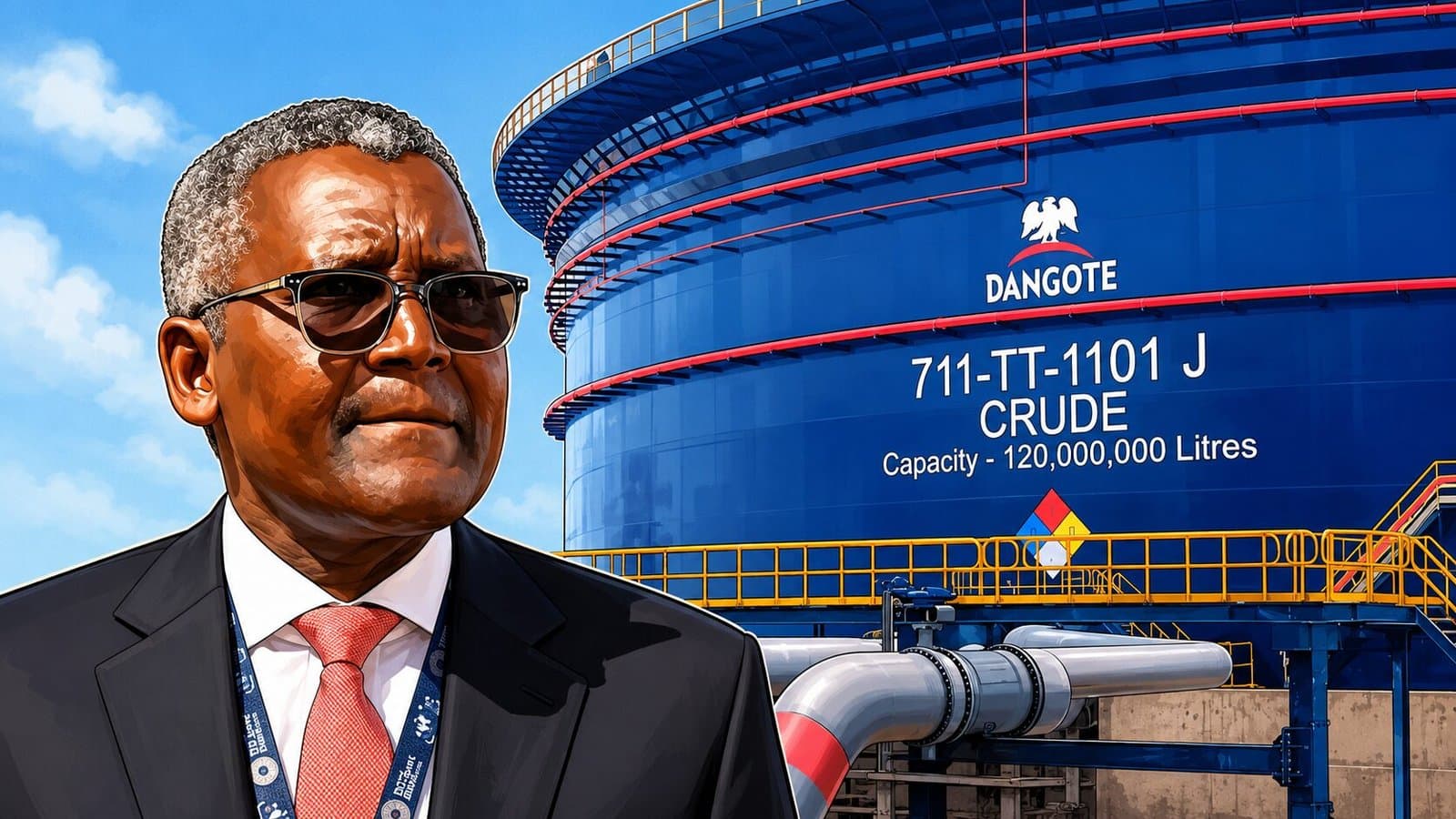

Three East African governments are circling a deal that could hand them ownership stakes in the region’s most ambitious energy project in decades. Aliko Dangote, the billionaire behind Africa’s largest oil refinery, has offered Kenya, Ethiopia, and Rwanda a combined 30% equity stake in his proposed facility at Lamu on Kenya’s Indian Ocean coast.
The planned refinery would process 700,000 barrels of crude oil per day and cost an estimated $16 billion to build. Kenya’s share alone would require roughly $500 million, a significant bet for a government that currently imports virtually all of its refined fuel.
The proposed equity structure surfaced at a capital markets forum in Nairobi, where a top presidential adviser described the terms of regional participation publicly for the first time.
Kenya’s $500 million gamble on Dangote’s Lamu refinery
David Ndii, economic adviser to Kenyan President William Ruto, disclosed the equity terms at Mwango Capital’s Forum in Nairobi on August 20. Ndii confirmed that Kenya is pursuing a 10% interest in the planned facility, an investment valued at approximately $500 million at current project estimates, Rigzone reported.
Ethiopia and Rwanda have also expressed interest in taking equity positions, bringing the combined regional stake to approximately $1.5 billion, Business Post Nigeria reported. Participating countries would hold direct stakes while securing access to refined petroleum products for domestic consumption.
“The total for the region is about $1.5 billion. I don’t actually see a challenge in doing that, and if some of them are not off-taking, we will backstop.” — David Ndii, economic adviser to Kenyan President William Ruto

The deal would give these governments both an equity return and a supply guarantee, tying their financial interest to the project’s long-term operational success.
Dangote picked Lamu over Tanzania for commercial reasons
The project was initially planned for Tanga, Tanzania, before Dangote relocated it to Lamu on Kenya’s coast, citing commercial and logistical advantages, Forbes Africa reported. Lamu’s natural harbor can accommodate large crude tankers, giving the refinery direct access to long-haul imports and an export outlet for surplus fuel.
Groundbreaking is targeted for as early as September or October 2026, with the full build expected to take fewer than four years once construction begins, according to statements from Ndii and Dangote to the BBC. He noted that the Kenyan project should cost less than the Nigerian refinery, which ultimately exceeded $20 billion, Billionaires.Africa reported.
Nathan Were, a senior operations officer at the World Bank Group, called the Lamu project “the boldest move yet” to end East Africa’s longstanding fuel import dependency, writing in the UG Standard. The region currently imports more than 90% of its refined petroleum, spending an estimated $15 billion to $20 billion on fuel purchases annually, The Independent Uganda reported.

Dangote’s IPO and billionaire backers fuel the East Africa push
The East Africa refinery is not the only Dangote project commanding capital market attention, as the Nigerian refinery nears a landmark stock market listing. Dangote Petroleum Refinery secured a $1 billion underwriting program this week ahead of its planned initial public offering, Reuters reported via CNBC Africa.
The program includes a funded $600 million private placement and an additional $400 million underwriting commitment that activates when the IPO launches, Dangote Industries confirmed.
Private interest is building outside government channels as well. Tanzanian billionaire Mohammed Dewji has expressed willingness to invest $100 million in the Kenyan refinery. Dewji said what Dangote has accomplished in Nigeria was “unbelievable” and confirmed his intent to open investment discussions, Nairametrics reported.

The 30% stake could reshape how East Africa controls its fuel supply
The proposed equity structure would give Kenya, Ethiopia, and Rwanda direct ownership in a facility designed to serve the entire region’s refined fuel needs and reduce exposure to volatile import costs.
Roughly 80% of the region’s gasoil and jet fuel comes from Persian Gulf states, leaving East Africa vulnerable when supply routes are disrupted, S&P Global noted. Whether these three governments can mobilize the $1.5 billion needed to secure their collective stake remains the question this deal has yet to answer.
Key takeaways from Dangote’s East Africa equity offer
- Dangote has offered Kenya, Ethiopia, and Rwanda a combined 30% equity stake in the planned $16 billion Lamu refinery, Rigzone reported
- Kenya would commit approximately $500 million for a 10% interest in the 700,000-barrel-per-day facility
- Groundbreaking is targeted for September or October 2026, with construction expected to take fewer than four years, Ndii and Dangote have said
- Tanzanian billionaire Mohammed Dewji has expressed interest in a separate $100 million investment, Nairametrics reported
- Dangote Petroleum Refinery secured a $1 billion underwriting program ahead of its planned IPO, Reuters reported
- East Africa imports over 90% of its refined fuel, spending an estimated $15 billion to $20 billion annually, The Independent Uganda reported