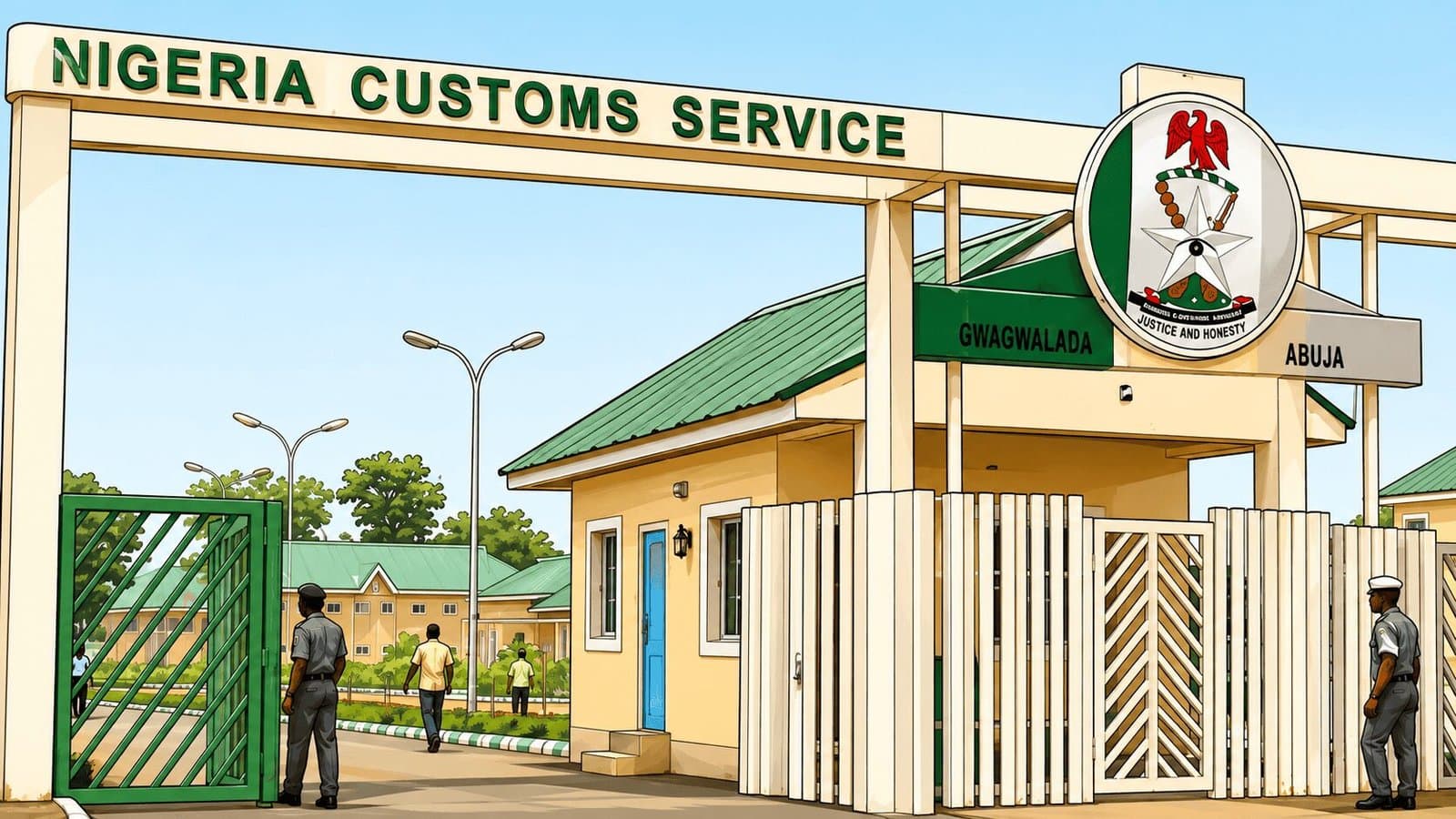

Nigeria’s busiest ports are processing cargo faster, catching more contraband, and feeding the treasury at a pace that few predicted two years ago. The agency responsible for all of it just posted a half-year number that raises an obvious question: can it keep this up?
The Nigeria Customs Service collected ₦4.03 trillion between January and June 2026, according to a compendium from Comptroller-General Adewale Adeniyi obtained by the News Agency of Nigeria. That figure already puts the service well ahead of its mid-year projections and on track toward an annual target of ₦11.074 trillion.
If you follow Nigerian government revenue, you know that the customs agency has been on a tear for three consecutive years now. But the strategy behind this latest surge involves a fundamental shift in how the service operates at every port and border crossing.
The core of that shift is a single decision: stripping individual officers of their authority to make judgment calls on cargo valuations and classifications. What replaced that discretion is a system of automated rules, and the revenue gains suggest it is working.
How Customs generated ₦4.03 trillion by overhauling officer discretion
The ₦4.03 trillion first-half figure represents a significant jump over the ₦3.6 trillion the service collected in the same period in 2025, Punch reported at the time. What drove the increase was not higher tariff rates or a sudden wave of imports. It was an operational overhaul targeting one of the oldest problems in Nigerian customs administration: the vulnerability that comes with giving officers the power to assign values and classifications at their own discretion.
Adeniyi framed the reform in blunt terms in the compendium, saying the service replaced manual interventions with standardized rules, risk-based systems, and automated valuation references designed to close revenue leakages. He described the removal of officer discretion as the single most important driver of the revenue improvement.
“We removed human discretion, deployed technology, and built trust with compliant traders. When you do that, revenue will grow exponentially without hurting business.” — Adewale Adeniyi, Comptroller-General of Customs
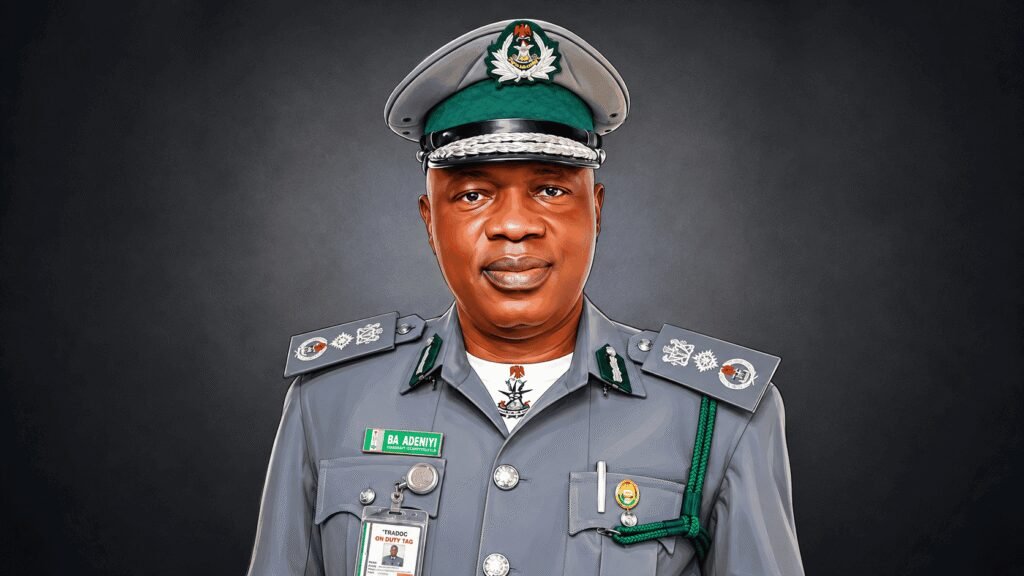
The practical effect is that cargo arriving at ports like Apapa and Tin Can Island now moves through a system where valuations are generated algorithmically, not negotiated. Officers still staff the checkpoints, but the system dictates what duties are owed, reducing both corruption risk and inconsistency.
Nigeria Customs revenue has tripled since 2023 on the back of reforms
The trajectory makes the agency’s recent performance look less like a one-off spike and more like a sustained acceleration. The service collected ₦3.21 trillion in 2023, nearly doubled that to ₦6.1 trillion in 2024, and then pushed further to ₦7.277 trillion in 2025, exceeding its ₦6.584 trillion target by 10.24%, Premium Times reported.
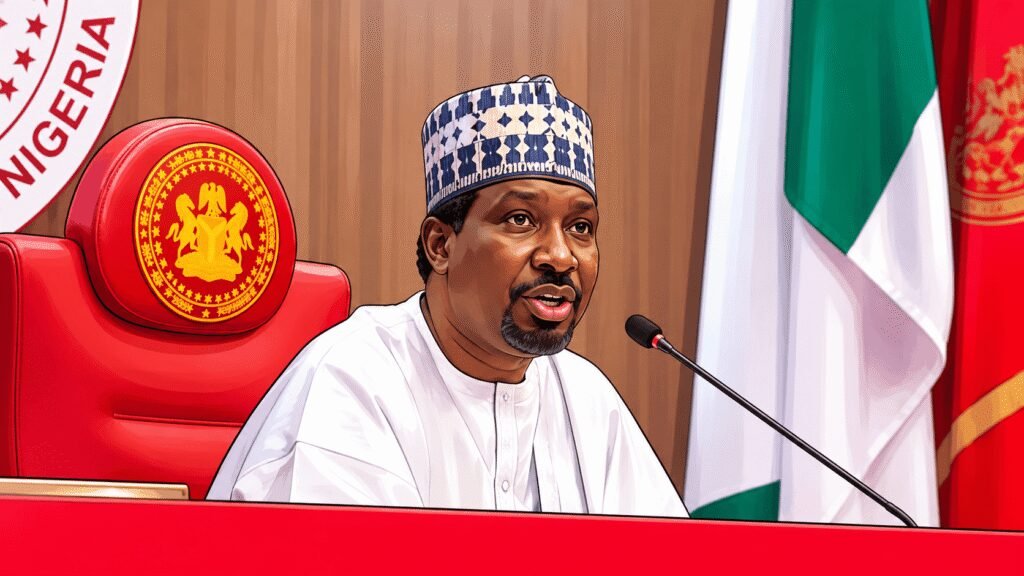
The Senate gave its formal backing to the ₦11.074 trillion target on July 8, 2026, approving the agency’s budget alongside a ₦1.295 trillion expenditure plan covering personnel, overhead, and capital projects. Deputy Senate President Jibrin Barau called the agency’s fiscal discipline noteworthy, pointing out that Customs proposed spending only ₦1.2 trillion to generate more than ₦11 trillion in revenue.
What the ₦11 trillion Customs target means for Nigeria’s fiscal outlook
The first-half collection of ₦4.03 trillion puts the service at roughly 36% of its annual target with six months remaining. That is a slower pace than needed for a straight-line projection to ₦11 trillion, which would require about ₦5.5 trillion in the first half. However, import volumes typically pick up in the second half of the year ahead of festive-season demand, which could accelerate collections.
The target itself is ambitious by any standard. It represents a 52% jump over the ₦7.277 trillion collected in all of 2025 and nearly 3.5 times the ₦3.21 trillion collected in 2023. Achieving it would make the NCS one of the largest single contributors to Nigeria’s non-oil revenue base.
Nigeria Customs revenue growth at a glance
- 2023 full-year revenue: ₦3.21 trillion (source: NCS compendium via Tribune)
- 2024 full-year revenue: ₦6.1 trillion, exceeding the ₦5.08 trillion target by 20.2% (source: NCS press briefing via Nairametrics)
- 2025 full-year revenue: ₦7.277 trillion, exceeding the ₦6.584 trillion target by 10.24% (source: NCS budget defense via Premium Times)
- H1 2026 revenue: ₦4.03 trillion (source: NCS compendium via NAN)
- 2026 full-year target: ₦11.074 trillion, approved by the Senate on July 8, 2026 (source: Senate Committee report via Premium Times)
Customs is also pushing for policy changes that could reshape trade revenue
The revenue story is only part of what Adeniyi is signaling. In the same compendium, he described the NCS as an institution that has evolved beyond duty collection into a multifunctional agency covering trade facilitation, data generation for national planning, and border security enforcement.
On the enforcement front, he noted that intelligence-led operations now involve coordinated work with the Army, Navy, DSS, EFCC, and the NFIU across land, sea, and air borders. The service also adopted Time Release Studies as a tool to measure cargo clearance times, an approach Adeniyi said is lowering costs for businesses and improving Nigeria’s standing in global trade facilitation rankings.
The big question: can Customs sustain this pace through year-end?
The ₦11 trillion target requires second-half collections to nearly double what the service pulled in during the first six months of 2026. That is a tall order, even with import volumes expected to pick up. Exchange rate volatility, which Adeniyi himself flagged as a challenge during the Q1 2025 review, remains a persistent wildcard that can swing both trade volumes and the naira value of customs receipts.

The service has also called on the National Assembly to review Nigeria’s import waiver and concession regime, questioning whether those incentives still justify their fiscal cost, Adeniyi said during a Senate Committee retreat in Abuja earlier this month, Nairametrics reported. If lawmakers act on that recommendation, it could unlock additional revenue streams. But it would also create new friction with importers and industries that rely on existing duty exemptions.
For ordinary Nigerians, the immediate takeaway is that more customs revenue flowing into the Federation Account should, in theory, mean more funding distributed to federal, state, and local governments. Whether that translates into visible improvements in public services is a separate question entirely, and one that the revenue numbers alone cannot answer.