
Your rent is due in 72 hours, your child’s school fees invoice just arrived, and your salary is still two weeks away from hitting your account. That scenario plays out for millions of Nigerian salary earners every quarter, and a personal loan from the right bank can bridge the gap.
Personal loans issued by Nigerian banks reached ₦1.96 trillion in January 2026, accounting for 51.44% of total consumer credit, the Central Bank of Nigeria confirmed in its January 2026 Economic Report, Legit.ng reported. That figure grew by 5.95% from December 2025, a clear sign that household borrowing keeps accelerating across the country.
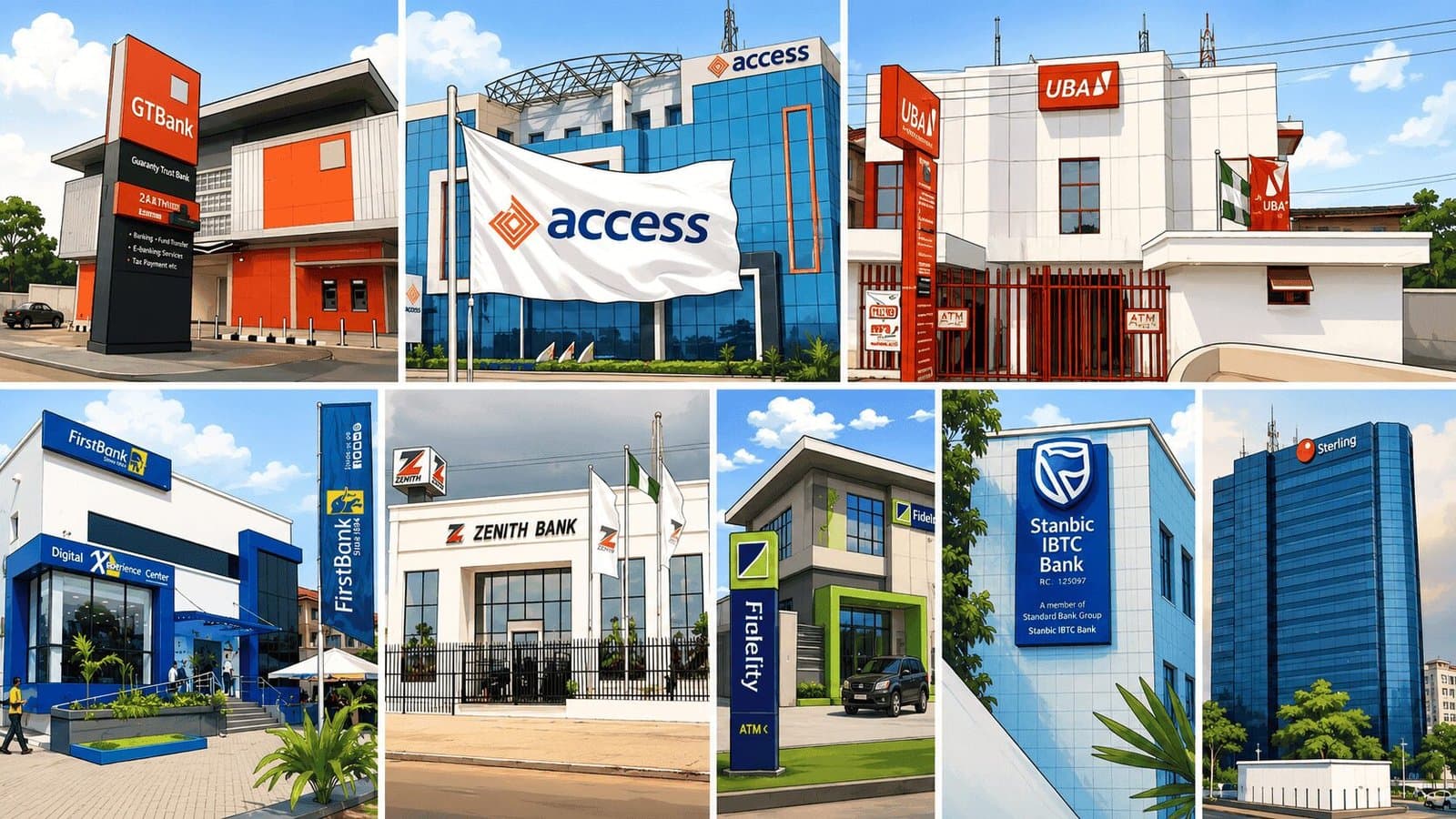
With eight major banks offering different rate structures, loan ceilings, and digital channels, finding the best banks for personal loans in Nigeria for your situation takes careful comparison. This guide breaks down the personal loan products at GTBank, Access Bank, UBA, FirstBank, Zenith Bank, Stanbic IBTC, Fidelity Bank, and Sterling Bank. You will see exactly which bank wins for the lowest rate, the highest ceiling, the fastest cash, and the most flexible eligibility.
How eight Nigerian banks compare on personal loan rates and limits
The gap between the cheapest and most expensive personal loan among Nigeria’s top banks is wider than most borrowers realize. A Nairametrics review of June 2026 lending data found that GTBank’s retail rates range between 24% and 42% annually, while Access Bank’s prime lending rate sits at 25.5%, Nairametrics reported. Fidelity Bank’s prime rate stands at 30%, and its maximum rate reaches 36%, the same report confirmed.
More personal finance:
How to get a loan from your bank without collateral
Access Bank’s Salary Advance product charges 9% on a reducing balance, with a ceiling of ₦10 million or 400% of the borrower’s net monthly salary, the bank’s product page states. GTBank’s Quick Credit facility carries a monthly rate of 2.95%, which translates to roughly 35.4% per year, with a maximum of ₦5 million.
UBA offers the highest ceiling among the eight banks, with personal loans up to ₦30 million and tenors stretching to 60 months, Credit Nigeria noted. Sterling Bank’s Specta platform accepts both salaried and self-employed applicants with accounts at any Nigerian bank, giving it the widest eligibility net.
What drives lending rates at Nigerian banks in 2026
The CBN held its benchmark Monetary Policy Rate at 26.5% at the 305th MPC meeting in May 2026, citing renewed inflationary pressure and exchange rate concerns. Headline inflation rose to 15.93% year-on-year in May 2026, while food inflation eased to 16.96%, according to National Bureau of Statistics data cited by Nairametrics.
Jerry Igwilo, Co-Founder and CEO of Wynk Limited, told Nairametrics that easing geopolitical tensions could create room for lower interest rates globally.
“If the CBN does not reduce rates at its next meeting, it may decide to maintain them before considering a cut subsequently,” Igwilo said.

Dr. Muda Yusuf, CEO of the Centre for the Promotion of Private Enterprise, told Nairametrics in the same report that he held a contrasting view on the rate outlook. High interest rates serve the dual purpose of combating inflation and attracting foreign portfolio investment needed for forex liquidity, Yusuf explained. That tension between growth-friendly cuts and inflation control shapes every bank’s loan pricing decision for individual borrowers.
Ranked comparison of the easiest bank loan in Nigeria by use case
Each bank occupies a distinct niche depending on whether you prioritize low cost, large amounts, speed, or flexible eligibility. The best banks for personal loans in Nigeria depend entirely on what you need most, and here is how the eight stack up for salary earners and individual borrowers.
Key comparison data at a glance
- Access Bank (lowest rate for term loans): 9% reducing balance annually on Salary Advance; up to ₦10 million or 400% of net salary; 12-month tenor; USSD and QuickBucks, Access Bank.
- UBA (highest ceiling): Up to ₦30 million; 60-month repayment window; 1% management fee; disbursement within 48 hours of documentation, UBA.
- FirstBank (fastest disbursement): FirstAdvance disburses within minutes via USSD (*894*11#) or FirstMobile; 3% flat monthly for the 90-day variant; max ₦2 million or 75% of net salary, FirstBank.
- Sterling Bank (most flexible eligibility): Specta platform accepts salaried and self-employed applicants with accounts at any bank; personal loan tenor up to 60 months, Sterling Bank.
- GTBank (Quick Credit): 2.95% monthly (~35.4% p.a.); max ₦5 million; salary account must be active 12 months; available on GTWorld and *737*51*51#, GTBank.
- Zenith Bank (salary advance): Up to 60% of net monthly salary; revolving credit with clean-up cycle; 24% prime lending rate and 32% maximum rate, CBN-published data shows; apply at branch or via *966*, Zenith Bank.
- Stanbic IBTC (investment-backed lending): EZ Cash at 4% flat monthly; Smart Loan of up to ₦200 million (per the bank’s product page; some Stanbic IBTC pages list a lower figure, so borrowers should confirm directly) against Money Market Fund holdings; secured term loan tenor up to 7 years, Stanbic IBTC.
- Fidelity Bank (salary-based): Prime lending rate of 30%, maximum 36%; salary-based personal loan for employees of approved organizations; salary domiciliation required, Fidelity Bank.
Which bank with the lowest loan interest rate wins each category
Borrowers who want the bank with the lowest loan interest rate on a structured term loan will find Access Bank’s 9% reducing-balance Salary Advance hard to beat. That rate applies to confirmed employees whose salaries flow through Access Bank, with a ceiling of ₦10 million or four times net monthly pay.
For sheer borrowing power, UBA’s ₦30 million maximum with a five-year repayment window outpaces every other retail bank product on this list. The trade-off is a floating interest rate and the requirement to domicile salary plus provide an employer’s undertaking before approval.
Speed belongs to FirstBank, whose FirstAdvance product pushes cash into the borrower’s salary account within minutes of a successful USSD or mobile app request. The 90-day variant carries a 3% flat monthly charge, and the maximum sits at ₦2 million or 75% of net monthly salary, whichever is lower.
Sterling Bank takes the flexibility award because its Specta lending platform does not require salary domiciliation with Sterling specifically. Salaried workers, business owners, professionals, and traders with accounts at any Nigerian bank can apply for loans with tenors up to 60 months.
What borrowers need to watch before signing a personal loan agreement
Dr. Femi Egbesola, President of the Association of Small Business Owners of Nigeria, expressed hope that the CBN would lower rates at its next meeting.
“We believe that lowering the interest rate will go a long way to support more access to funding for SMEs and will also make it more affordable,” Egbesola told The Punch.

Beyond headline rates, management fees, credit life insurance premiums, and upfront interest deductions can inflate the true cost of any personal loan. Access Bank charges a 1% management fee and 1.2% credit life insurance upfront on its Salary Advance, for example, eating into the disbursed amount.
FirstBank collects all fees, including interest and insurance, at disbursement rather than spreading them across the repayment schedule, the bank’s product terms confirm. GTBank’s Quick Credit charges a one-off 1% credit insurance fee, but interest is repaid through equal monthly installments over the selected tenor. That front-loaded cost structure at FirstBank means the effective annual rate is higher than the advertised monthly figure suggests.
The CBN’s Global Standing Instruction policy allows lenders to recover overdue personal loans from any bank account linked to the borrower’s BVN. Borrowers who overextend across multiple banks risk automatic debits that can drain accounts at institutions where they hold no loan, the CBN confirmed.