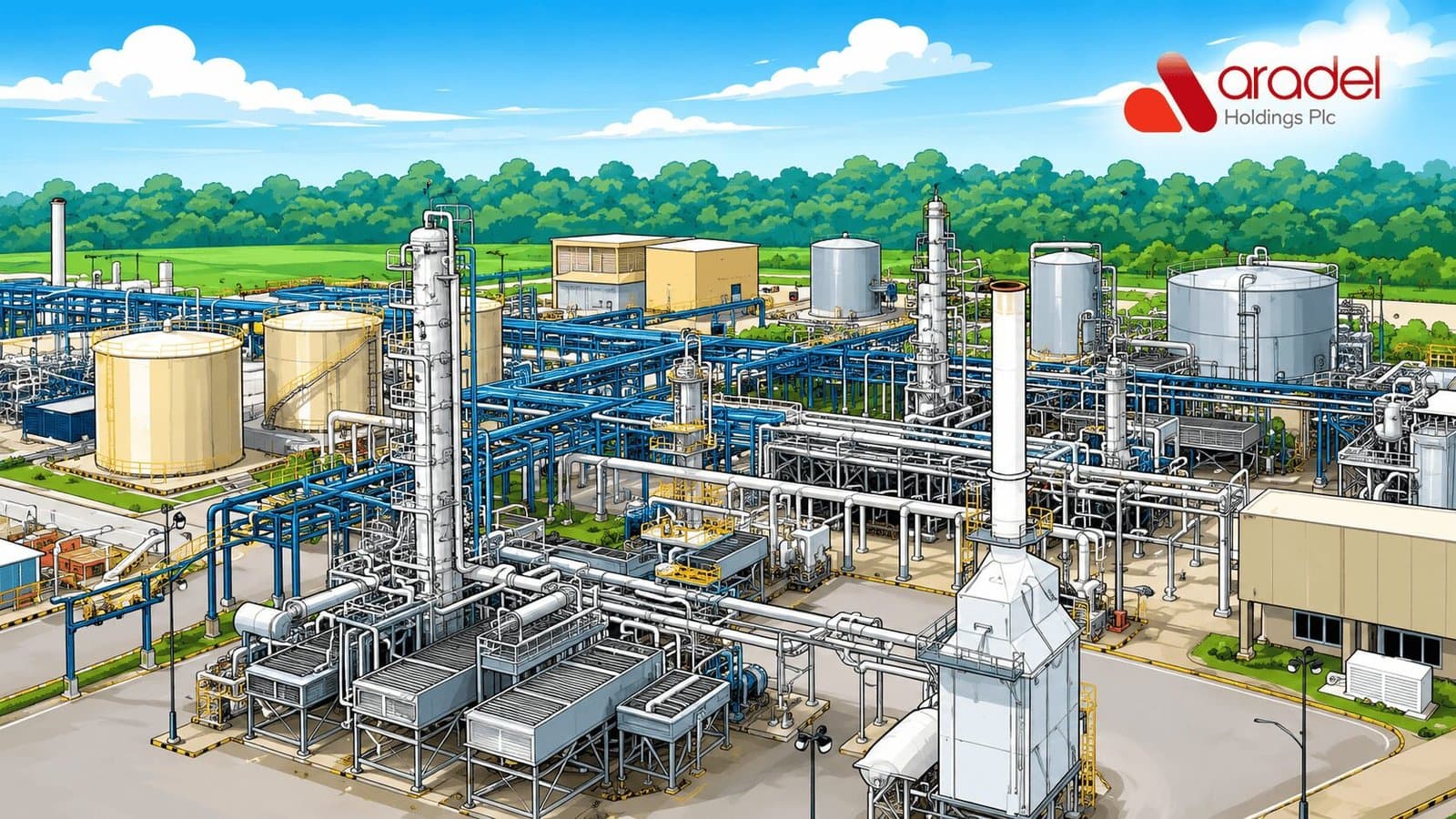

2026 is shaping up to be a defining year for Aradel Holdings. After a series of major acquisitions that transformed its position in Nigeria’s oil and gas industry, the company is finally seeing the rewards of its expansion.
Production kept climbing, revenue kept soaring, and the business is now breaking records on different fronts.
Aradel’s growth and stronger financial position showed in its latest earnings report and gave investors a glimpse of just how much the business has grown
Aradel records impressive earnings
Aradel Holdings Plc has posted the biggest set of numbers in its history, with revenue jumping 633% in the first nine months of 2026 after the Nigerian oil and gas producer folded two newly acquired companies fully into its books.
Revenue rose to ₦3.95 trillion in the nine months to September 30, from ₦538.8 billion a year earlier, Punch reported
Operating profit jumped 832% to ₦1.56 trillion from ₦167.5 billion, and profit before tax climbed 154% to ₦764.7 billion.
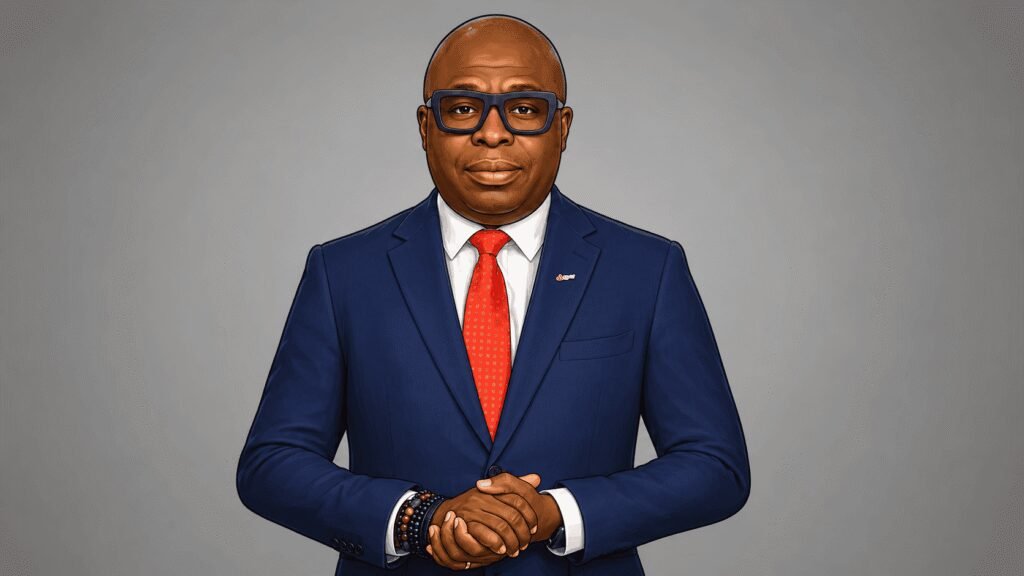
“The first nine months of 2026 demonstrated what our enlarged portfolio can deliver,” Chief Executive Officer Adegbite Falade said in the press release. “Group production ran above our full-year guidance range, with strong growth in both crude oil and gas output. This drove a step-change in revenue and EBITDA, alongside improved margins.”
Where the growth came from
The jump traces back to Renaissance Africa Energy Co., the consortium that bought Shell’s Nigerian onshore business, Shell Petroleum Development Co. (SPDC), in March 2025, Reuters reported.
Aradel raised its stake in ND Western Ltd., one of the consortium’s members, to 81.67%, and now owns 53.3% of Renaissance directly and through ND Western.
Both companies, previously treated as associates, were consolidated into Aradel’s accounts for the first time from the end of December 2025.
That consolidation transformed Aradel’s production base. Group output rose to an average of 144,700 barrels of oil equivalent a day, from just 24,000 a year earlier, BusinessDay said.
Crude production nearly quadrupled to 57,900 barrels a day, and gas output climbed almost tenfold to 503.6 million standard cubic feet a day.
On the strength of that performance, Aradel raised its full-year production target to between 140,000 and 150,000 barrels of oil equivalent a day, up from a prior range of 110,000 to 140,000.
Favorable pricing added to its momentum. The company sold its crude at an average of $97.50 a barrel, up from $75.60, and its gas at $2.64 per thousand cubic feet, up from $1.64, while field operating costs fell 28% to $7.90 a barrel.
Crude oil contributed 69% of revenue, gas 26% and refined products the remaining 5%, The Nation reported.
The earnout charge that ate most of the profit
The headline growth masks the steep divergence down the income statement. Profit after tax fell 82% to ₦43.3 billion, dragged down by a ₦529.1 billion “earnout” charge.
This is a contingent payment tied to Renaissance’s acquisition of SPDC, under which Shell retains an economic interest in a defined perimeter of the assets and receives payments calculated against net revenue generated there, Nairametrics explained.
As oil prices climb, the arrangement acts like a revenue royalty that grows heavier as the business performs better.
Combined with net finance costs of ₦797.3 billion and a tax bill of ₦721.4 billion, the net effect was a profit after tax that fell far short of the operating numbers above it.
Falade and Chief Financial Officer Adegbola Adesina said the net finance explains the interest on the consolidated borrowings of ND Western and Renaissance, the discount on decommissioning provisions, and the earnout charge.
Excluding the earnout charge, profit after tax would have risen 134% to ₦572.4 billion, though Aradel said that number is an alternative performance measure, not one recognized under IFRS.
Profit attributable to shareholders fell 42% to ₦141.5 billion, and earnings per share dropped to ₦32.57 from ₦55.90.
Aradel’s board said the arrangement “no longer reflects the balanced participation” originally intended between the parties.
The company has paid ₦543.9 billion in earnout payments during the nine months and still carries ₦1.32 trillion of the liability on its books, down from ₦1.42 trillion at the end of 2025, but still a substantial obligation.
Aradel said the charge will continue to accrue through the rest of 2026.
More NGX and oil coverage
- Aradel drops below ₦1,400 on heavy selling
- NGX turnover hits ₦110 billion as sellers take charge
- Dangote Refinery IPO closes with demand from 120 nations
A stronger balance sheet, despite the charges
Even with earnings squeezed, Aradel’s cash position improved. Cash from operations rose to ₦2.46 trillion from ₦205.4 billion, and the company cut its borrowings by 25% to ₦1.51 trillion.
That cash generation flipped the company from a net debt position of ₦475.1 billion at the end of December to net cash of ₦532.3 billion by the end of September.
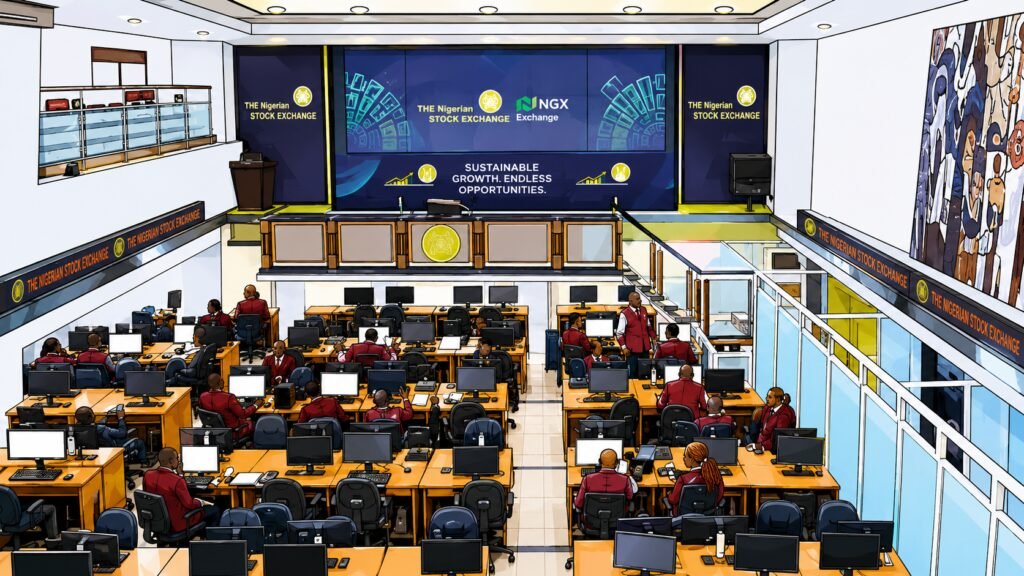
The improved liquidity supported the board’s decision to declare an interim dividend of ₦7 a share, worth about ₦30.4 billion, down from ₦10 a share a year earlier, TheGuardian reported.
Aradel’s smaller refining business was the one soft spot, with output falling 18% to 194.2 million litres. This is due to the limited feedstock availability, evacuation constraints and planned maintenance.
Key numbers at a glance
- Revenue: ₦3.95 trillion, up 633% year-on-year
- Operating profit: ₦1.56 trillion, up 832%
- EBITDA: ₦2.1 trillion, up 702%; margin improved from 49% to 53%
- Profit before tax: ₦764.7 billion, up 154%
- Profit after tax: ₦43.3 billion, down 82%
- Profit after tax excluding earnout charge: ₦572.4 billion, up 134%
- Production: 144,700 boepd, up from 24,000 boepd a year earlier
- Interim dividend: ₦7 per share (≈₦30.4 billion), down from ₦10 a year earlier
Who benefits from the jump
Five African billionaires together hold about 24.25% of the company, a stake worth about ₦1.52 trillion at that price, Billionaires.Africa highlighted.
The largest is Beninese businessman Samuel Dossou-Aworet, founder of the Petrolin group, who owns about 12.26% through Petrolin, a stake worth around ₦767 billion.
Nigerian banker Fola Adeola, co-founder of Guaranty Trust Bank, holds about 5.52%, worth ₦345 billion, while Aradel chairman Ladi Jadesimi owns about 5.27% through Badagry Creek FZE, worth about ₦330 billion.
Olusola Adeeyo holds about 0.93%, and Falade himself owns about 0.26% of the company he now runs.