
Something unusual is happening inside one of Africa’s largest telecoms companies, and most investors have barely noticed the scale of it.
Airtel Africa has been steadily pulling its own shares off the open market since late May, buying millions of them through Barclays Capital Securities across multiple European trading venues each week. The purchased shares are not sitting in treasury or being recycled into employee compensation plans.
They are being destroyed. Every single share the company repurchases under this program gets permanently cancelled, shrinking the total pool of stock available to investors. The pace of that destruction has now reached a level that deserves a closer look from anyone tracking African telecoms.
Airtel Africa’s buyback crosses 17.4 million shares in under three months
The company’s latest regulatory filing, published on August 11, confirmed that Airtel Africa purchased 1,427,030 ordinary shares between August 3 and August 7, the NGX filing noted. Since the buyback program launched on May 22, the company has now repurchased 17,411,099 shares at a volume-weighted average price of 337.75 pence per share.
Barclays Capital Securities is executing the purchases as a riskless principal, buying shares on the open market before transferring them to Airtel Africa for cancellation. Trades during the latest week were spread across five major venues, including the London Stock Exchange, BATS Europe, CHI-X Europe, Aquis Exchange, and Turquoise, the company’s filing indicated.

Prices paid during the five-day window ranged from a low of 321.00 pence to a high of 333.80 pence per share. The spread across multiple venues suggests Barclays is sourcing liquidity broadly to minimize market impact as the programme accelerates through its third month.
How Airtel Africa’s $110 million program is structured
Airtel Africa announced the buyback on May 22, structuring it as a two-part program worth up to $110 million in total, Nairametrics reported. The first component is a non-discretionary tranche requiring Barclays to automatically purchase between $50 million and $60 million worth of shares.
The second component is a discretionary element allowing Airtel Africa to instruct Barclays to buy up to an additional $50 million in shares, subject to regulatory approvals and market conditions. The program is scheduled to run until November 27, 2026, and the company has stated all repurchased shares will be cancelled to reduce its overall capital base.
This is not Airtel Africa’s first foray into buybacks. The company completed two prior programs totaling $200 million between March 2024 and March 2026. The second program alone repurchased 44.97 million shares at a volume-weighted average price of 169.44 pence, The Kenyan Wall Street reported. The current program’s higher average price of 337.75 pence reflects the stock’s significant appreciation since those earlier tranches.
Strong FY2026 earnings fuel Airtel Africa’s confidence to return cash
The buyback comes on the heels of a breakout fiscal year. Airtel Africa reported revenue of $6.42 billion for the year ended March 31, 2026, a 29.5% increase over the prior year, while profit after tax surged 147.4% to $813 million, Brand Expressions noted. Underlying EBITDA rose 37.2% to $3.16 billion, pushing margins to 49.3% from 46.5% a year earlier.
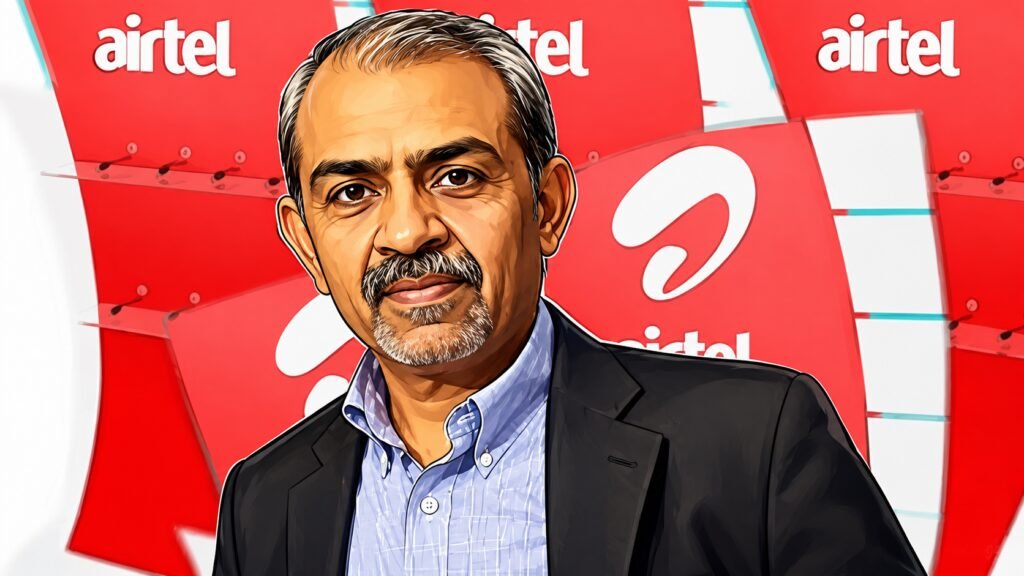
Chief Executive Officer Sunil Taldar framed the results as a turning point in the company’s FY2026 results statement.
“This year delivered a very strong performance across both operating and financial metrics, reflecting the attractive industry fundamentals and structural growth drivers across our footprint,” Taldar said.
The momentum has carried into the current fiscal year as well. Airtel Africa posted first-quarter revenue of $1.85 billion, up 31% year-over-year, while its customer base grew 11.6% to 189 million subscribers, The Guardian Nigeria reported. As of June 30, the company had already repurchased 10.2 million shares worth $46.6 million under the current program.
What the shrinking share count signals for Airtel Africa investors
The company’s issued share capital stood at 3.65 billion ordinary shares as of June 30, with 6.14 million held in treasury, Investors King reported. As cancelled shares reduce the denominator, earnings per share mechanically increase even if absolute profits stay flat.
Meanwhile, parent company Bharti Airtel has been consolidating its grip on Airtel Africa through a separate $2.9 billion share-swap transaction, Brand Communicator reported, citing Bharti Airtel’s board approval dated May 13. That deal aims to raise Bharti’s direct ownership from roughly 62.7% to nearly 79%, with ambitions to eventually reach 90%.
Key buyback figures at a glance
- Total shares repurchased since May 22: 17,411,099 (source: NGX filing)
- Volume-weighted average price: 337.75 GBp per share (source: NGX filing)
- Program size: Up to $110 million (source: Nairametrics)
- Program deadline: November 27, 2026 (source: Nairametrics)
- Prior buybacks completed: $200 million across two programs (source: Kenyan Wall Street)
- Issued share capital as of June 30: 3.65 billion shares (source: Investors King)
Airtel Africa’s buyback faces a ticking clock and competing priorities
The program still has roughly three and a half months remaining before its November 27 deadline, and Airtel Africa has indicated it may announce additional tranches to reach its 1% target. With 17.4 million shares already purchased from an issued base of 3.65 billion, the company still has room to buy significantly more stock.
The buyback is unfolding alongside preparations for a potential IPO of Airtel Money, the company’s mobile money arm that generated over $1 billion in revenue last fiscal year. CEO Taldar has said the company intends to pursue the listing in London during the second half of 2026, though geopolitical uncertainty has already pushed the timeline back multiple times.
For investors watching from Lagos or London, the tension between returning cash through buybacks and preserving firepower for growth spending is the story within the story. Every cancelled share tightens the float and lifts per-share metrics, but the real question is whether Airtel Africa can sustain this pace while simultaneously funding network expansion and a landmark fintech IPO.