You need money fast, and a loan app promises approval within minutes with no paperwork and no bank verification number required. The offer feels like a shortcut past the red tape that delays every other lending product you have ever tried in the past.
If this app does not need to verify who you are, how does it plan to recover its money when you fall behind on payments?
The answer, for many borrowers, has involved defamatory messages sent to family members, edited photos posted on social media, and unauthorized debits. Behind the convenience of a “loan without BVN Nigeria” search sits a regulatory gap that exposes you to contact-list shaming and identity fraud.
The Central Bank of Nigeria and the Federal Competition and Consumer Protection Commission have spent four years building a framework to filter out predatory operators. Your BVN sits at the center of that framework, and understanding why it matters could save you from a financial nightmare.
CBN and FCCPC require BVN verification for all regulated loan apps
Nigeria’s Bank Verification Number is an 11-digit biometric identifier that links every bank account you hold across all financial institutions. BVN enrollments reached 67.8 million by the end of 2025, the Nigeria Inter-Bank Settlement System (NIBSS) confirmed. That figure climbed further to 69.55 million as of July 5, 2026, according to NIBSS data reported by Nigerian CommunicationWeek.
More on credit and loans:
Loan apps in Nigeria: complete 2026 guide to borrowing, regulation, and safety
When a licensed lender asks for your BVN, it fulfills a regulatory obligation under the DEON Consumer Lending Regulations, 2025. The FCCPC issued these rules in September 2025, requiring all digital lenders to register, verify borrower identity, protect user data, and follow ethical recovery practices.
The BVN functions as a Know Your Customer anchor that ties each borrower to a verifiable banking identity across all institutions. Regulated apps use it to confirm you are a real person, cross-reference your credit history with licensed bureaus, and block duplicate applications under fake identities.
How the FCCPC crackdown reshaped Nigeria’s digital lending market
The FCCPC and CBN have approved 457 digital lending platforms to operate legally in Nigeria as of June 2026, Brand Spur reported. Another 35 hold conditional approval, and 103 unregistered apps sit on a regulatory watchlist facing possible sanctions and prosecution.
The FCCPC blacklisted 45 loan apps in January 2026 after they missed the compliance deadline of January 5, 2026, Legit.ng reported. Those delisted apps engaged in debt shaming, unauthorized data access, and hidden charges on borrowers.

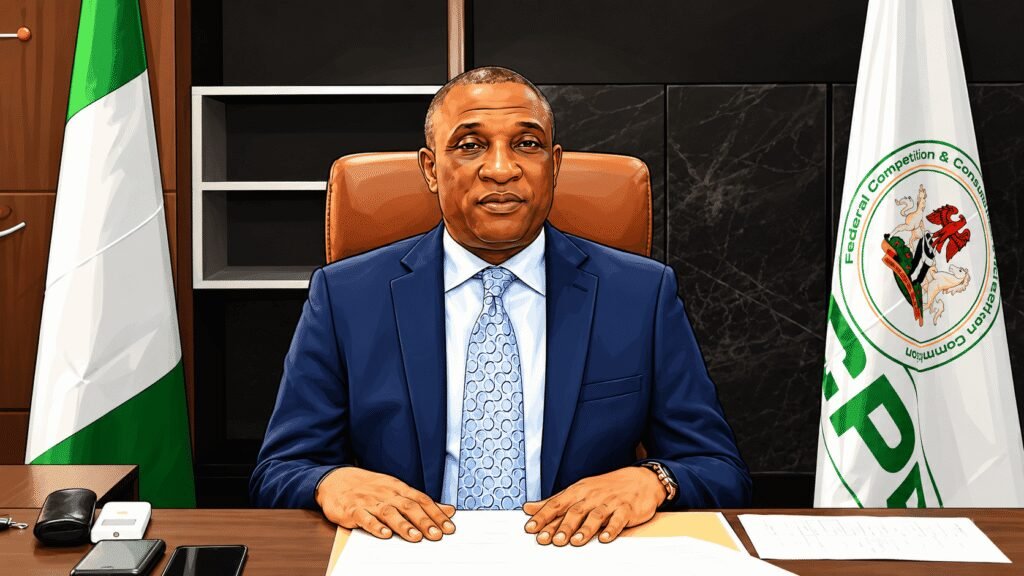
Tunji Bello, Executive Vice Chairman of the FCCPC, confirmed enforcement would follow immediately for noncompliant operators. “The compliance window provided under the Regulations has now closed,” Bello said in a statement on the FCCPC website.
No BVN loan scam tactics range from contact shaming to identity fraud
The reason some apps skip BVN verification is not borrower convenience; it is regulatory avoidance that removes every layer of protection you would otherwise enjoy. An app that does not verify your identity through BVN likely does not appear on the FCCPC’s approved register, leaving you with no formal complaint process.
The Nigeria Data Protection Commission has launched investigations into over 1,368 organizations suspected of violating the Nigeria Data Protection Act, including 795 financial institutions, Babatunde Bamigboye, Head of Legal, Enforcement and Regulations at the NDPC, confirmed via AllAfrica. Unregulated apps harvest your phone data at installation, then weaponize that information against you the moment a payment falls behind.
“No consumer should be harassed, defamed, or lured into unsustainable debt under the guise of digital lending.” — Tunji Bello, Executive Vice Chairman of the FCCPC, said in a statement reported by Vanguard
Common tactics used by unregulated loan apps in Nigeria
- Contact-list shaming: Apps send defamatory messages to your employer, family, and friends labeling you a criminal, leading to job losses and damaged relationships.
- Data theft: Personal information is stored without encryption and may be sold to third-party scammers for identity fraud, Bamigboye warned in the NDPC’s enforcement disclosure reported by AllAfrica.
- Predatory interest rates: Illegal apps operate outside any regulatory rate ceiling, and borrowers report rates that turn small loans into unrepayable obligations.
- Unauthorized debits: Some platforms debit your bank account without permission before repayment is even due, NairaCompare documented in its review of delisted loan apps.
BVN loan app safety tips and alternatives for borrowers without a BVN
If you do not yet have a BVN, registration is available at any commercial bank branch in Nigeria with your biometric data and a valid identification document. Nigerians abroad can register remotely through the Non-Resident BVN initiative, which the NIBSS has described as a milestone in financial inclusion.
Some CBN-licensed platforms offer initial small loans using your National Identification Number, phone data, or mobile wallet verification for amounts under N50,000. However, the CBN and FCCPC mandate full BVN verification for larger amounts, and regulated platforms will eventually require it as you build borrowing history.
3 steps to verify a loan app before you borrow
- Check the FCCPC register: Confirm the app appears on the official list of 457 approved digital money lenders at fccpc.gov.ng before entering personal data.
- Review app permissions: If a loan app requests access to your contacts, gallery, or call logs before approving a loan, it likely violates FCCPC privacy rules.
- Report violations: File complaints at lenderstaskforce@fccpc.gov.ng for lending abuses and at ndpc.gov.ng for data privacy violations.
BVN verification is the single most reliable signal that a loan app operates within the legal framework built to protect your data, your contacts, and your financial reputation.