

If you held Transcorp Hotels shares heading into August 13, 2026, the trading session likely tested your conviction in a big way. The stock opened at ₦241.90, barely a whisker below its 52-week high of ₦242.00, and then promptly collapsed to close at ₦221.00.
That single-session drop of close to 9% landed during a broader multi-session selloff that has wiped approximately ₦3.54 trillion from the NGX since Monday’s record close. For a stock that has climbed more than 40% over the past twelve months, the sudden reversal demands a closer look.
You might assume something fundamentally changed for Nigeria’s largest listed hospitality company, but the picture is more nuanced than that. The decline played out alongside aggressive profit-taking across consumer goods, banking, and industrial stocks on the Nigerian Exchange.
Transcorp Hotels shares slide ₦20.90 as NGX profit-taking intensifies
Transcorp Hotels (NGX: TRANSCOHOT) opened trading on August 13 at ₦241.90 and closed at ₦221.00, shedding ₦20.90 per share in the process. The stock traded within a 52-week range of ₦155.60 to ₦242.00, meaning the session’s open price was effectively at the ceiling, according to the NGX Daily Official List for equities.
The decline did not happen in isolation, and that context matters for anyone closely watching the hospitality sector on the Nigerian Exchange. The NGX All-Share Index fell 0.39% to 243,017.38 points on August 13, which Nairametrics described as the fourth consecutive session of losses, the outlet reported. The benchmark index has now shed roughly 5,512 points since its record close of 248,529.75 on August 10.
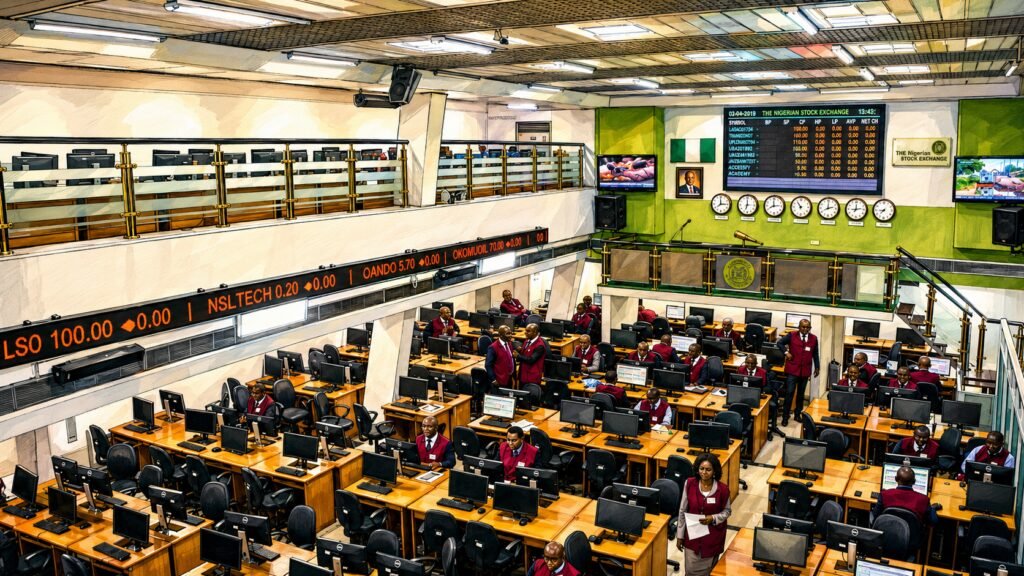
Only four shares of Transcorp Hotels changed hands during the session, which suggests thin liquidity may have amplified the price swing. Low-volume declines often overstate the depth of genuine selling conviction, but the direction still signals caution among holders near record levels.
Transcorp Hotels delivered record H1 profit despite softer revenue
The sell-off came just weeks after Transcorp Hotels filed unaudited results for the first half of 2026 showing resilient profitability. Profit after tax climbed 21% year-on-year to ₦10.5 billion, even as revenue dipped 5.3% to ₦44.4 billion from ₦46.9 billion, the company disclosed in its NGX filing.
The revenue decline was largely tied to weaker performance in the company’s international business segment, which outweighed sustained strength in room bookings and conferencing. Operating expenses fell 12.8% to ₦19.36 billion, driven by a 27% reduction in repairs and maintenance costs, Proshare noted in its analysis of the results.
“Our Q2 2026 performance reflects the resilience of our business and the disciplined execution of our strategy in a dynamic operating environment. While market conditions remained challenging, we continued to deliver strong profitability by staying focused on operational excellence, commercial agility, and creating exceptional experiences for our guests.” — Uzoamaka Oshogwe, Managing Director/CEO, Transcorp Hotels Plc, via Vanguard

Why the stretched valuation makes Transcorp Hotels vulnerable to selloffs
The August 13 session highlighted a tension that has been building around Transcorp Hotels for months: its stock price has outpaced its earnings growth. The stock carried a listed price-to-earnings ratio of roughly 495, based on the NGX official list data for the session, a figure that reflected the pre-decline price rather than the ₦221 close.
Research analyst Qudus Adebara of DLM Capital Group flagged margin pressure and negative operating cash flow in Q1 2026 as near-term risks for the company. While profitability remained intact, increased borrowings and working capital strain raised questions about liquidity heading into the second half, Simply Wall St reported.
What the broader NGX correction means for Transcorp Hotels investors
The losing streak on the NGX has erased approximately ₦3.54 trillion from total market capitalization since the benchmark hit its record close. The Consumer Goods Index fell 1.22% on August 13 alone, while the Banking Index dipped 0.27% despite gains in select counters.
The broader correction followed the ASI’s surge past 248,000 points on August 10, which pushed the market’s year-to-date return above 59%. That kind of rally inevitably attracts profit-taking, and hospitality stocks were not immune to the selling pressure that swept across multiple sectors.
For context, Transcorp Hotels finished full-year 2025 with record revenue of ₦97.04 billion, a 38% jump over the prior year, while profit after tax surged 47% to ₦21.85 billion, ThisDay reported. The company also launched its 5,000-seat Transcorp Centre event venue and declared a final dividend of ₦1.30 per share, Punch confirmed.
Key takeaways from the Transcorp Hotels selloff
- Transcorp Hotels shares dropped from ₦241.90 to ₦221.00 on August 13, a decline of close to 9%, according to the NGX Daily Official List.
- The session’s opening price was just ₦0.10 below the stock’s 52-week high of ₦242.00, based on data from the same NGX filing.
- Only four shares traded during the session, suggesting the price move was driven by thin liquidity rather than broad-based selling.
- Transcorp Hotels’ H1 2026 profit after tax rose 21% to ₦10.5 billion despite a 5.3% revenue decline, Nairametrics reported.
- The broader NGX has shed roughly ₦3.54 trillion since its record close on August 10, Nairametrics data confirmed.
Can Transcorp Hotels regain its footing after the selloff?
The company’s fundamentals offer reasons for cautious optimism, but the near-term path depends on how quickly the broader market stabilizes from this correction. Transcorp Hotels holds a market capitalization above ₦2 trillion, operates the iconic Transcorp Hilton Abuja, and recently launched the Transcorp Centre event venue.
Whether the stock’s valuation can sustain its current multiple will likely depend on second-half revenue trends in its international business segment. Investors watching the hospitality sector on the NGX will want to see whether the cost discipline that boosted H1 margins can hold up.