
Something shifted on the Nigerian Exchange on June 4, 2026, and the ETF market made it impossible to ignore. Out of twelve exchange-traded funds tracked on the NGX, nine posted losses in a single session, with two shedding close to 8% each.
The damage spanned gold-backed products, equity trackers, consumer goods funds, and pension-focused vehicles in one coordinated wave of selling. Only three funds escaped with gains, and two of those barely moved at all.
If you hold any position in Nigerian exchange-traded funds, the session delivered a jolt that followed weeks of overbought signals. The lone standout was a sovereign bond fund that defied the trend entirely, raising fresh questions about where capital is rotating.
Stanbic IBTC ETF 30 and Meristem Value lead the NGX fund sell-off
The Stanbic IBTC ETF 30, which tracks the thirty most capitalized and liquid stocks on the NGX, dropped 8.28% to close at ₦3,256. That single-session loss of ₦294 made it the worst-performing fund on the board, according to the NGX Daily Official List.
The Meristem Value ETF followed closely with a 7.76% decline, falling ₦11.02 to settle at ₦131. The NewGold ETF tumbled 3.26% to ₦125,001, while the SIAML Pension ETF 40 slid 3.73% to ₦6,450, the NGX data showed. Vetiva Consumer Goods ETF dropped 3.39%, and Greenwich Alpha ETF declined 0.70%, rounding out the broad losses across the board.
Nigerian ETF losses reflect a broader ₦5 trillion market correction
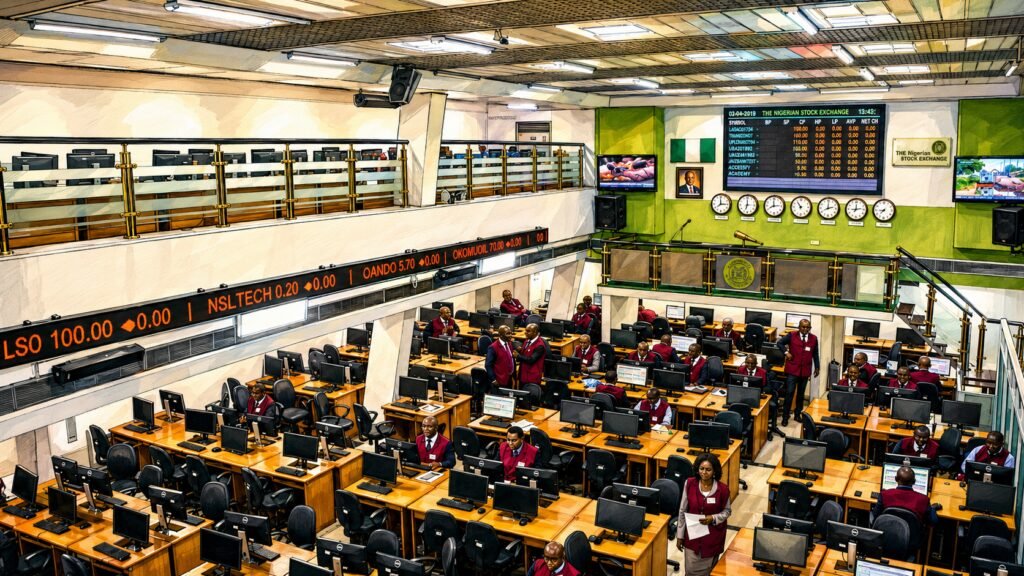
The ETF rout did not happen in isolation but instead reflects a larger wave of selling sweeping the Nigerian equity market. Investors have pulled more than ₦5 trillion from the NGX since June 1, 2026, as profit-taking accelerated across blue-chip counters, Nairametrics reported.
Key numbers behind the NGX correction:
- The NGX All-Share Index peaked at 252,508 points in May 2026 before shedding over 9,300 points from its all-time high, Nairametrics reported.
- Market capitalization fell from above ₦160 trillion to approximately ₦155.94 trillion over consecutive sessions, NGX trading data via Nairametrics showed.
- Despite the selloff, the NGX’s year-to-date return still stood at 56.24%, among the strongest globally in 2026, the outlet noted.
The market’s Relative Strength Index had spent weeks above 75, at times crossing 80, signaling prices had advanced too quickly, Blueprint reported. The rally was largely driven by heavyweight stocks like Dangote Cement and MTN Nigeria, alongside banking giants that benefited from the CBN’s recapitalization program, Nairametrics noted.
Analysts see the Nigerian market correction as a natural cooldown
Despite the intensity of the ETF selloff, market analysts have characterized the pullback as a predictable adjustment after months of exceptional gains. Olumide Adesina, a certified investment trader who writes financial market analysis for Nairametrics, flagged warning signs building beneath the rally in the weeks before the correction.
“The Nigerian equity market is shifting from an ‘uncontrolled rally’ to a stock-picker’s domain, where profits are being tactically taken on over-extended stocks, and retaining invested capital takes priority.” — Olumide Adesina, financial market analyst, Nairametrics
Adesina noted in a separate piece that structural reforms, including foreign exchange liberalization and the expansion of pension fund equity limits by the National Pension Commission, have sustained institutional liquidity on the NGX throughout 2026, the outlet reported. Mohammed Saidu, team lead of research and advisory at TrustBanc Financial Group, told Zikoko that revenue and earnings growth are his primary filters for picking strong positions, a framework that could help investors evaluate which names look fundamentally sound through this kind of pullback.
Vetiva sovereign bond ETF surges nearly 5% while equity funds bleed
The standout performer on June 4 was the Vetiva S&P Nigeria Sovereign Bond ETF, which surged 4.86% to close at ₦302 after gaining ₦14 in a single session, the NGX daily list showed. Only two other funds posted gains: Vetiva Banking ETF rose 1.73% to ₦28.89, and Vetiva Industrial ETF edged up 0.14% to ₦147.50.

The divergence between bond-backed and equity-tracking funds tells a pointed story about changing investor priorities on the exchange. When equity ETFs fall in near-unison while a sovereign bond product climbs almost 5%, the capital flow signals are difficult for you to miss.
Massive year-to-date ETF gains still cushion the blow for holders
The daily losses look different against the full-year trajectory for many of these funds, the NGX daily list data showed. The SIAML Pension ETF 40 carries a year-to-date return of 2,113.45%, while the Stanbic IBTC ETF 30 has still returned 1,067.03% for the year despite the brutal session.
Year-to-date returns for selected NGX ETFs as of June 4, 2026:
- SIAML Pension ETF 40: 2,113.45% YTD return
- Stanbic IBTC ETF 30: 1,067.03% YTD return
- Vetiva Industrial ETF: 264.20% YTD return
- Vetiva Banking ETF: 140.75% YTD return
- Meristem Growth ETF: -69.93% YTD (the lone deep annual loss)
For everyday investors watching ETF positions fluctuate, the key tension is clear in a market like this. The year-to-date gains remain extraordinary by any global standard, but a session wiping 8% off a fund’s value is the volatility that tests conviction and forces difficult decisions about timing.