
Nigeria’s external reserves have gained more than $14 billion in a single year, and the country’s most influential economic think tank believes there is still room to run. The Nigerian Economic Summit Group released its H1-2026 State of the Economy report on August 19, projecting reserves will reach roughly $53 billion by December.
The supporting data, from a stronger naira to a widening current account surplus, backs the projection up on paper. Reserves stood at $51.5 billion by the end of June, up from $37.2 billion a year earlier, a gain of nearly 40% in 12 months.
But the same report delivers a sharper message deeper in its pages. Manufacturing’s share of total exports collapsed to just 1.4% in the first quarter, and the sector’s slice of bank credit fell to a two-year low.
Nigeria’s external reserves gained $14 billion in 12 months
The buildup was driven by stronger export earnings, rising foreign portfolio investment, and resilient diaspora remittances, the NESG report showed. Foreign portfolio investment reached $6.0 billion in the first quarter of 2026, up from $5.0 billion a year earlier, while foreign direct investment edged to $1.0 billion from $0.7 billion.
The naira appreciated 11.2% year-on-year to ₦1,379.2 per dollar in the official window, while the parallel market premium narrowed to 1.1% from 2.7%, the report noted.
“The report projects the external sector will remain resilient, with reserves climbing to about $53 billion by year-end, Dr. Joseph Ogebe”, the NESG’s interim director of research, said at the forum.

Nigeria’s petrol import collapse is reshaping the trade balance
Premium motor spirit imports plunged from $3.0 billion in the first quarter of 2025 to just $0.3 billion in the same quarter of 2026, a 90% drop driven by expanded local refining capacity, the report noted. That reduction directly widened the current account surplus to $5.0 billion, or 6.3% of GDP, compared with $3.4 billion a year earlier, according to NBS data cited in the report.
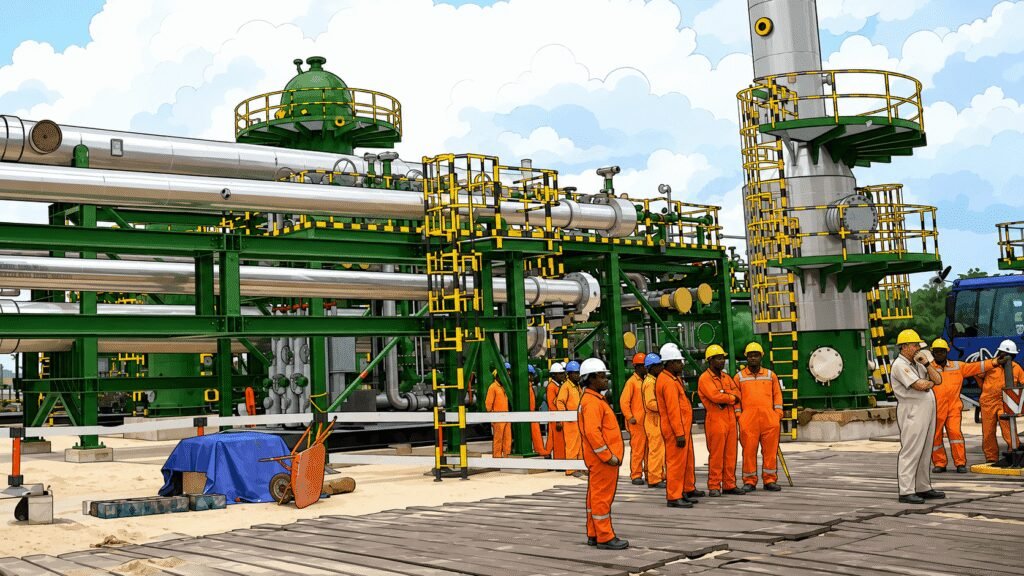
Crude oil production is expected to stay above 1.7 million barrels per day in the second half, with oil prices projected between $70 and $80 per barrel, both above the $64.85 budget benchmark, the NESG indicated.
Inflation at 15.5% and election spending threaten reserve gains
The NESG flagged several risks that could stall reserve accumulation in the second half of the year. Headline inflation averaged 15.5% in the first half and is projected to hold at that level for the full year, the report warned.
Key risks to Nigeria’s H2-2026 outlook
- Global shocks: A sharper-than-expected global slowdown or renewed trade tensions could weaken export earnings and tighten financing, the NESG warned.
- Election spending: Pre-election fiscal expansion ahead of the 2027 general elections could undermine reform momentum and widen the budget deficit, the report noted.
- Security challenges: Persistent insecurity in the North Central and North West could disrupt agricultural production and discourage investment.
- Climate risks: Flooding could damage food supply chains, push food inflation higher, and constrain economic growth, the report said.
Nigeria’s manufacturing weakness could undercut the reserves story
Manufacturing contributed less than 10% of GDP throughout the review period, and its share of total exports dropped to just 1.4% in the first quarter, down from 4.3% two quarters earlier, the report showed. Bank credit to manufacturers fell from 12.2% of total lending in the first half of 2025 to just 8.3% in the first half of 2026, according to CBN data cited in the report.
“Without a more diversified and competitive industrial sector, Nigeria will remain heavily reliant on imported intermediate inputs and finished manufactured goods, leaving the economy vulnerable to external shocks.” — Olaniyi Yusuf, NESG Chairman, as reported by THEWILL News
What Nigeria’s $53 billion reserve target means for stability
The NESG projects full-year GDP growth of 4.2%, up from 3.9% in 2025, with the second half expected to accelerate to 4.5%. Nigeria’s stock market reinforces the confidence narrative, with the NGX All-Share Index surging 91.2% year-on-year to 229,419 points in the first half, the report showed.
The MSCI Nigeria Index delivered 61.1% returns, making Nigeria the top-performing equity market globally. The rally was driven overwhelmingly by domestic investors, whose share of transactions rose to 87.9% from 72.9%, while foreign participation fell to 12.1% from 27.1%.
The $53 billion reserve target remains within reach, but the NESG’s own data makes clear that the durability of these gains depends on whether Nigeria can build a productive economy underneath the oil-driven headline numbers.