
Nigeria’s largest telecom operator has committed ₦1.62 trillion since 2025 to expanding and upgrading its mobile network across the country’s most underserved corridors. That level of spending should have transformed connectivity for over 87 million subscribers who depend on MTN for calls, data, and mobile transactions every day.
Instead, a problem buried beneath Nigerian roads is consuming those gains before engineers can finish deploying new coverage sites nationwide. Fibre-optic cables carrying voice and data traffic are being severed at a rate of 33 per day across the industry.
Every naira operators spend patching severed cables is a naira that never reaches new towers, faster speeds, or wider rural coverage.
Nearly 6,000 cable breaks hit Nigeria’s network in six months
The Nigerian Communications Commission (NCC) recorded 5,934 fibre-optic cable cuts in the first half of 2026, translating to roughly 33 incidents every single day.
Nnamdi Chife, vice president for military relations at Terra Industries, cited the NCC data in an analysis of the damage to Nigeria’s network, Techeconomy reported.
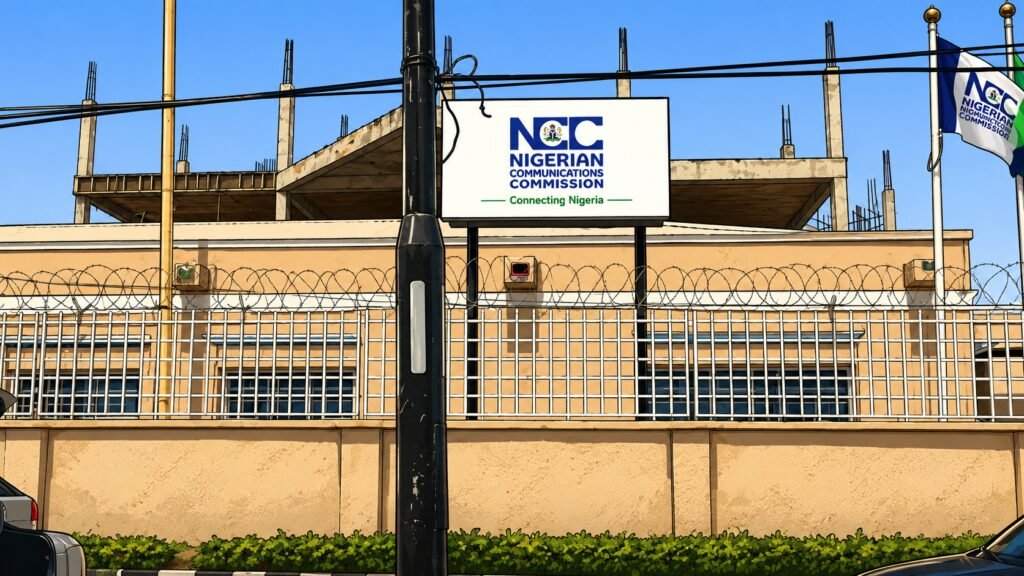
In May 2026, fibre damage caused 183 of 245 major network outages, representing about 75% of all significant service disruptions recorded that month. The pattern has been accelerating, as Nigeria recorded 19,384 fibre-optic cable cuts across 2025, NCC uptime data showed.
Why road construction keeps destroying Nigeria’s telecom cables
The crisis traces back to the early days of GSM in Nigeria, when operators buried fibre along federal and state road corridors for accessibility and affordability.
No government agency ever developed a shared, geo-referenced map of where the cables went beneath those roads.
That missing map now collides with Nigeria’s road construction and urban renewal boom, which routinely destroys telecom infrastructure buried just beneath the surface. The Federal Ministry of Works has acknowledged that road construction is the primary cause of fibre damage, since both industries share the same physical corridors.
Early deployment standards compounded the exposure, with shallow trenching, no concrete ducts, and poor signage leaving buried cables almost completely unprotected.
ATCON has described this as a structural weakness that continues to make the entire network vulnerable, Chife noted in his analysis.
What the fibre crisis costs MTN and the broader Nigerian economy
MTN alone has committed ₦1.62 trillion since 2025 to network expansion, with total industry spending reaching ₦2.1 trillion over the same period, Chife reported. As of September 2026, the operator has deployed 70% of its planned 12,179 coverage and capacity sites nationwide.
“It is a significant achievement, yet it has not been matched by a deliberate, government-backed framework for fibre protection and safety,” Chife said.

Each fibre break costs millions of naira to repair and diverts engineering teams from expansion work to emergency response nationwide.
Operators have deployed ring topologies and redundant routing to contain the damage, but Chife described those measures as costly and reactive.
“The trillions invested will continue to leak into avoidable repairs, customer downtime and lost economic output,” Chife warned. MTN alone recorded over 9,000 fibre cuts in 2025, CEO Dr. Karl Toriola disclosed in a social media post, African Wireless Communications reported.

Regulatory action and the push for a National Fibre Atlas
The telecom industry has pursued regulatory protection through its trade bodies, ALTON and ATCON, with some policy success.
Operators lobbied for a June 2024 presidential order designating telecom infrastructure as Critical National Information Infrastructure (CNII), making willful damage a criminal offense.
“Our fibre networks, towers, and data centres are the digital lifelines of the Nigerian economy,” NCC Executive Vice Chairman Dr. Aminu Maida said through a representative at a CNII conference, noting that any disruption carries far-reaching consequences, Nairametrics reported.

Enforcement remains inconsistent, however, and no contractor has been prosecuted or blacklisted for negligent damage to fibre infrastructure since the order took effect. Chife called for a National Fibre Atlas, a centralized digital map of critical fibre routes accessible to all works ministries and contractors.
He also recommended mandatory concrete telecom ducts in all new road projects and prosecution of high-profile damage cases to serve as deterrents nationwide.
Key data points from Nigeria’s fibre crisis
- The NCC recorded 5,934 fibre-optic cable cuts in H1 2026, averaging 33 daily across all operators (NCC data via Techeconomy).
- In May 2026, fibre cuts caused 75% of all major network outages, accounting for 183 of 245 recorded incidents nationwide.
- MTN has invested ₦1.62 trillion since 2025 and deployed 70% of its 12,179 planned sites, Chife reported.
- MTN recorded over 9,000 fibre cuts in 2025, CEO Dr. Karl Toriola disclosed (African Wireless Communications).
- The telecom sector contributes over 14% to Nigeria’s GDP, underpinning banking, fintech, and e-commerce nationwide.