
A brewer that just posted 53% profit growth should not be losing ₦33 per share in a single trading session. Yet that is exactly what happened to Guinness Nigeria on August 11, when the stock opened at ₦376 and closed at ₦343 amid heavy selling.
The drop came as the NGX All-Share Index reversed a four-session rally, shedding 1,806 points and wiping ₦1.17 trillion from total market capitalization. Losses rippled across banking, consumer goods, and industrial stocks, leaving no sector untouched throughout the trading day.
For investors who bought into Guinness Nigeria’s recent earnings momentum, the reversal raises one pointed question about this stock’s near-term floor.
Guinness Nigeria falls to N343 as the NGX reverses its four-session rally
The stock’s slide from its ₦376 opening price to its ₦343 close erased gains from the post-earnings rally two weeks earlier. Trading volume across the broader market surged to 3.91 billion shares worth ₦32.38 billion in 45,608 deals, Vanguard News reported.
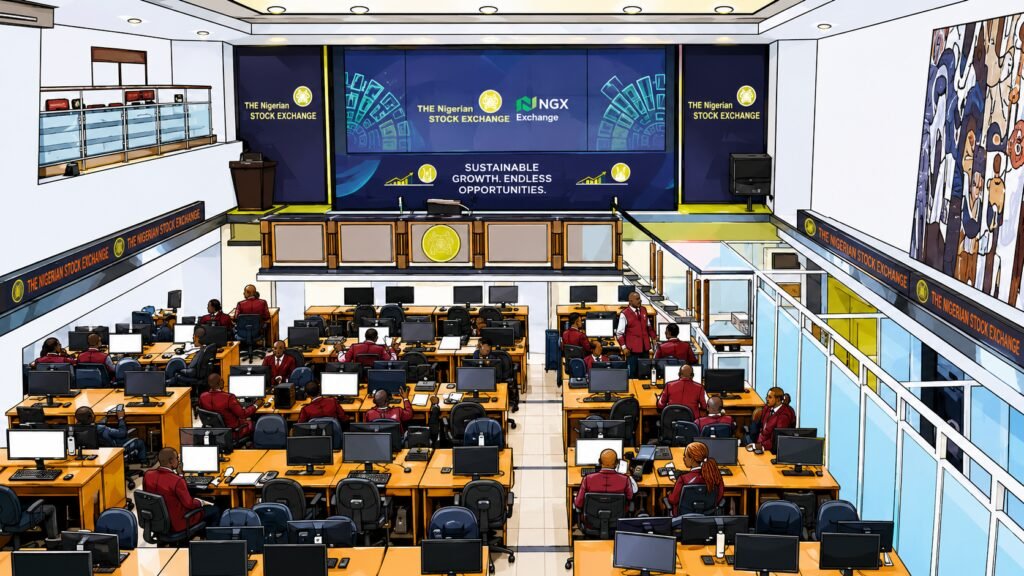
Market capitalization fell 0.73% from ₦160.42 trillion to ₦159.26 trillion, while the benchmark index settled at 246,723.57, according to NGX data. Thomas Wyatt led all decliners at 9.97%, followed by AVA Capital at 9.60% and International Energy Insurance at 6.32%, Vanguard News reported.
Strong FY2026 earnings make the Guinness Nigeria selloff harder to explain
The pullback is striking because Guinness Nigeria’s fundamentals have rarely looked this strong in the company’s recent history. For the year ended June 30, 2026, the brewer reported profit after tax of ₦25.30 billion, a 53.3% jump from the prior year, Investors King reported.
Guinness Nigeria FY2026 key figures
- Revenue: ₦265.04 billion, up 11.8% year-over-year
- Operating profit: ₦41.52 billion, up 14.8% from the prior year
- Earnings per share: ₦11.55, up from ₦7.54 in the comparable period
- Interim dividends declared: ₦9 per share (₦2 in Q1 plus ₦7 in Q2)
Revenue expanded to ₦265.04 billion from ₦237 billion, supported by sustained demand across the brewer’s stout, spirits, and malt portfolio. The board declared an additional ₦7 interim dividend per share in Q2, bringing total interim payouts to N9 per share, Brand Times reported.
“Our Q2 performance demonstrates that the momentum we’ve built is being sustained through disciplined execution and a relentless focus on our consumers and customers.” — Girish Sharma, MD/CEO, Guinness Nigeria, via Brand Times

The ex-dividend date for the ₦7 payout passed on July 30, meaning August 11 buyers missed the distribution entirely. That gap likely weakened buying interest as dividend-driven demand evaporated from the order book after the qualification cutoff.
Profit-taking and Dangote Refinery anticipation are pressuring NGX stocks
The selloff stretched well beyond Guinness Nigeria, as banking, industrial, and energy stocks all declined sharply in the same session. Profit-taking across major names ended a four-session bullish run that had pushed the ASI toward its 2026 highs, Vanguard News reported.
August trading was always expected to feature aggressive selling, according to analysis published by Nairametrics. The outlet noted that institutional investors have been building cash reserves ahead of the anticipated Dangote Refinery IPO, reducing exposure to current market heavyweights to free up capital for that listing.
Where Guinness Nigeria’s share price sits in the bigger picture
At ₦343, the stock trades 31% below its 52-week high of ₦499 and roughly 164% above its 52-week low of ₦130, based on NGX data. Board chairman Prof. Fabian Ajogwu said the first-half results demonstrated the business’s resilience and the effectiveness of its long-term strategy, Brand Times reported.

The broader market’s year-to-date return remains at 58.55% even after the session’s correction, suggesting the structural uptrend has not broken. Whether Guinness Nigeria rebounds from this level or slides further will likely depend on how quickly post-ex-div selling pressure exhausts itself.