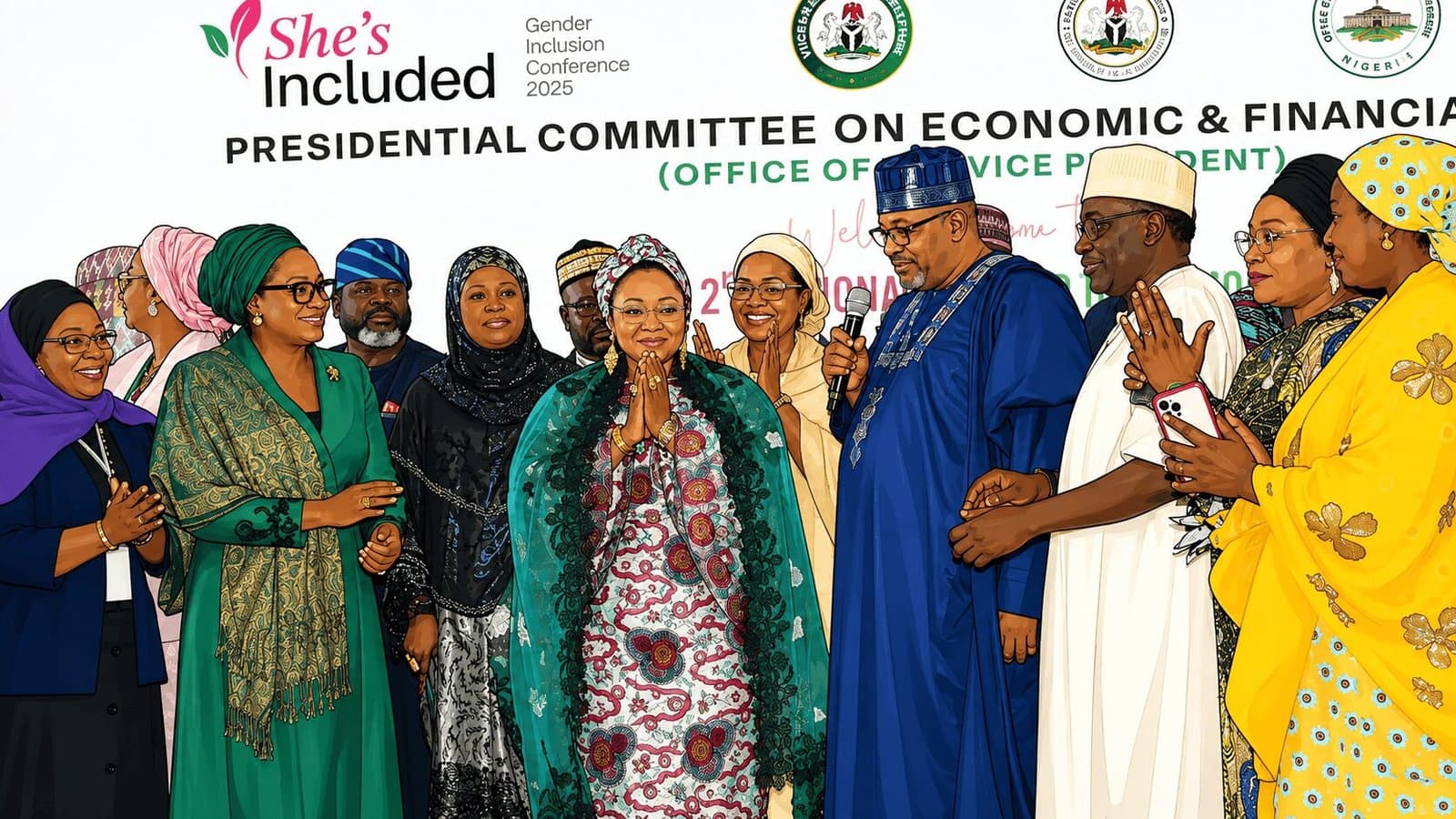

Nigeria has set its sights on building a $1 trillion economy, but a $14.8 billion financing gap tied to women could undermine that ambition. The federal government threw down a direct challenge to banks, fintechs, and payment operators at the Second National Gender Inclusion Conference in Abuja.
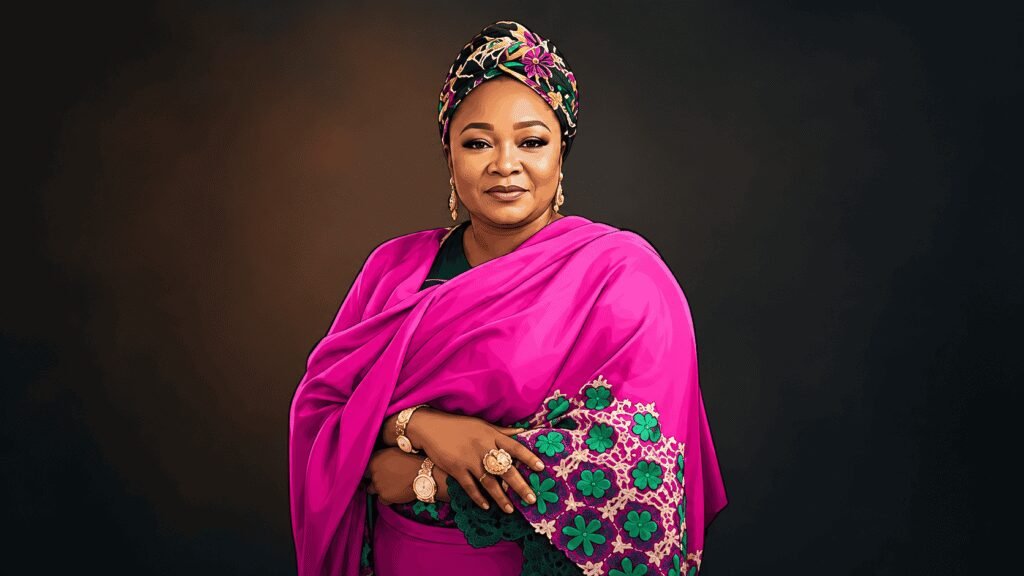
The message from the Women’s Affairs Minister was pointed: the financial system was built for a borrower who does not resemble the average Nigerian woman. That mismatch between institutional design and borrower reality has left billions in commercial value sitting untouched on the table for years.
The International Finance Corporation has flagged the gap as an unclaimed commercial return, the kind of opportunity banks would normally compete over aggressively. Yet the data tells a stark story about who the financial system actually serves, and who it continues to leave behind entirely.
$14.8bn sits unclaimed in Nigeria’s women’s finance gap
Women Affairs Minister Hajiya Imaan Sulaiman-Ibrahim delivered the challenge at the #SheIsIncluded 2026 conference, held at the Presidential Villa on August 20, 2026. She cited the International Finance Corporation’s estimate that closing Nigeria’s gender financing gap could unlock approximately $14.8 billion in annual economic value, the Daily Nigerian reported.
The minister framed the figure as a commercial return rather than a social concession, urging banks to design for the women who actually exist today. She proposed alternative-data credit scoring, guarantee-backed lending built around group liability, and low-cost payments compatible with basic handsets that women already own.
The Nigeria for Women Programme Scale-Up has already organized 4.5 million women into 300,000 affinity groups across the country, she noted. In the program’s first phase, over 560,000 women mobilized into more than 26,000 groups and saved over N4.9 billion of their own resources.
Only 5% of Nigerian women can access formal credit
The scale of the gap becomes clearer when you look at who Nigeria’s financial system currently serves and who it shuts out. Data from EFInA’s 2023 Access to Financial Services survey shows that only 47% of Nigerian women use formal financial services, compared with 58% of men.
That 11-percentage-point gap in formal access means millions of women are locked out of the tools they need to build enterprises. Only 5% of adult women accessed credit from formal financial service providers, EFInA confirmed, underscoring the structural barriers embedded in conventional lending models that require traditional forms of collateral that women disproportionately lack.
At the Securities and Exchange Commission, the numbers were equally striking, with women’s participation in corporate institutions standing between 12% and 15%. Women in executive offices represent below 7%, and those accessing capital to raise funds account for under 5%, the Daily Nigerian reported.
VP Shettima warns $1trn goal is at risk without women
Vice President Kashim Shettima reinforced the urgency of the minister’s call at the same conference, warning that Nigeria’s ambitious economic target remains incomplete. He cautioned that national averages could conceal the continued exclusion of women in rural communities across Nigeria, the Daily Nigerian reported.
“We have set our sights on a one-trillion-dollar economy. But what kind of economy can we build if half of our people cannot participate fully in creating it?” — Vice President Kashim Shettima, at the SheIsIncluded 2026 conference
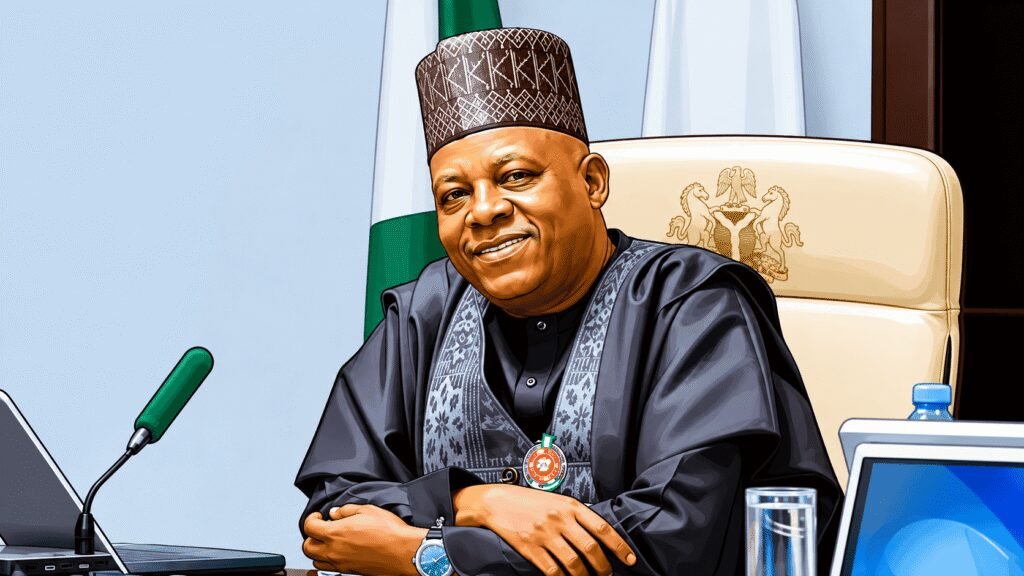
Estimates cited by conference presenters suggest that national output could be as much as 23% higher with greater equality in women’s economic participation. Shettima urged policymakers and program implementers to track who is being reached, who remains excluded, and what interventions are producing results on the ground.
IFC and AfDB signal growing institutional pressure on women’s finance
The government’s push at the SheIsIncluded conference did not emerge in isolation from broader institutional momentum building around women’s financial inclusion in Nigeria. In July 2026, the IFC launched the Nigeria Gender Country Programme with the Nigerian Exchange Group and the Lagos Chamber of Commerce and Industry to boost women’s participation in leadership, employment, and access to finance, CapMad reported.
Separately, the African Development Bank in May 2026 approved a $61 million financial package for the Development Bank of Nigeria to support women-led businesses, mainly SMEs in agricultural value chains, the AfDB confirmed.

At the 4th Gender Impact Investment Summit in Lagos in May 2026, stakeholders revealed a troubling deployment gap in the space. Only $1.25 billion of the $8 billion committed for gender and social inclusion investments by 2035 had actually been deployed, Nairametrics reported. That $6.75 billion shortfall showed how far commitments remain from actual capital flowing to women-led enterprises across the country.
Banks face a design problem, not a demand problem
EFInA’s CEO, Foyinsolami Akinjayeju, emphasized at a March 2026 event that inclusive growth cannot happen without intentional investment in women entrepreneurs who drive economic activity across markets, workshops, and communities in Nigeria. She noted that women-led micro, small, and medium enterprises remain central to Nigeria’s economic growth and employment base, ThisDay reported.
The minister’s argument at SheIsIncluded echoed that view, framing the core issue as a structural failure rather than a lack of entrepreneurial ambition. The financial architecture was not designed for the borrower who exists, and that design flaw has kept $14.8 billion off the table.
Key figures in Nigeria’s women’s finance gap
-
IFC estimate: $14.8bn in annual value from closing the gender financing gap (Daily Nigerian)
-
EFInA data: 47% of women use formal financial services, compared with 58% of men (EFInA)
-
Only 5% of adult women access credit from formal providers (EFInA)
-
SEC: Women’s corporate participation is 12-15%; executive representation sits below 7% (Daily Nigerian)
-
NFWP Scale-Up: 4.5 million women organized into 300,000 affinity groups nationwide (Daily Nigerian)
-
AfDB: $61 million approved via the Development Bank of Nigeria for women-led businesses (AfDB)