
The Nigerian Exchange’s food sector took another hit on August 14, with BUA Foods falling 6% to close at ₦714 per share. The decline extends a stretch that has now erased more than 15% of the stock’s value in just three trading sessions.
BUA Foods was not the worst performer in its own sector on the day, however, and the damage ran much deeper than one stock. Nascon Allied Industries, Northern Nigeria Flour Mills, and Union Dicon Salt each dropped close to the exchange’s daily 10% price limit.
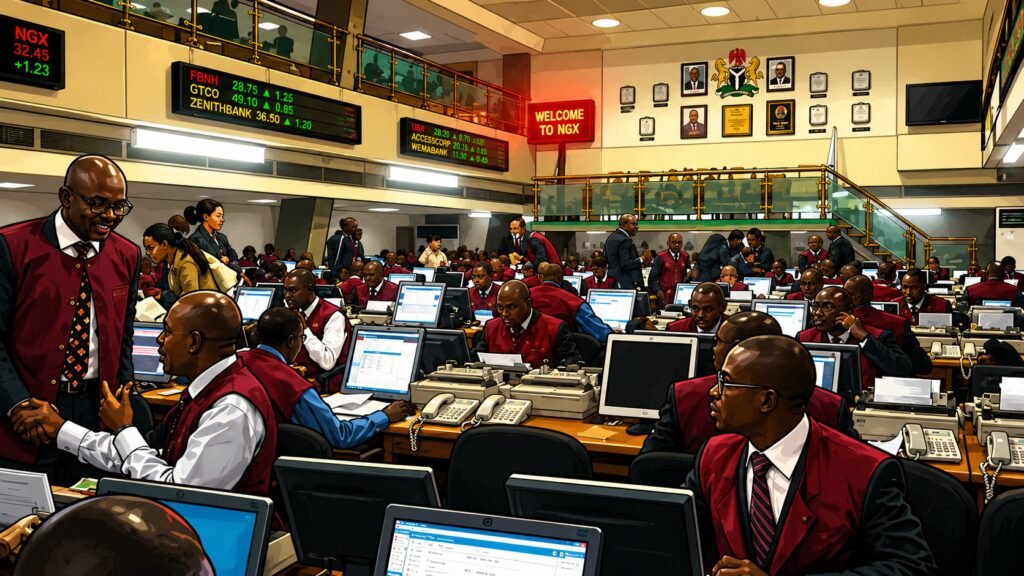
The broader NGX All-Share Index closed at 242,619.2 points on August 14, shedding 398 points and extending losses into a fourth straight session, data from NGX Pulse showed. BUA Foods entered the week as the third most valuable company on the exchange, with a market capitalization that recently topped ₦15 trillion.
A stock of that size falling this fast sends signals to the rest of the market that no food-sector investor can afford to overlook.
Nascon hits 10% daily limit as food sector bleeds
Nascon Allied Industries opened at ₦195 and slammed into the exchange’s 10% daily floor, closing at ₦175.50, the NGX Daily Official List showed. Northern Nigeria Flour Mills dropped from ₦79.40 to ₦71.50 on the same day, while Union Dicon Salt slid from ₦23.75 to ₦21.40.
The NGX Consumer Goods Index had already plunged 4.93% on August 12, recording the sharpest sector decline of the session, Nairametrics reported. That index fell another 1.22% on August 13, settling at 4,056.39 points as selling pressure continued to mount across consumer-facing names.
Analysts at Cardinalstone Securities attributed the sector’s strong Q1 2026 earnings to improved consumer demand and a recovery in volume, CNBC Africa reported. Those fundamentals, however, have not been enough to prevent the wave of profit-taking that has gripped food stocks for nearly a full week.
BUA Foods loses ₦131 per share in three sessions
BUA Foods opened the week at ₦845.10, a price it had held for six consecutive sessions with daily volumes between 37,679 and 79,573 shares, Investors King reported. That stability vanished on August 12 when volume surged to nearly 300,000 shares, and the stock crashed 10% to ₦760.60.
By the close on August 14, BUA Foods had shed ₦131.10 in value since August 12, bringing the total decline to roughly 15.5% from its pre-selloff level. The company’s market capitalization, which had exceeded ₦15 trillion before the selloff began, contracted by more than ₦2 trillion over the period.
The company reported ₦1.77 trillion in revenue for 2025, a 16% increase over the prior year, according to its audited annual report filed with the NGX. Profit after tax surged 95% to ₦518.39 billion, and BUA Foods proposed a ₦28 per share dividend with a 97% payout ratio, Proshare noted in its analysis of the results.
Pre-election dynamics and rising yields weigh on the food sector
The selloff is unfolding against a backdrop that several analysts flagged months ago. Abiodun Ogunniyi, Head of Research at GTI Securities, warned in June that pre-election year dynamics typically weaken equities from midyear onward.
“In pre-election years, the stock market tends to be strong from January to May, and then we start seeing some weakening from June. That decline tends to be very strong in August and September.” — Abiodun Ogunniyi, Head of Research, GTI Securities, via Nairametrics

Cordros Securities echoed the cautious tone in its weekly outlook, noting that it expected choppy trading as investors rotated selectively into strong earners, ThisDay reported.
The NGX is also set to implement a revised pricing methodology on August 17, introducing tiered minimum trade volume thresholds for official price movements. Equities priced between ₦500 and ₦999 will require 50,000 shares traded before a price change is recorded, The Guardian reported.
Key data from the food sector selloff
- BUA Foods: closed at ₦714 on August 14, down from ₦845.10 at the start of the week (NGX Daily Official List)
- Nascon Allied Industries: hit 10% daily limit, closing at ₦175.50 (NGX Daily Official List)
- Northern Nigeria Flour Mills: fell nearly 10% to ₦71.50 (NGX Daily Official List)
- Union Dicon Salt: declined to ₦21.40 from ₦23.75 (NGX Daily Official List)
- NGX Consumer Goods Index: fell 4.93% on August 12 (Nairametrics)
- NGX ASI: lost over 5,900 points from its August 10 record of 248,529.75 (NGX Pulse)
What food sector investors should watch next
BUA Foods reported 95% profit growth for 2025 and remains one of the most dominant food companies on the Nigerian Exchange by every major operating measure. The stock has still lost more than 15% of its value over three sessions, and the broader food sector has fared even worse. Pre-election selling pressure, elevated Treasury bill yields above 17%, and a new NGX pricing methodology effective August 17 could all shape what comes next. Whether BUA Foods’ ₦ 28-per-share dividend and ₦1.77 trillion revenue base are enough to attract buyers at current levels remains an open question.