
If you held BUA Cement shares heading into the second week of August, the closing bell on August 12, 2026, likely tested your patience.
The stock opened at ₦316 and closed at ₦288, slipping below the ₦300 psychological threshold in a sharp single-session decline. That drop amounted to a roughly 8.9% loss, and BUA Cement was not the only heavyweight caught in the downdraft.
Across the Nigerian Exchange, the All-Share Index fell from 248,529.75 points to 246,723.57 on August 11 before declining further to 243,967.09 on August 12, erasing a combined ₦2.9 trillion in market capitalization over the two sessions. The August 11 session alone wiped ₦1.166 trillion from market value, Business Post reported, while August 12 erased another ₦1.76 trillion, according to Punch.
Selling pressure hit consumer goods and banking stocks hardest on August 11, while the insurance and energy sectors posted marginal gains and industrial goods closed flat, Business Post reported. By August 12, the selloff deepened across industrial goods, consumer goods, and banking, with only insurance and energy still in the green, DMarketForces noted.
The question for investors tracking Nigeria’s second-largest cement maker is whether this retreat is a correction worth buying into, or a signal that the stock’s recent rally has outpaced what even strong fundamentals can justify.
BUA Cement drops 8.9% as profit-taking sweeps through NGX blue chips
The August 12 session capped a two-day selloff that wiped a combined ₦2.9 trillion from NGX equity market capitalization, with ₦1.76 trillion of that loss occurring on August 12 alone, according to Punch. The Central Bank of Nigeria’s Monetary Policy Rate, held steady at 26.50%, continued to serve as the macro backdrop for cautious investor sentiment across sectors.
BUA Cement was not the only industrial name under pressure during the session, as the NGX Daily Official List confirmed. Dangote Cement, the country’s largest producer, opened at ₦1,034 and closed at ₦937, a roughly 9.4% decline in the same session, according to NGX Group’s official equities list. Geregu Power also dropped sharply, falling from ₦825.70 to ₦743.20, a slide of approximately 10%.
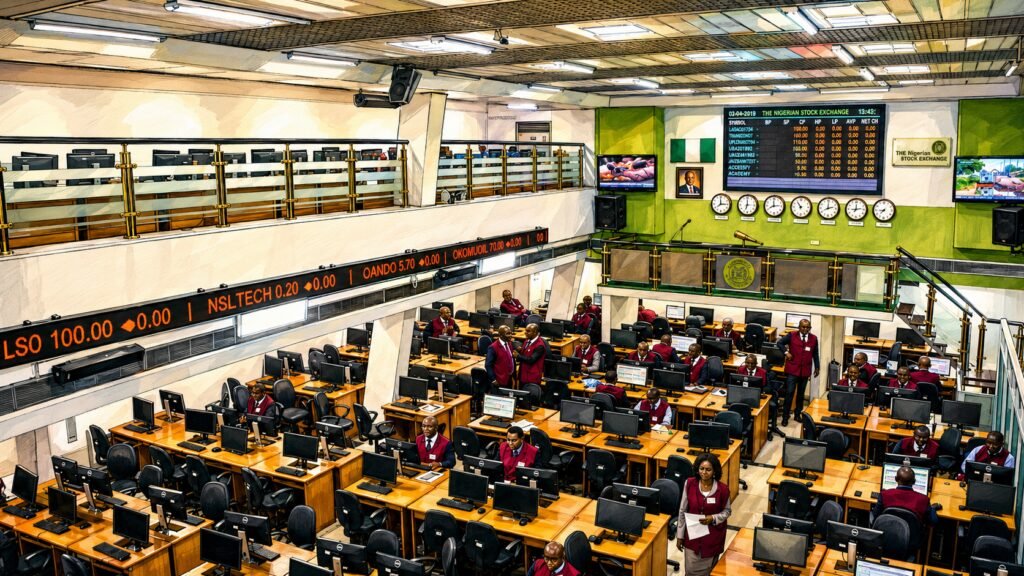
The consumer goods sector led the overall decline at 4.93%, followed by the industrial goods index at 0.42%, and the banking sector, which shed 0.30%, DMarketForces noted. BUA Foods topped the day’s losers chart with a 10% decline, while Unilever Nigeria fell 9.97%.
BUA Cement’s strong H1 2026 earnings and the case for a pullback
The selloff arrives at a peculiar time for BUA Cement, considering the company’s financial performance in the first half of 2026 was among the strongest in its history. Revenue climbed 25.6% to ₦728.9 billion from ₦580.3 billion in the same period of 2025, while profit after tax surged 80% to ₦324.9 billion, BusinessDay reported.
The company’s EBITDA margin improved to 54% from 46.3% in the corresponding period of 2025, and earnings per share rose to ₦9.59 from ₦5.34 a year earlier. BUA Cement also recorded a net foreign exchange gain of ₦16.57 billion in H1 2026, compared with just ₦782.8 million in the same period last year, ThisDay reported.
“We have delivered a strong quarter despite the constraints encountered,” Yusuf Binji, BUA Cement’s managing director and chief executive officer, said in a statement accompanying the results, as reported by The News Chronicle.

He noted that growth initiatives and cost optimization programs were gaining traction, and expressed confidence in operational improvements over the coming quarters.
Cement sector outlook and what the broader selloff signals for investors
Despite the sharp one-day move, BUA Cement’s stock still trades well above its 52-week low of ₦151.20, but significantly below its 52-week high of ₦460. The August 12 closing price of ₦288 places the stock roughly 37% below its peak, a gap that reflects the broader correction pattern across Nigerian industrial goods names this year.
Nigeria’s cement market is projected to grow by 12.6% in 2026 to reach approximately ₦3.95 trillion, building on a compound annual growth rate of 19.4% achieved between 2021 and 2025, according to a ResearchAndMarkets report published through Yahoo Finance.
Gideon Oshadumi, a research analyst at Chapel Hill Denham, told CNBC Africa in a February 2026 interview that stronger demand drivers, measured capacity expansion, and an improving macroeconomic environment position the cement sector well for 2026 and beyond.
BUA Cement is also progressing with plans to expand its installed production capacity from 17 million metric tons per annum to 20 million, including a greenfield cement plant in Ososo, Edo State, the company confirmed in its H1 2026 earnings release.
Rising cement prices add another layer to the BUA Cement story
Retail cement prices in Nigeria continued to climb through July 2026, with 50-kilogram bags selling between ₦12,000 and ₦15,000 depending on the producer and location. BUA Cement products were retailing between ₦12,000 and ₦14,500, while Dangote Cement products ranged from ₦13,000 to ₦15,000, CemNet reported.
Analysts have cautioned that stronger competition from Huaxin Cement’s acquisition of Lafarge Africa is unlikely to push prices lower in the near term. High energy costs, inflation, foreign exchange volatility, and rising logistics expenses continue to keep cement prices elevated across the country, CemNet noted.
Key takeaways from BUA Cement’s August 12 session
- BUA Cement closed at ₦288, down 8.9% from its ₦316 opening price, dropping below the ₦300 level (NGX Daily Official List).
- Dangote Cement fell 9.4% in the same session, from ₦1,034 to ₦937, reflecting broad industrial goods pressure (NGX Daily Official List).
- The NGX equity market lost approximately ₦1.76 trillion in capitalization on August 12, 2026 alone (Punch).
- BUA Cement’s H1 2026 revenue rose 25.6% to ₦728.9 billion, with profit after tax up 80% to ₦324.9 billion (BusinessDay).
- Nigeria’s cement market is projected to grow 12.6% in 2026, supported by housing deficits and infrastructure spending (ResearchAndMarkets).