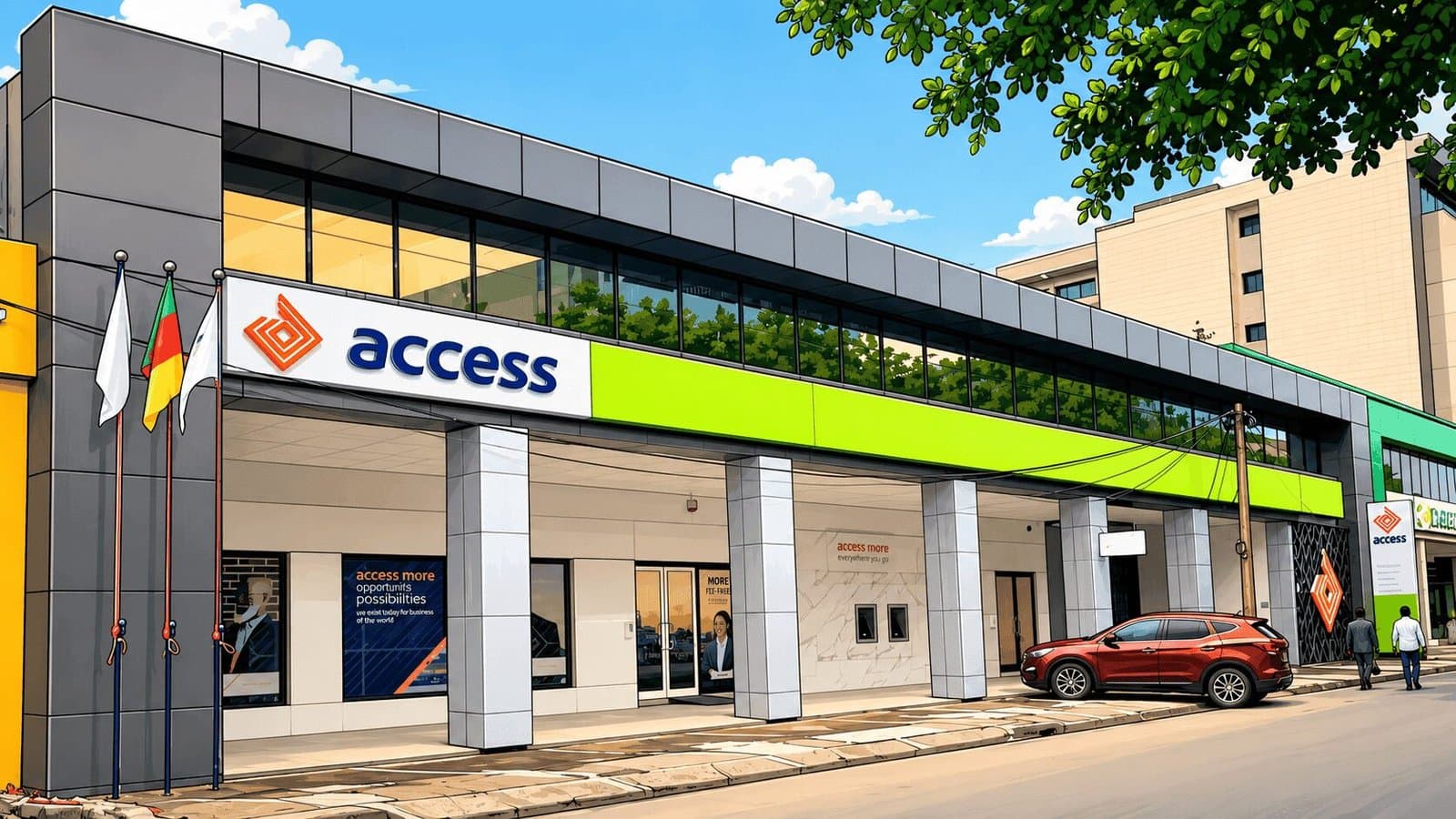

Access Bank has completed one of the year’s largest single-stock transactions on the Ghana Stock Exchange, and the details carry serious weight for investors. The Nigerian banking group sold 12,085,318 ordinary shares in Access Bank Ghana on July 15, reducing its ownership stake by 7.44% in a single session. Before the transaction, Access Bank held 93.4% of the subsidiary, and afterward the figure dropped to approximately 86% of total issued shares.
That 7.44% reduction may appear modest, but it represents the most significant single dilution of the parent’s holding since the subsidiary’s 2017 IPO. Pension funds, institutional investors, and high-net-worth individuals all participated in the offering, generating a wave of demand that reshaped the trading week. For a stock that rarely trades in high volumes on the exchange, the sudden institutional interest sent a strong signal about underlying demand. The company said the move was designed to broaden local participation, but the timing points to a more layered story about regulatory compliance. If you follow Nigerian bank stocks or monitor cross-border exposure across West Africa, this transaction could signal the start of something bigger.
Access Bank Ghana drew a wave of institutional demand
The sale moved exactly 12,085,318 shares through the Ghana Stock Exchange, with IC Securities Ghana acting as adviser and executing broker on the transaction, Access Bank Ghana disclosed in a filing with the GSE. The Bank of Ghana granted a formal no-objection before the sale, clearing the way for pension funds and institutional buyers to step in and participate.
Pearl Nkrumah, managing director of Access Bank Ghana, said the deal reflected a commitment to deepening local ownership and broadening liquidity in the bank’s shares. She added that management remains focused on converting the scale the bank has built into sustained, measurable value for all of its stakeholders.

Weekly turnover on the Ghana Stock Exchange surged 452% to GHS 370.67 million during the week the sale cleared, NewsGhana reported. The ACCESS ticker alone accounted for GHS 277.87 million of that total, effectively dominating the exchange’s entire weekly activity from a single block of trading.
CBN’s foreign investment cap pushed Access Bank toward the Ghana sale
Analysts tracking the deal point to a specific regulatory trigger inside the Central Bank of Nigeria’s rulebook that made the stake reduction unavoidable. Under BOFIA Section 19(8)(c), Nigerian banks cannot invest more than 10% of total shareholders’ funds in their foreign banking subsidiaries. Access Holdings disclosed a breach of that threshold in its full-year 2025 financial results, and regulators granted a 12-month compliance window, Nairametrics reported. Management has since launched capital optimization initiatives and a balance sheet restructuring effort aimed at curing the breach within the regulatory deadline.

“It is inevitable,” Abiodun Ogunniyi, head of research at GTI Limited, said in comments to Nairametrics about the transaction’s broader significance for the Nigerian banking sector. He described the sale as consistent with the revised HoldCo framework and the CBN’s 10% ceiling on overseas banking investment. Ogunniyi also noted that similar sell-downs could follow from United Bank for Africa and Guaranty Trust Holding Company, given their extensive overseas operations.
Access Holdings retains firm control and a strong capital position
The divestment does not signal a retreat from Ghana, and the group retains approximately 86% of the subsidiary after completing the share sale.
Chief Blakey Ijezie, founder of chartered accountancy firm Okwudili Ijezie & Co, described the transaction as “a strategic capital optimisation exercise rather than a withdrawal from Ghana,” Nairametrics reported.
He argued the immediate impact on Access Holdings’ stock should remain limited, since the group freed up proceeds for technology investment and continental expansion.
Access Holdings reported a capital adequacy ratio of 18.3% at the close of its 2025 fiscal year, with its banking subsidiary posting a 21% ratio. The group also completed a N40 billion private placement as part of a broader recapitalization drive aligned with evolving CBN requirements, Nairametrics reported. On the dividend outlook, Ijezie argued the sale does not weaken the long-term investment case, since payouts will depend on earnings growth and capital allocation going forward.
Freed-up Ghana capital gives Access Holdings new strategic options
For Access Holdings shareholders, the central question is not the size of the stake sold but how efficiently the group deploys the freed-up capital. Ogunniyi at GTI noted that the group’s earnings now lean more heavily on Nigeria, the United Kingdom, and the broader European market as primary revenue centers. He added that Access Bank’s UK operation has surpassed Nigeria in profitability, making Ghana a logical subsidiary to trim for overall group-level efficiency. The transaction also reshapes how investors should evaluate Nigerian bank valuations, especially those with large cross-border operations stretching across West Africa.

Key details from the Access Bank Ghana stake sale
- Shares sold: 12,085,318 ordinary shares on the Ghana Stock Exchange on July 15, 2026
- Stake reduction: 7.44%, bringing parent ownership from 93.4% to approximately 86%
- Regulatory clearance: Bank of Ghana no-objection granted prior to the sale
- Buyers: Pension funds, institutional investors, and high-net-worth individuals
- Adviser: IC Securities (Ghana) Ltd served as adviser and executing broker
- Regulatory driver: BOFIA Section 19(8)(c) caps foreign subsidiary investment at 10% of shareholders’ funds
Whether UBA or GTCO follows with a similar divestment remains an open question, but the regulatory math now points in a clear direction for the sector.