
Nigeria’s largest telecom stock closed July 23 exactly where it opened, even as the broader exchange tore in opposite directions. MTN Nigeria traded just five shares at ₦850, recording zero price movement on a session where the NGX All-Share Index climbed 0.98%.
That unchanged close masked a dramatic fracture running through the exchange’s most closely watched names. Banking stocks on the premium board pushed higher, Airtel Africa punched through a fresh 52-week ceiling, and at least six large-cap equities slammed into the ±10% daily price-movement floor.
The result was a ₦1.58 trillion single-session gain in market capitalization, lifting the total to ₦159.89 trillion, TheWill reported. The headline number looked healthy, but the pain underneath it was concentrated and severe.
MTN Nigeria holds at ₦850 while NGX banking stocks push higher
MTN Nigeria printed just five shares during the entire session, according to the NGX Daily Official List for July 23, 2026. The stock’s 52-week range spans from ₦395 to ₦915, placing the current ₦850 close in the upper half of that band.
The flat tape arrives one day before MTN Nigeria’s next earnings release, which TradingView data placed on July 24, 2026. Agusto & Co. recently upgraded the company’s long-term national rating to Aaa, its highest grade, citing stronger cash flows and lower leverage, Nairametrics reported.
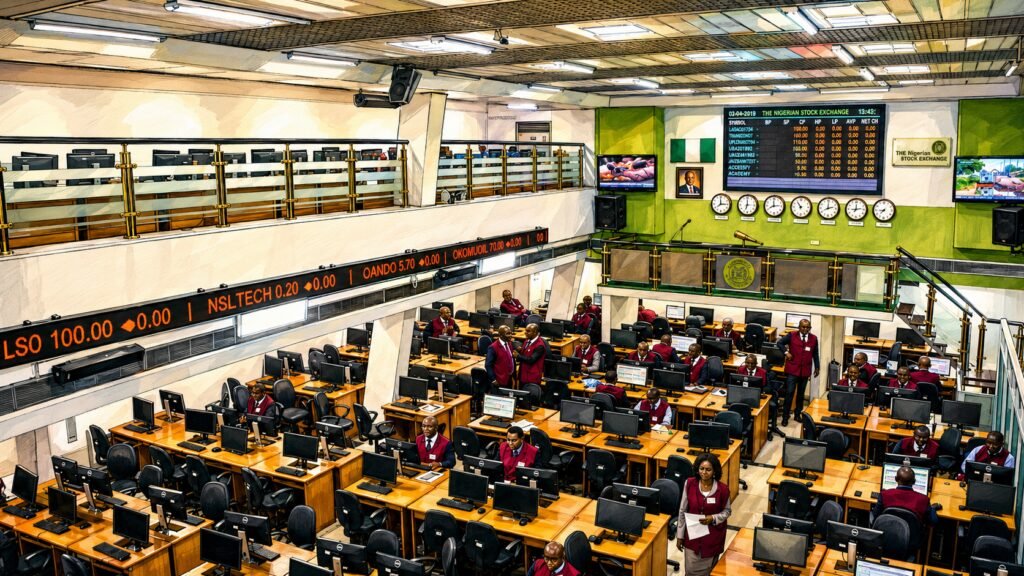
Five analysts currently rate MTN Nigeria a “Buy” with an average 12-month price target of ₦884.11 as of mid-July 2026, Stock Analysis data showed. Premium board banking names told the opposite story, with Zenith Bank, UBA, Access Holdings, and First HoldCo all posting upward price markers.
Airtel Africa surges to ₦6,381 and sets a new 52-week record
Airtel Africa closed at ₦6,381, blasting past its previous 52-week high of ₦5,801.40, the daily official list confirmed. The stock’s year-to-date gain from its January opening price of ₦2,270 now exceeds 180%, making it one of the exchange’s strongest large-cap performers in 2026.
The telecom company’s ongoing share buyback program, which has systematically reduced its circulating float through Barclays Capital Securities, continues to support the price trajectory. Airtel launched a $60 million buyback tranche in May 2026 to reduce the company’s issued share capital, BusinessDay reported.
Seplat Energy also breached its 52-week ceiling on the same session, closing at ₦11,720 against a previous high of ₦11,600. Both stocks traded on thin volume, with Airtel and Seplat each recording just one transaction on the daily list.
Several NGX large-caps slammed into the 10% daily price floor
While the premium board rallied, at least six main board stocks hit or approached the NGX’s ±10% daily price-movement limit on the downside during the session.
Stocks that touched the 10% floor on July 23 (source: NGX Daily Official List)
- Nestle Nigeria: closed at ₦2,537 from ₦2,812.50 open, a decline of roughly 9.8% on the session.
- Presco: fell to ₦2,070 from ₦2,300, losing approximately 10% of its opening value.
- BUA Foods: dropped to ₦760.60 from ₦845.10, shedding roughly 10% by the closing bell.
- Geregu Power: slipped to ₦743.20 from ₦825.70, a nearly 10% decline in a single session.
- Julius Berger: tumbled to ₦279.80 from ₦310.80, falling approximately 10% on the day.
- NCR Nigeria: declined to ₦145.10 from ₦161.20, giving back roughly 10% of its opening price.
Transcorp Power also fell roughly 10% to ₦219.60, just two days after going ex-dividend on July 21, the official list confirmed.
What analysts say about the NGX’s fractured blue-chip landscape
The split between gainers and losers underscores a theme market watchers have been flagging throughout H2 2026. Olatunde Amolegbe, managing director of Arthur Stevens Asset Management, told Vanguard in a July 16 report on the H2 market outlook that the bull run persists because economic reform gains have not yet been fully priced into equities.
“The stock market continuing to signal that the gains from the painful economic and financial reforms the government had embarked on is yet to be fully factored into the prices of stocks which is why we are seeing this bull run.” — Olatunde Amolegbe, MD/CEO, Arthur Stevens Asset Management, via Vanguard

Dr. Fiona Ahimie, president of the Chartered Institute of Stockbrokers, struck a more cautious tone in the same July 16 Vanguard report. She noted that rising valuations mean investment decisions must be anchored to company fundamentals and earnings quality rather than short-term momentum.
David Adonri, CEO of Highcap Securities, told Vanguard in the same report that the market should remain stable through H2 2026 on improving corporate fundamentals. He cautioned, however, that political uncertainty around Nigeria’s 2027 election remains a headwind investors cannot afford to ignore.
The NGX closed July 23 with the All-Share Index at 247,831.40 points, up from 245,418.37, TheWill reported. The year-to-date return remained above 55%, sustaining Nigeria’s position as one of the world’s best-performing equity markets in dollar terms, a distinction the Nigerian Exchange Group highlighted earlier this month.