
West Africa posted 4.8% economic growth in 2025, comfortably outpacing the rest of the continent by nearly half a percentage point. On the surface, that number suggests a region firing on all cylinders and building momentum heading into the next fiscal cycle.
Yet underneath that headline figure, a quieter crisis is taking shape across the region’s government balance sheets and financial systems. The money that should be financing hospitals, roads, and power grids exists, but it is stuck in the wrong places.
A new report from the African Development Bank lays out exactly where those resources are trapped and why they never reach productive use. The findings challenge a longstanding assumption that West Africa’s development problems stem primarily from insufficient funding.
What emerges instead is a picture of fragmented capital pools, underperforming tax systems, and pension savings that sit dormant rather than fueling growth. If you follow African markets or hold exposure to the region, the implications are worth understanding.
West Africa’s 9.9% tax ratio reveals the depth of the financing gap
The region’s average tax-to-GDP ratio stood at just 9.9% over the past five years, the AfDB’s 2026 West Africa Regional Economic Outlook found. That figure is less than half the 20% benchmark set by the West African Economic and Monetary Union for its member states.
That tax gap alone limits every government in the region from financing essential development priorities and building long-term fiscal resilience. The report estimates that West Africa faces an annual development financing shortfall of between $90 billion and $100 billion.
However, the AfDB argues that this gap does not stem from a fundamental shortage of available capital across the region. Instead, existing financial resources remain fragmented across institutions and underutilized within domestic markets, the report concluded.
“West Africa’s challenge is not simply the volume of resources available to finance development. The challenge is how those resources are mobilized and deployed to transformative investments that create jobs, strengthen resilience and improve livelihoods,” said Joseph Ribeiro, Deputy Director General for West Africa and Country Manager for Côte d’Ivoire at the AfDB.
Four priorities the AfDB identified to unlock trapped capital
The report, launched on July 28 in Abidjan, identified four priority actions that could help West African governments close the financing gap. Each targets a specific structural weakness that currently prevents domestic resources from reaching productive investment channels.
Key AfDB priority actions for West Africa
- Broadening the tax base beyond current narrow collection pools to capture more economic activity across sectors.
- Improving the management of natural-resource revenues, particularly in oil-producing economies like Nigeria and Ghana.
- Formalizing informal economic activity, which accounts for a significant share of output but generates minimal tax revenue.
- Channeling pension and insurance savings toward long-term productive investments instead of leaving them in low-yield instruments.
Marcellin Ndong Ntah, Lead Economist for West Africa at the AfDB, echoed the point in the report’s official release, stressing that the region already has the means to finance its own development if structural reforms are prioritized.
“The reports show that West Africa’s financing gap is not driven solely by a lack of resources. Significant opportunities exist to broaden the tax base, formalize the informal sector, improve public investment efficiency, and channel long-term resources from institutional investors towards productive investments,” Ndong Ntah noted in the AfDB press release.
Côte d’Ivoire’s 6.5% growth offers a regional benchmark
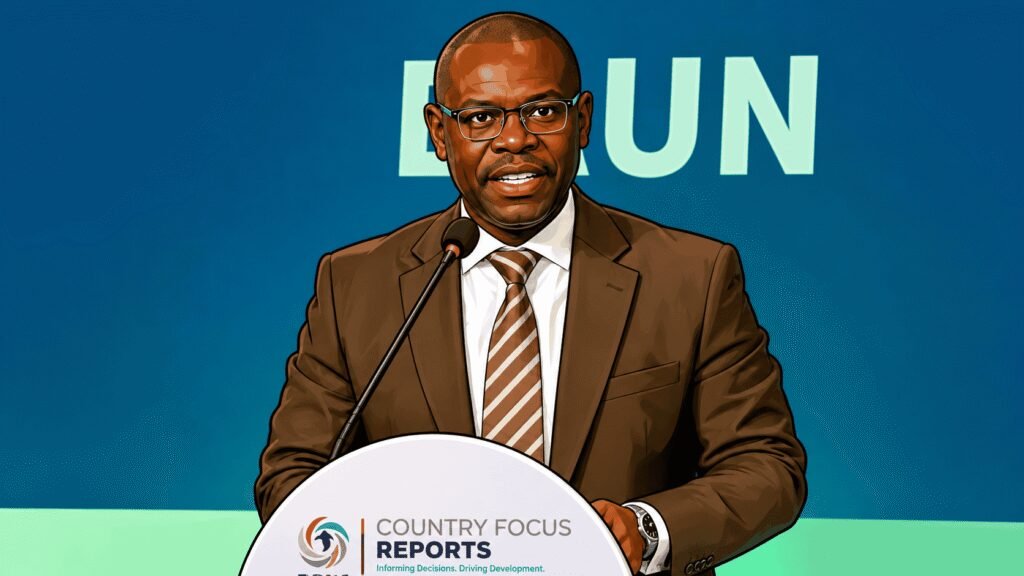
The report highlighted Côte d’Ivoire as the largest economy in the WAEMU zone, projecting its growth at 6.5% for 2025. The accompanying Country Focus Report noted that the nation’s ambition to reach upper-middle-income status by 2030 hinges on accelerating industrialization.
Across the broader region, the AfDB projects growth will moderate slightly from 4.8% in 2025 to 4.6% in 2026. Private investment, recovering domestic demand, and expansion in oil, gas, and mining sectors are expected to drive output forward.
However, geopolitical tensions, persistent global inflation, rising public debt vulnerabilities, and tighter financial conditions pose meaningful downside risks. Countries like Nigeria, whose total public debt reached ₦159.35 trillion in Q1 2026, face pressure from both external and domestic debt-servicing obligations.
Why deeper capital markets matter for West Africa’s future
The AfDB report also called for stronger regional financial integration, including deeper capital markets through institutions like the West African Regional Stock Exchange. More integrated financial systems and stronger payment infrastructure could help unlock long-term cross-border investment.
The West African Tax Administration Forum has separately pushed for accelerated digital transformation of VAT systems, arguing that inefficiencies in current tax infrastructure continue to limit revenue generation.
Together, these findings point toward a consistent message from multilateral institutions working in the region: West Africa’s financing constraints are structural, not cyclical, and demand systemic reform rather than additional external borrowing to resolve effectively.