
KEY TAKEAWAYS
|
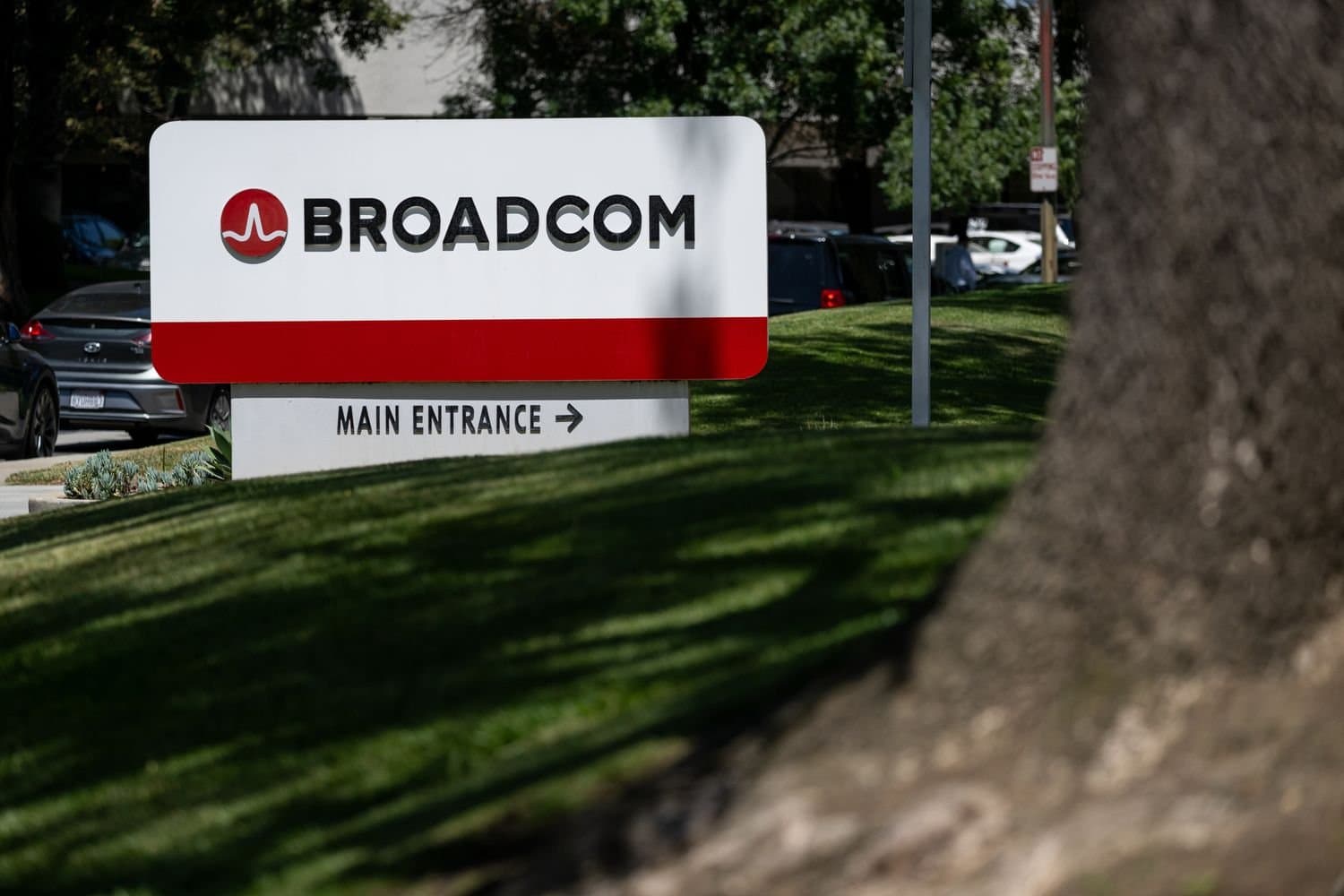
Broadcom Inc. (NASDAQ: AVGO) experienced a jarring decline on Friday, December 13, 2025, despite delivering what appeared to be a blockbuster fiscal fourth-quarter earnings report. The semiconductor and infrastructure software giant’s shares closed at $359.90, down from $406.96, erasing approximately $100 billion in market capitalization in a matter of hours. This dramatic selloff, which came despite the company beating both revenue and earnings estimates while posting spectacular AI chip sales growth, exemplifies the mounting anxiety among investors about the sustainability of AI infrastructure investments and the economics of the ongoing artificial intelligence boom.
Broadcom’s Regulatory Disclosure Framework
Broadcom Inc. maintains comprehensive financial disclosures with the U.S. Securities and Exchange Commission. Investors can access the company’s complete filing history, including Form 10-K annual reports, 10-Q quarterly reports, and 8-K current reports at the SEC’s EDGAR database.
The semiconductor industry operates under extensive regulatory oversight from multiple federal agencies. Export controls and trade regulations are administered by the Bureau of Industry and Security within the U.S. Department of Commerce. Additionally, merger and acquisition activity in the technology sector is subject to review by the Federal Trade Commission. Broadcom’s 2023 acquisition of VMware underwent rigorous antitrust review, demonstrating the scrutiny applied to major technology transactions.
Strong Results Failed to Satisfy Investors
Broadcom’s fiscal fourth-quarter 2025 results were objectively impressive by traditional metrics. Total revenue reached $18.02 billion, up 28% year-over-year and exceeding the $17.49 billion analyst consensus. Adjusted earnings per share came in at $1.95, surpassing the $1.86 estimate. AI revenue hit $6.4 billion, up 74% year-over-year and above the $6.2 billion Wall Street projection. The company’s guidance for the first quarter of 2026 also topped estimates.
CEO Hock Tan projected that AI chip sales would double in the current quarter to $8.2 billion, driven by both custom AI chips and semiconductors for AI networking. For most companies, these would be celebrated as triumph numbers. Yet Broadcom’s stock suffered its worst single-day decline since January 2025.
Understanding the Margin Pressure Concerns
The primary catalyst for Broadcom’s selloff centered on concerns about profit margins, specifically the revelation that the company’s massive new orders come with structurally lower profitability than investors anticipated. During the earnings call, CFO Kirsten Spears acknowledged that gross margins will be lower for some of Broadcom’s AI chip systems, a statement that sent shockwaves through the investment community.
The specific concern relates to Broadcom’s $11 billion order from AI developer Anthropic for server racks equipped with Google’s Tensor Processing Units. According to BNP Paribas analyst Karl Ackerman, this arrangement involves significant pass-through costs where Broadcom essentially manufactures and delivers the TPUs to Anthropic without adding substantial markup. In other words, the company acts more as a systems integrator than a high-margin chip designer for these orders.
Technical Breakdown Shows Oversold Conditions
From a technical perspective, Broadcom’s chart has deteriorated significantly following the earnings-induced selloff. As of December 15, 2025, shares traded at $359.90. The 14-day Relative Strength Index sits at 21.41, in deeply oversold territory suggesting potential for a short-term bounce. The Moving Average Convergence Divergence shows a strong sell signal at negative 12.21.
The stock broke down from a pivot top point on December 10 and has fallen 12.84% since that technical breakdown. Volume surged dramatically on the decline, with 84 million shares traded compared to a typical daily average around 27 million shares, indicating institutional selling rather than retail panic. The stock now trades below its five-day moving average of $355.14, its 50-day moving average of $390.43, and its 200-day moving average of $369.31.
Analysts Remain Bullish Despite Selloff
Wall Street analysts remain predominantly bullish on Broadcom despite the sharp decline. Mizuho raised its price target to $450 from $435, noting that this is still where the growth is and highlighting Broadcom’s role as the primary supplier to Google, Meta, Anthropic, and eventually OpenAI.
Bernstein’s Stacy Rasgon maintained an outperform rating, calling profitability concerns shortsighted and emphasizing Broadcom’s expanding opportunity as a full-scale AI systems supplier providing complete server racks with chips and networking solutions. These analysts argue that the market is being myopic in focusing on near-term margin pressure rather than the massive long-term opportunity in AI infrastructure.
Investment Implications Across Time Horizons
In the short term, spanning one to three months, the stock’s deeply oversold RSI and extreme volume on the selloff suggest a potential technical bounce is likely. However, with the MACD showing strong negative momentum and the stock trading below key moving averages, any rally may face resistance around $380 to $390.
Over the medium term of three to 12 months, much depends on whether margin concerns prove temporary or structural. If Broadcom can demonstrate that the Anthropic TPU arrangement is an isolated low-margin deal rather than a template for future business, sentiment could recover. The company’s next earnings report in March 2026 will be critical.
For the long term spanning one to three years, the fundamental case for Broadcom remains intact. Custom AI chip design is a specialized, high-barrier-to-entry business, and the company’s relationships with hyperscalers provide durable competitive advantages. The OpenAI deal beginning in 2027 could be transformational if executed successfully.
The Bottom Line
Broadcom’s post-earnings selloff represents either an exceptional buying opportunity for contrarian investors or an early warning sign that AI infrastructure valuations have become unsustainable. The disconnect between strong operational performance and weak stock reaction suggests the market is looking beyond next quarter’s results and questioning longer-term profitability and competitive dynamics. The stock’s 11% single-day decline on blockbuster earnings reflects a market that has become hyper-sensitive to any signs of margin pressure, increased competition, or slowing momentum in the AI infrastructure build-out.
Frequently Asked Questions
What does Broadcom do and how does it make money?
Broadcom designs and manufactures a wide range of semiconductor and infrastructure software products. The company generates revenue from selling custom AI chips to hyperscale cloud providers, networking semiconductors for data centers, wireless chips for smartphones, and enterprise software products following its acquisition of VMware. Broadcom’s business model involves both selling standard products and designing custom chips specifically tailored to individual customers’ requirements.
Why did Broadcom stock fall despite good earnings?
The stock declined because investors became concerned about profit margins on large new orders. While revenue and earnings beat estimates, management indicated that some AI chip system orders would carry lower gross margins than historical levels. An $11 billion order from Anthropic appeared to involve significant low-margin systems integration work rather than high-margin chip design. This raised concerns that Broadcom’s AI business might not be as profitable as investors had anticipated.
What is a Tensor Processing Unit?
A Tensor Processing Unit is a specialized chip designed by Google specifically for machine learning and artificial intelligence workloads. TPUs are optimized for the mathematical operations common in neural network training and inference, offering superior performance and energy efficiency compared to general-purpose processors for these specific tasks. Broadcom manufactures TPUs for Google and integrates them into complete server systems for customers like Anthropic.
Is Broadcom stock oversold at current levels?
Technical indicators suggest the stock has reached oversold levels based on the 14-day Relative Strength Index of 21.41, well below the traditional oversold threshold of 30. However, oversold conditions do not guarantee an immediate bounce, and stocks can remain oversold for extended periods. The high selling volume and breakdown below key moving averages indicate significant technical damage that may take time to repair.
What should long-term investors do with Broadcom stock?
Long-term investors should carefully evaluate whether the margin pressure concerns represent a temporary issue or a structural change in Broadcom’s business model. Those with conviction in the AI infrastructure thesis and confidence in Broadcom’s competitive positioning may view current levels as attractive entry points. However, investors should be prepared for continued volatility and should consider the stock’s risk profile relative to their overall portfolio. Consulting with a qualified financial advisor about your specific situation is recommended before making investment decisions.
Article Sources
FinanceTracked requires writers to use primary sources to support their work. These include white papers, government data, original reporting, and interviews with industry experts.
- S. Securities and Exchange Commission. “Company Search – Broadcom Inc..”
- Bureau of Industry and Security. “Export Administration Regulations.”
- Federal Trade Commission. “Merger Review.”
- Broadcom Inc. “Fiscal Fourth Quarter 2025 Earnings Release,” Dec. 12, 2025.
- Mizuho Securities. “Broadcom Research Note,” Dec. 13, 2025.
- Bernstein Research. “Broadcom Earnings Analysis,” Dec. 13, 2025.