


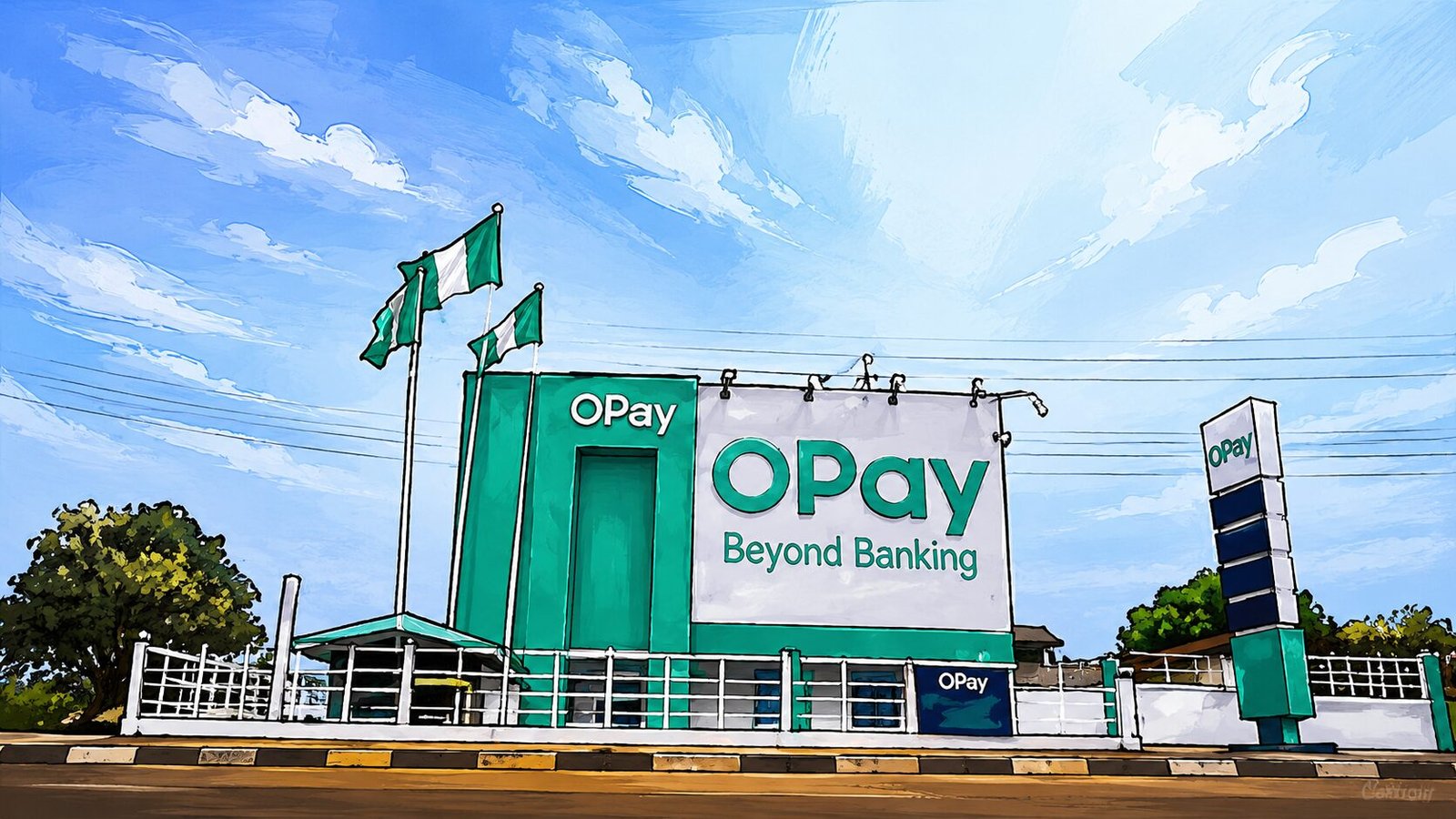

OPay’s planned US stock market listing has been reported by Bloomberg, citing people familiar with the deal, as a $4 billion fintech milestone, with three Wall Street banks running the offering.
Citigroup, Deutsche Bank, and JPMorgan Chase will guide the offering, and most coverage has stopped at the bank lineup and the headline valuation.
The coverage has missed the second meaning of a listing, the one that names a roster of people rather than a roster of shares.
OPay sits on a customer base of more than 40 million Nigerians, and every one of those accounts becomes part of the company being sold.
When OPay debuts on a US exchange, the franchise that American shareholders buy includes data, identity, and consent decisions made elsewhere.
A US listing means a stock ticker and a database, and OPay’s deal involves both
A stock market listing is a financial event, but the word also carries an older meaning rooted in catalogs, registries, and inventories of people.
OPay’s planned US offering involves both, because the company sits on a customer base of more than 40 million Nigerians by its own count.
That figure comes from OPay’s App Store disclosure for its business app, where the platform describes itself as a leading Nigerian financial service provider.
Nairametrics has cited a higher figure of more than 60 million users, drawn from OPay’s own disclosures, in a service review published in October 2025.
Either number means OPay’s customer roster is larger than several traditional Nigerian banks by self-reported user count, including a number of mid-sized lenders.
When investors buy OPay shares, they will not own those customers directly, but they will own a stake in the relationships those customers represent.
OPay’s privacy policy already anticipates a sale of the business
Buried inside OPay’s privacy policy is the clause that turns this listing from an equity story into a data story for every active user.
The document, hosted on the company website, states that personal data may be shared to facilitate the sale of any part of OPay’s business.
The same policy confirms that user data may be transferred to and stored in countries outside Nigeria, under standard contractual clauses or other lawful mechanisms.
A US public offering is exactly the kind of event that triggers this language, alongside diligence work by the lead banks.
Diligence by Citigroup, Deutsche Bank, and JPMorgan will involve a data trove that is among the largest non-bank repositories in Africa today.

It likely encompasses payments, transfers, savings histories, and identity verification documents drawn from tens of millions of active accounts across Nigeria.
In Nigeria, a phone number functions as a verified identity, raising the stakes
Nigeria’s identity infrastructure makes this data unusually sensitive, because active mobile numbers in the country are required by law to be linked to a verified National Identification Number.
Nigerian authorities enforced the National Identification Number-to-SIM linkage starting in late 2020, with the Nigerian Communications Commission directing telecom operators to comply, FIJ.ng reported.

That linkage means a phone number tied to an OPay wallet is also tied to a face, a fingerprint, an address, and a biometric file.
When the FIJ.ng investigative outlet wrote about the risks of posting OPay account numbers online, it framed the problem as a national data exposure issue.
A US listing introduces a new vector for that exposure, because diligence, custody, and disclosure obligations move portions of this information outside Nigerian jurisdiction.
OPay says its security investments protect users at the app level
OPay says customer protection sits at the heart of its product strategy, citing a series of security features rolled out across 2024 and 2025 in its app.
Elizabeth Wang, identified in public reporting as a senior commercial executive at OPay Nigeria, has framed those tools as a direct response to fraud, theft, and unauthorized transaction attempts.

Those features address security at the app and account layer, which is the layer most users see and the layer most fraud complaints concern.
The features do not address what happens to user data during a change in ownership, a cross-border transfer, or a banking diligence review.
Those questions sit at the corporate layer, and they fall under the policy clauses that authorize sharing during a sale of part of the business.
American shareholders may never read OPay’s privacy policy, but the document remains the binding contract between the company and its 40 million-plus Nigerian users.
SoftBank gets liquidity, Wall Street gets exposure, and Nigerian users get scrutiny
The Bloomberg report that broke the listing news on May 1, 2026, described OPay as a SoftBank-backed Nigerian fintech targeting a public float.
SoftBank Vision Fund 2 anchored the 2021 Series C round alongside Sequoia Capital China and other co-leads, valuing OPay at roughly $2 billion at the time.
For SoftBank, the offering represents the kind of exit the Vision Fund has prioritized in recent reporting cycles across its portfolio.
For Citigroup, Deutsche Bank, and JPMorgan, the deal delivers fees, league-table credit, and a signature African fintech mandate that other banks did not capture.
For Wall Street investors, the float offers exposure to one of the largest fintech franchises in Africa’s most populous country.
For the millions of Nigerians whose data sits inside OPay’s servers, the IPO offers no upside, no notification, and no formal consent process.
That asymmetry is the part of the story most coverage has missed, because the financial press reads IPOs through the lens of bankers.
Key facts to know about OPay’s planned US IPO
- OPay has engaged Citigroup, Deutsche Bank, and JPMorgan Chase as advisors, Bloomberg reported on May 1, 2026.
- The targeted valuation sits near $4 billion, roughly double the company’s 2021 Series C valuation of $2 billion.
- The company claims more than 40 million users in Nigeria, drawn from its own App Store disclosure.
- OPay’s privacy policy explicitly allows data sharing during a sale of any part of the business.