
KEY TAKEAWAYS
|
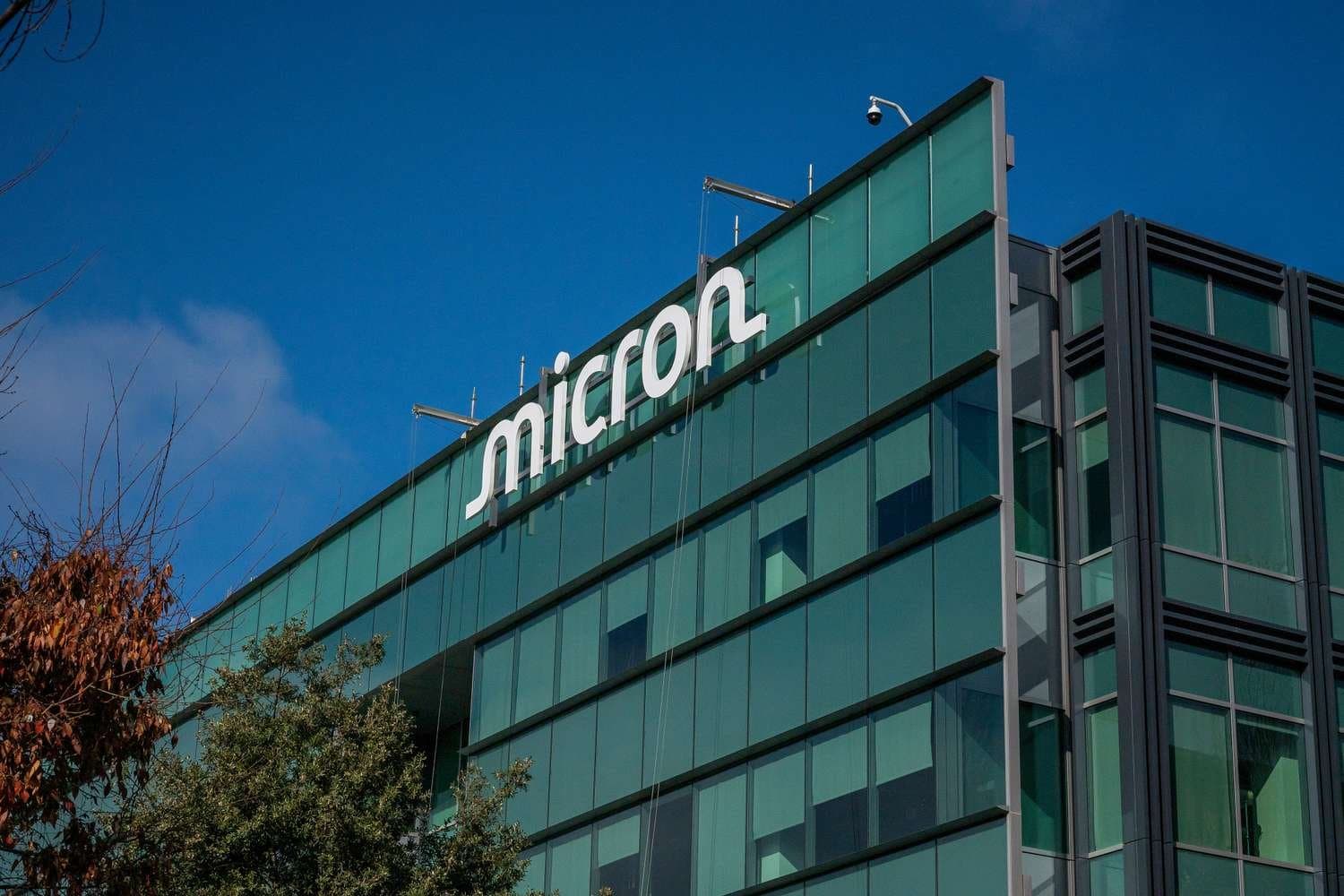
Micron Technology Inc. (NASDAQ: MU) heads into its fiscal first-quarter 2026 earnings report on Wednesday as one of the most remarkable success stories in the semiconductor sector this year. With shares having nearly tripled from January lows, the memory chip manufacturer exemplifies both the promise and peril of the artificial intelligence infrastructure boom. As Wall Street anxiously awaits the company’s results and forward guidance, investors must grapple with whether Micron’s extraordinary stock performance reflects sustainable fundamental improvements or whether enthusiasm over AI-driven demand has pushed valuation into dangerous territory.
Understanding Micron’s Regulatory Framework
Micron Technology maintains comprehensive financial transparency through regular filings with the U.S. Securities and Exchange Commission. Investors can access the company’s complete disclosure history, including annual reports (Form 10-K), quarterly reports (Form 10-Q), and current reports (Form 8-K) through the SEC’s EDGAR database.
Memory semiconductor manufacturers operate within a complex regulatory framework governing international trade. The Bureau of Industry and Security within the U.S. Department of Commerce administers export controls on advanced semiconductors. In 2023, China’s Cyberspace Administration prohibited critical infrastructure operators in China from purchasing Micron products, affecting the company’s ability to compete in that market. The regulatory landscape continues to evolve, with ongoing reviews by the Committee on Foreign Investment in the United States.
The AI Memory Revolution Driving Micron’s Success
Micron’s spectacular 2025 performance stems from its strategic positioning at the intersection of two powerful trends: explosive growth in artificial intelligence workloads and a structural tightening in memory chip supply. Unlike previous semiconductor cycles characterized by boom-bust dynamics driven by personal computer and smartphone demand, the current memory upcycle is being propelled by data center build-outs requiring high-bandwidth memory.
High-bandwidth memory, a specialized product category that barely existed a few years ago, has become the company’s crown jewel. HBM chips are essential for AI accelerators like NVIDIA’s H100 and Blackwell graphics processing units, where they provide the massive data throughput required for training and running large language models. Industry sources indicate that Micron’s HBM inventory is sold out through calendar years 2025 and 2026, with the company having begun shipping 12-layer HBM3E products for NVIDIA’s latest Blackwell Ultra platform.
This supply-demand imbalance has created extraordinary pricing power. According to TrendForce, conventional DRAM contract prices are forecast to rise 45% to 50% quarter-over-quarter in the fourth quarter of 2025, with total memory prices including HBM up even more dramatically. Reuters reported in early December that memory prices could increase another 20% in early 2026 as hyperscalers and major technology buyers push aggressively for additional allocation.
Strategic Pivot Away From Consumer Markets
In a move that underscores management’s conviction about the AI-driven memory opportunity, Micron announced in early December that it would exit its consumer memory business. The company will wind down its Crucial-branded consumer products sold through retail channels, continuing shipments only through February 2026. This strategic decision to abandon a legacy business that generated hundreds of millions in annual revenue signals that management believes the opportunity in AI data center markets dwarfs anything possible in consumer channels.
Wall Street’s Bullish Stance on Memory Pricing
Wall Street’s enthusiasm for Micron heading into earnings is palpable. Wedbush Securities elevated its price target to $300 from $220 on December 15, citing sharper-than-expected improvements in memory pricing and strengthening industry conditions. This represents approximately 24% upside from current levels around $241.
Recent research notes highlight several key drivers supporting the bullish thesis. The supply-demand balance has shifted dramatically in Micron’s favor, with AI-driven memory requirements far exceeding available supply. Micron’s HBM3E products have been qualified for NVIDIA’s most advanced platforms, and deals for 2026 HBM supply are expected to be locked in within months. Early discussions suggest significantly higher pricing for next-generation HBM4 products.
Technical Analysis Shows Recent Consolidation
Micron’s stock chart tells the story of a parabolic rally that has recently entered a consolidation phase. As of December 15, shares traded at $241.14, down 6.7% from the prior Friday. The stock has traded in a 52-week range of $84.36 to $258.46, representing a year-to-date gain of approximately 185%.
Technical indicators present a mixed picture. The 14-day Relative Strength Index sits at 40.75, in neutral territory after cooling from overbought levels above 70. The Moving Average Convergence Divergence shows a mild sell signal at negative 1.47, though momentum remains constructive. The stock trades above its 200-day moving average of $231.19, confirming the long-term uptrend, but slightly below its 50-day moving average of $232.03.
What to Watch in Micron’s Earnings Report
Wall Street consensus estimates for Micron’s fiscal first quarter of 2026, which ended November 30, 2025, reflect expectations for continued robust performance. Analysts expect earnings per share of $3.83, with an implied earnings move of plus or minus 3.48% in the first trading day post-announcement.
Investors will be laser-focused on several key metrics and management commentary. The percentage of revenue coming from high-bandwidth memory and the associated margins will be critical in assessing the quality of Micron’s earnings growth. Management commentary on expected growth and capital expenditure plans for 2026 will shape forward estimates. The degree of customer concentration and dependence on NVIDIA and large cloud customers will influence risk assessments. Guidance on memory pricing trajectory will determine whether current conditions are sustainable or ephemeral. Finally, competitive positioning relative to Samsung and SK Hynix remains a critical factor for long-term market share.
Balancing Opportunity and Risk
For investors considering Micron ahead of its Wednesday earnings report, the calculus involves balancing extraordinary near-term fundamentals against stretched valuation and execution risks. Memory market fundamentals are the strongest in years, with multi-year contracts providing revenue visibility. HBM is a differentiated, high-margin product category with limited competition. The stock has consolidated following its parabolic rally, with the Relative Strength Index back in neutral territory. An earnings surprise could propel shares toward the $270 to $300 range.
However, after a 200% rally, much positive news may already be priced in. Any disappointment in guidance or margins could trigger a sharp correction. Historical memory cycles suggest current conditions will not last forever, and technical indicators show some negative divergences. The stock’s inherent volatility and the cyclical nature of the memory business require appropriate position sizing that reflects these risks.
The Bottom Line
Micron Technology’s Wednesday earnings report represents more than just a quarterly update. It is a referendum on the sustainability of AI-driven memory demand and the durability of unprecedented pricing power. With the stock having nearly tripled in 2025, expectations are extraordinarily high. The company must not only meet these elevated expectations but also provide compelling evidence that the current memory upcycle has years, not quarters, of runway remaining. The technical setup suggests consolidation after a powerful rally, the fundamental backdrop remains constructive, and the strategic positioning in HBM gives Micron competitive advantages. However, investors should approach with eyes wide open to both the exceptional opportunity and the meaningful risks.
Frequently Asked Questions
What is high-bandwidth memory and why is it important for AI?
High-bandwidth memory is a specialized type of computer memory that provides extremely fast data transfer rates between memory chips and processors. It is essential for AI accelerators because training and running large language models requires moving massive amounts of data quickly between memory and processing units. HBM chips are stacked vertically and connected with thousands of parallel connections, allowing data transfer speeds up to 10 times faster than conventional memory.
How does Micron make money from its products?
Micron generates revenue by designing and manufacturing memory and storage products, primarily DRAM and NAND flash memory chips. The company sells these products to original equipment manufacturers, retailers, and distributors who incorporate them into computers, smartphones, servers, and other electronic devices. Micron’s profitability depends heavily on memory chip pricing, which fluctuates based on supply and demand dynamics in the semiconductor industry.
What are the main risks to Micron’s stock price?
The primary risks include the cyclical nature of the memory chip industry, potential oversupply if competitors increase production capacity, slowing AI infrastructure spending by major technology companies, and geopolitical tensions affecting international trade. Memory chip pricing can fall dramatically during downturns, as seen in previous cycles. Customer concentration risk is also significant, with large portions of revenue dependent on a small number of hyperscale cloud providers and AI chip manufacturers.
When does Micron report earnings and how can investors access the information?
Micron reports quarterly earnings approximately four times per year following the close of each fiscal quarter. The company’s fiscal year ends in August, with quarters ending in November, February, May, and August. Investors can access earnings releases, financial statements, and conference call information through Micron’s investor relations website at investors.micron.com or through SEC filings at SEC.gov.
How does Micron compare to competitors Samsung and SK Hynix?
Micron is the third-largest memory chip manufacturer globally, behind South Korean rivals Samsung and SK Hynix. All three companies produce both DRAM and NAND flash memory, competing directly in most market segments. Samsung has historically maintained technology leadership and the largest market share, while SK Hynix has also been a strong competitor in HBM. Micron’s competitive advantages include strong relationships with U.S. customers, government support for domestic semiconductor manufacturing, and technology partnerships with equipment suppliers. However, the company generally operates with lower profit margins than its larger competitors during industry upturns.
Article Sources
FinanceTracked requires writers to use primary sources to support their work. These include white papers, government data, original reporting, and interviews with industry experts. We also reference original research from other reputable publishers where appropriate.
- S. Securities and Exchange Commission. “Fast Answers: Researching Public Companies Through EDGAR.”
- S. Department of Commerce, Bureau of Industry and Security. “Semiconductor Manufacturing Items.”
- S. Department of the Treasury. “The Committee on Foreign Investment in the United States (CFIUS).”
- “Memory Market Pricing Analysis, Q4 2025.”
- “Memory Chip Price Forecasts for 2026.”
- Wedbush Securities. “Micron Technology Research Note,” Dec. 15, 2025.