
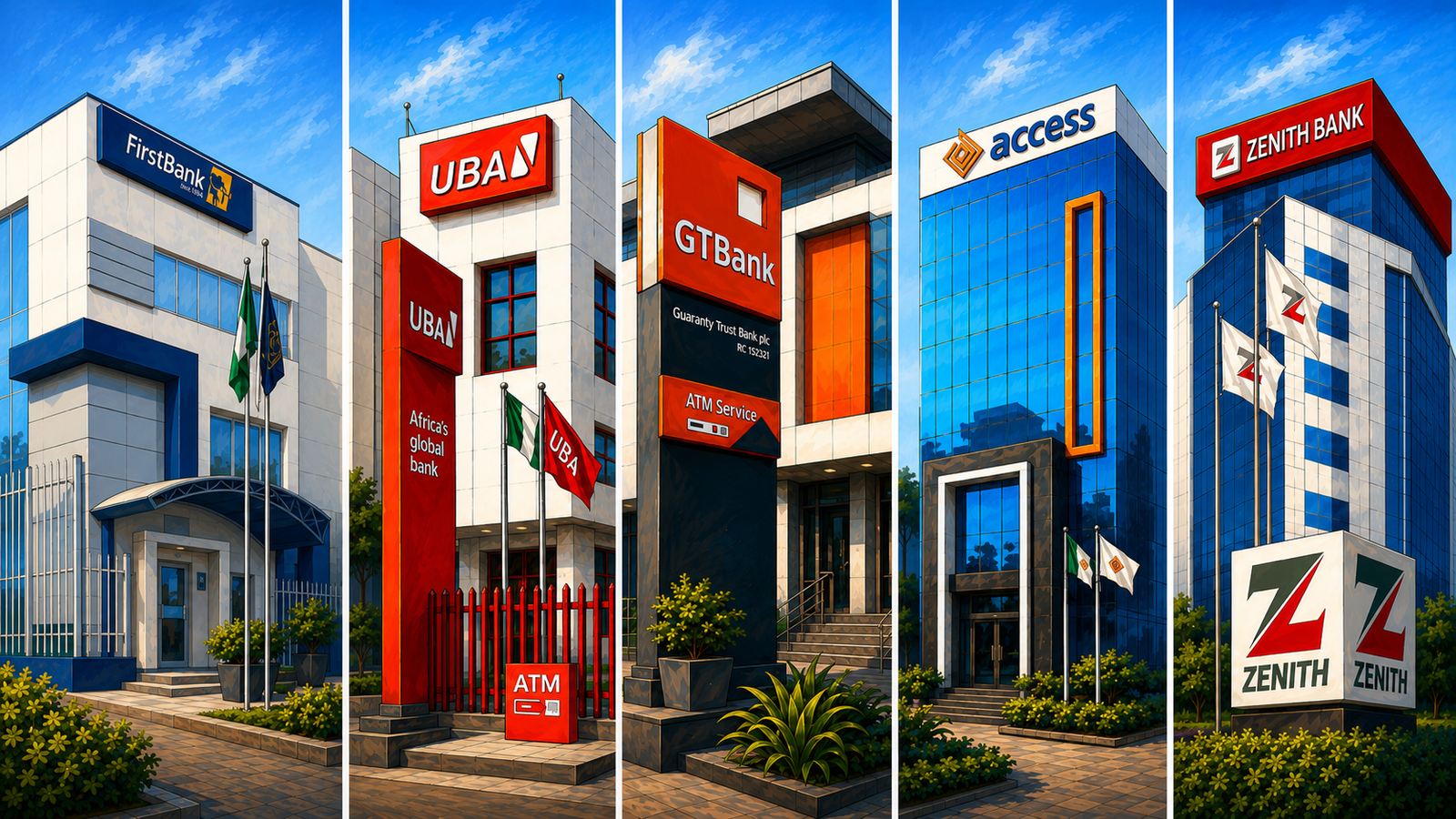

Nigeria’s five biggest tier-one lenders just released their first quarter 2026 financial statements, and the impairment numbers tell a striking story.
Combined provisions on customer loans across First HoldCo, United Bank for Africa, Guaranty Trust, Access Holdings, and Zenith reached roughly N153 billion in the period.
That figure runs about 36% above what the same group booked in the first three months of 2025, reflecting a sharp shift in posture.
If you hold shares in any of the five lenders or rely on bank credit, the underlying trend matters more than the headline alone.
The provisions echo a regulatory transition that has been reshaping how Nigerian lenders classify and report stressed loan exposures since 2025.
First HoldCo and Zenith lead FUGAZ’s Q1 2026 impairment charges
First HoldCo booked the heaviest single impairment line in the group, reporting N41.99 billion for Q1 2026 against N41.22 billion a year earlier.
Zenith Bank came in close behind with N41.68 billion for Q1 2026, against N35.95 billion in Q1 2025, according to its filing.
UBA delivered the sharpest year-on-year jump in the group, with its Q1 charge climbing to N38.2 billion from N11.1 billion in 2025.
Access Holdings reported provisions near N23 billion, while GTCO bucked the trend with just N7.95 billion, down 41% from its Q1 2025 figure.
Zenith and First HoldCo each carried the largest absolute provisioning loads, while UBA posted the biggest percentage move year-on-year for the quarter.

Across the five lenders, FUGAZ customer loan books closed 2025 at roughly N43 trillion in aggregate, with rising provisioning now weighing on bank margins.
Combined first-quarter loan impairments across FUGAZ banks reached roughly N153 billion, up about 36% from the prior-year base, based on individual NGX filings.
How CBN’s forbearance exit drove FUGAZ provisioning higher
Nigerian banks spent the past five years operating under temporary regulatory forbearance, which let them restructure stressed loans without classifying them as impaired.
The Central Bank of Nigeria began unwinding those measures in 2025, forcing lenders to recognize credit losses they had previously deferred under the relief framework.
Loans previously tagged as performing under forbearance now migrate into Stage 3 status, triggering full impairment recognition under International Financial Reporting Standard 9.
In June 2025, the CBN froze dividends for banks still using forbearance facilities, pushing several FUGAZ lenders to clean up loan books quickly.
The IFRS 9 framework requires banks to provision proactively for expected credit losses, rather than waiting until borrowers begin missing scheduled payments.
Oliver Alawuba, UBA’s group chief executive officer, told Daily Trust that the bank reclassified certain accounts in line with new prudential guidelines.
“We’re going after these defaulting customers, and there are signs that they are paying back. Once they do, we’ll be in a position to pay dividends for this year.” — Oliver Alawuba, group chief executive officer, United Bank for Africa, speaking to Daily Trust.

What rising FUGAZ provisions mean for investors and borrowers
The provisioning surge has already touched shareholder returns at several FUGAZ banks, with UBA cutting its 2025 total dividend to N0.25 per share.
The figure compares with the N5.00 per share UBA distributed in 2024, marking a sharp recalibration tied directly to higher loss provisions and weaker earnings.
First HoldCo group managing director Wale Oyedeji said the lender’s Q1 rebound followed deliberate actions taken in 2025 to de-risk its balance sheet, in remarks published by Premium Times.

Combined first quarter pre-tax profit across the five banks still reached roughly N1.42 trillion, suggesting earnings power remains strong despite the loss provisions.
First HoldCo shares have delivered a year-to-date return of about 28.7% through early May 2026, according to Nairametrics, with Zenith and Access Holdings also gaining ground.
Financial analyst Lizzy Aigbe told Economy Post that Zenith’s large write-offs may help the bank clear bad loans and present a cleaner balance sheet.
Q1 2026 loan impairment charges across FUGAZ banks
- First HoldCo: N41.99 billion (Q1 2026 NGX filing)
- Zenith Bank: N41.68 billion (Q1 2026 NGX filing)
- United Bank for Africa: N38.20 billion (Q1 2026 NGX filing)
- Access Holdings: approximately N23.00 billion (Q1 2026 NGX filing)
- Guaranty Trust Holding Company: N7.95 billion (Q1 2026 filing, down 41% year-over-year)
- Combined FUGAZ total: approximately N153 billion