
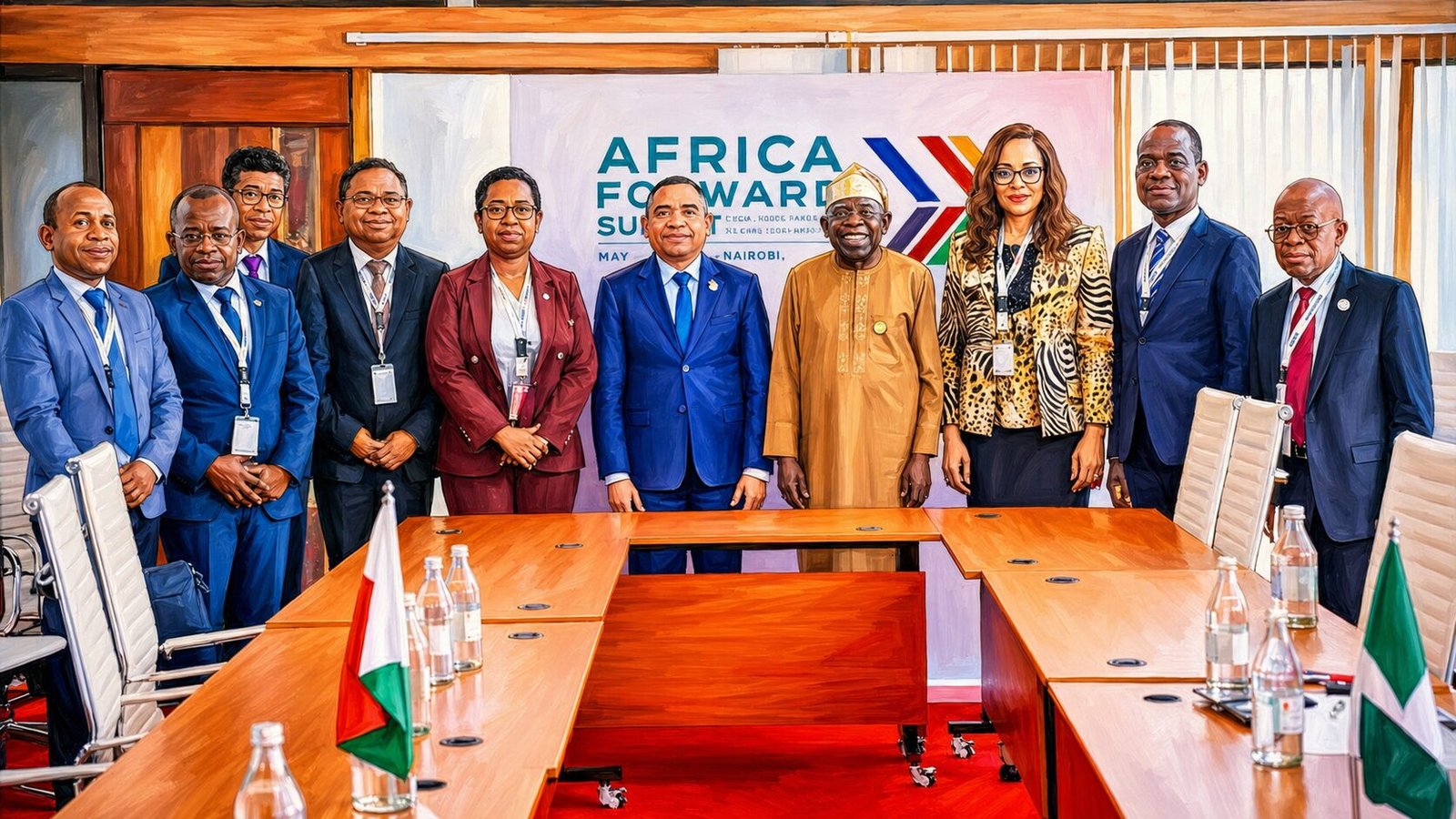

Nigeria will hand over roughly $11.6 billion to creditors this year, a sum that swallows nearly half of everything the government expects to collect in revenue. President Bola Tinubu put that number on the record at an international summit in Nairobi on May 12, 2026.
The disclosure was not buried in a budget document or whispered to reporters in a briefing room somewhere in Abuja. Tinubu chose to deliver it from the podium of the Africa Forward Summit, in front of more than 30 heads of state.
The figure itself is staggering, but what the president said next about what those payments are doing to Nigeria’s industrial base is worth paying close attention to. His argument was aimed at the global financial system, but the implications landed squarely on every Nigerian household.
If you care about the cost of borrowing, the price of goods, or where your tax money goes, this is the story to read.
Tinubu puts Nigeria’s $11.6 billion debt service bill on a global stage
Tinubu delivered the $11.6 billion figure as part of Nigeria’s National Statement at the Africa Forward Summit, co-hosted by French President Emmanuel Macron and Kenyan President William Ruto. The figure represents approximately half of the projected federal revenue for 2026, Premium Times reported.
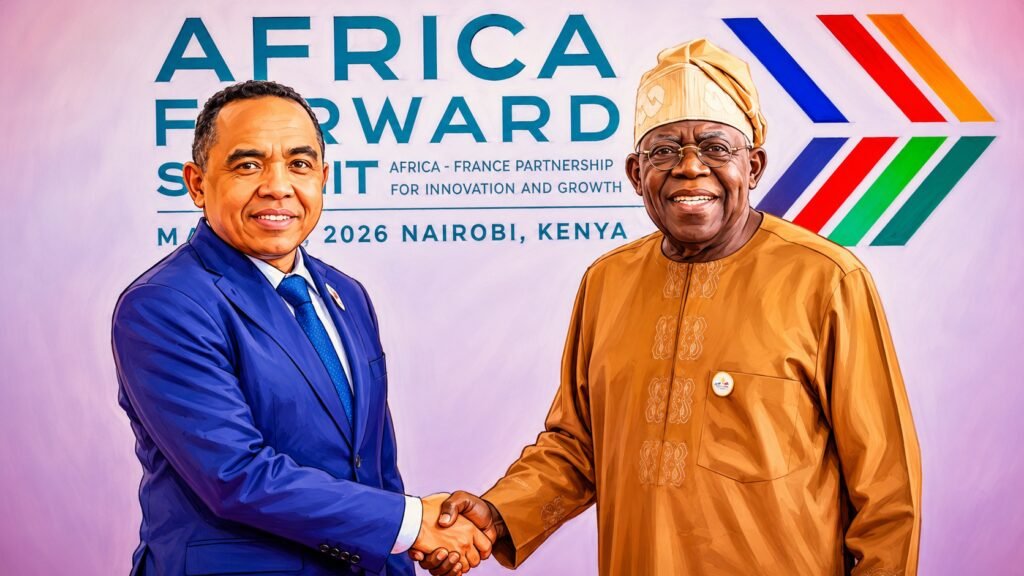
The president framed the payments as evidence that the global financial system is structurally rigged against African industrialization efforts. He argued that every dollar sent to creditors is a dollar withheld from Nigeria’s steel sector, textile mills, agro-processing facilities, and digital industries.
That framing carries weight because the 2026 Appropriation Act signed by Tinubu on April 17, 2026, allocates N15.8 trillion to debt service out of a total budget of N68.32 trillion, the State House confirmed. That single line item exceeds the combined budgets for education, health, and defense, BudgIT Foundation noted.
Nigeria’s debt service costs have surged nearly fourfold since 2021
The $11.6 billion figure did not materialize overnight, and the trajectory is what makes it alarming for ordinary Nigerians and investors. Debt servicing costs have surged from N4.2 trillion in 2021 to over N15 trillion in the 2026 fiscal plan, BudgIT Foundation noted.
Nigeria’s total public debt stood at N159.28 trillion as of December 31, 2025, with external debt accounting for $51.86 billion of that total. The 2026 fiscal plan features a deficit exceeding N20 trillion, much of which the government plans to finance through fresh borrowing, the Nigerian Economic Summit Group warned.
The NESG’s May 2026 Debt Burden Monitor found that Nigeria remains in a high-risk fiscal environment despite apparent stabilization in conventional debt indicators. The group’s debt burden index stayed within what it described as a high-stress band throughout 2025.
Tinubu cites reforms, but analysts question whether they offset borrowing
Tinubu used the Nairobi speech to list the reforms his administration has enacted since taking office in May 2023. He pointed to fuel subsidy removal, exchange rate unification, bank recapitalization worth $3.4 billion, and Nigeria’s exit from the FATF gray list.
Those reforms have produced measurable results on certain indicators, the president noted in his national statement at the summit. Nigeria’s debt-to-GDP ratio is now projected at 32.3% for 2026, and external reserves have risen to $45.5 billion.
“The allocation of about N15.8 trillion to debt servicing is substantial and continues to crowd out resources that could otherwise be deployed to development priorities.” — Prof. Uche Uwaleke, member of the Daily Trust Board of Economists, Daily Trust reported
Uwaleke called for deliberate steps to reduce both the size of the deficit and the overall debt stock over the medium term. He recommended that any windfall gains from higher oil revenues be applied toward deficit reduction rather than expanding expenses.
Key figures from Tinubu’s Nairobi speech and the 2026 fiscal plan
From the president’s National Statement
- Projected debt service for 2026: $11.6 billion, roughly half of expected revenue (Source: Premium Times)
- Debt-to-GDP ratio: Projected at 32.3% for 2026 (Source: Tinubu’s National Statement via Premium Times)
- External reserves: $45.5 billion (Source: Tinubu’s National Statement via Premium Times)
- Bank recapitalization: Over $3.4 billion (Source: Tinubu’s National Statement via Premium Times)
From the 2026 Appropriation Act
- Total budget: N68.32 trillion (Source: State House press release)
- Debt service allocation: N15.8 trillion (Source: State House press release)
- Capital expenditure: N32.2 trillion, roughly 50% of total (Source: State House press release)
- Total public debt as of December 2025: N159.28 trillion (Source: NESG Debt Burden Monitor via Business Post)
What $11.6 billion in debt payments means for Nigerian households
The fiscal math is straightforward and sobering for anyone who pays taxes or buys goods in Nigeria today. Vincent Nwan, strategy leader for West Africa at Africa Investment Group, described Nigeria’s core challenge as fundamentally a revenue problem rather than a debt problem, CNBC Africa reported.
Nwan cautioned that more debt today creates even larger debt-service obligations in future budgets, making fiscal space progressively tighter for spending on infrastructure, healthcare, and education that directly affects citizens across the country’s 36 states.
Debt servicing has grown from N942 billion in 2014 to over N15 trillion in 2026, leaving Nigeria unlikely to escape the 50% to 60% revenue absorption band in the near term, BudgIT Foundation noted. Eurobond principal repayments are also due in the years ahead, which will add further pressure to the fiscal outlook.
Tinubu’s speech in Nairobi put a public dollar figure on what fiscal analysts have been warning about for months. The $11.6 billion is no longer an abstract budget line; it is now a number the president himself has placed at the center of Nigeria’s international economic argument.